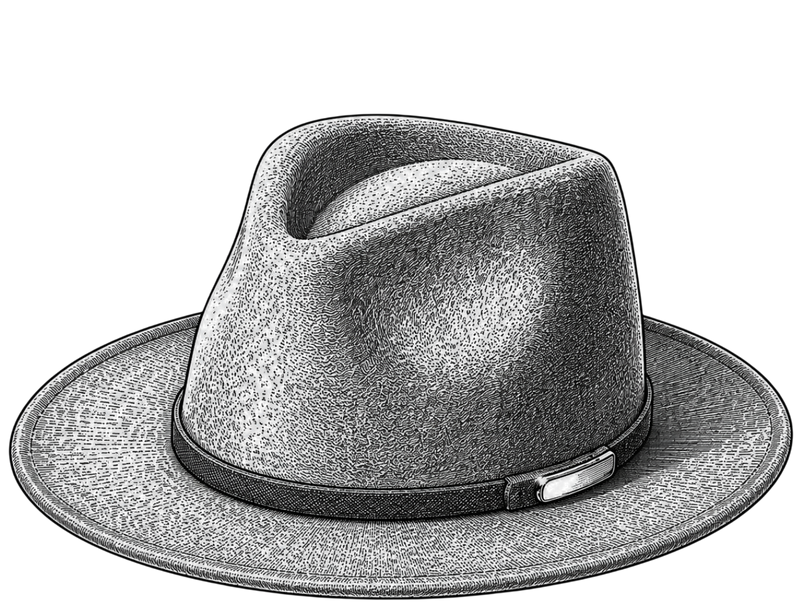
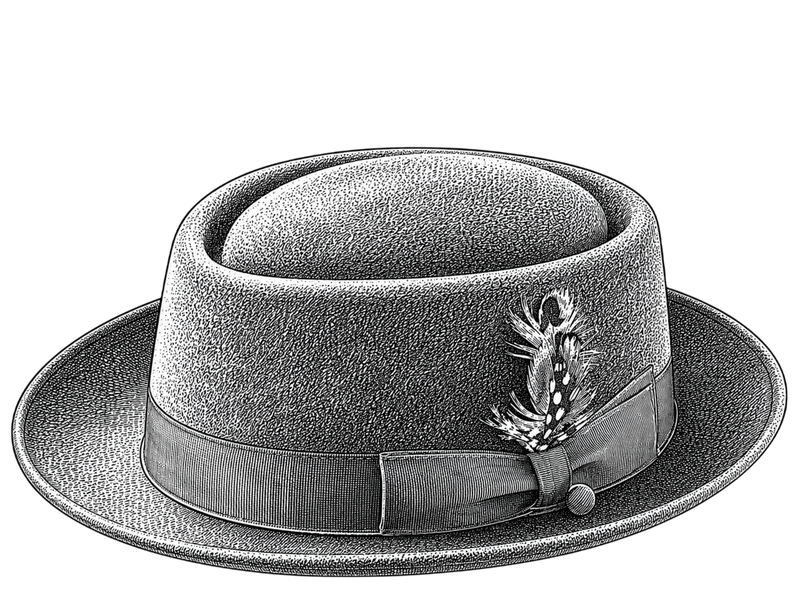
"Wool felt" on a label tells you almost nothing. Grade is what actually determines how a hat performs and ages.
How Wool Felt Grade Is Determined
- Fiber fineness (micron count): Lower micron count means finer, softer fiber — typically more expensive and more comfortable against skin.
- Felting density: Higher density (more fiber per given volume) produces a sturdier, more weather-resistant felt.
- Fiber source consistency: Uniform sourcing produces more predictable, even felting results than blended or inconsistent fiber batches.
Insight: Two hats both labeled "100% wool felt" can differ enormously in actual performance if one uses a finer, denser grade and the other a coarser, lower-density one — the label alone doesn't capture grade.
Our Standard
We specify felt weight and density at the sourcing stage rather than relying on generic "wool felt" labeling, because grade — not just material type — is what determines whether a hat holds its shape for one season or many.
| Grade Factor | Lower Grade | Higher Grade |
|---|---|---|
| Micron count | Coarser, 25+ | Finer, under 22 |
| Density | Lower, lighter weight | Higher, more structured |
| Shape retention | Degrades faster | Holds significantly longer |
Bottom line: Felt grade — micron count and density — determines real-world performance far more than the generic "wool felt" label alone.
Frequently Asked Questions
What does micron count mean for wool felt hat quality?
Micron count measures fiber diameter — lower numbers mean finer fibers. Fine fibers (under 22 microns) feel softer against skin, felt into a denser structure, and produce a smoother surface finish. Coarser fibers (25+ microns) create a rougher surface, felt less densely, and can feel scratchy at the sweatband contact area after extended wear. For a hat worn for hours, micron count directly affects comfort throughout the wear period, not just at first touch.
How can I tell wool felt grade when buying a hat online?
Look for specific numbers rather than descriptive adjectives. A listing that states felt weight in grams per square meter, micron range, or density specification is disclosing grade information. A listing that says "premium felt" or "high-quality wool" without numbers is describing marketing positioning, not grade. If a brand can't answer a direct question about their felt's micron count or density, they likely don't know it — which itself is grade information.
Does a heavier felt hat always mean better quality?
Not automatically. Density (fiber per volume) is the quality factor, not weight alone. A heavy felt could be heavy from coarse, loosely felted fiber or from fine, densely felted fiber — the weight is similar but the performance differs. Denser fine-fiber felt holds shape better, weathers better, and lasts longer than heavier coarse-fiber felt of the same apparent weight. Ask about density and micron count, not just weight.
Related Reading
- Inside the Wool Felt-Making Process: From Raw Fiber to Finished Hat
- Wool vs. Fur Felt Hats: Which Is Worth the Upgrade?
- How Hat Blocking Works: The Technique Behind Every Great Hat
Shop Hatloom
Wool felt hats with material grade specified per listing — micron range and density disclosed so you can compare on spec, not marketing language.