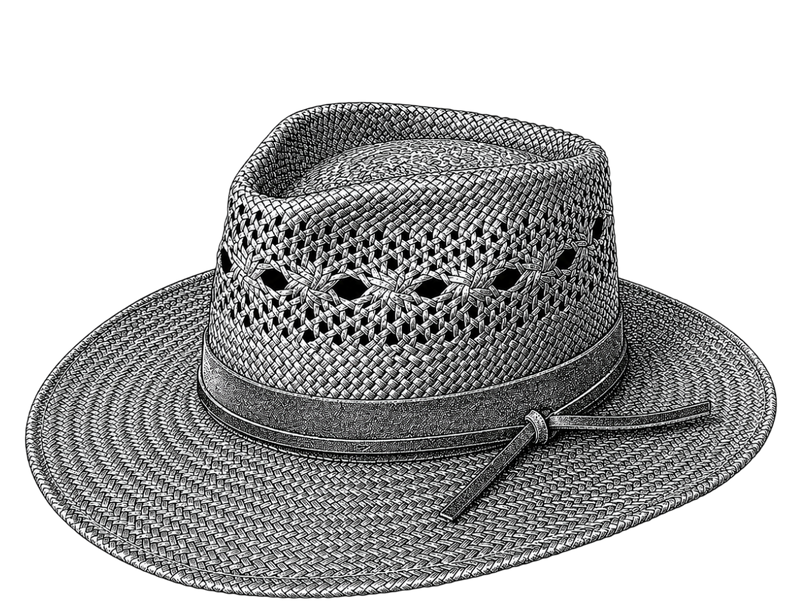
The seasonal split sounds obvious — straw for summer, wool for winter — but the actual crossover points are narrower than most people assume, and getting them wrong means an uncomfortable few weeks each year.
The Real Temperature Thresholds
- Above 75°F (24°C): Straw's breathability becomes noticeably more comfortable than wool felt.
- 55–75°F (13–24°C): Transitional zone — lighter wool felt or unlined straw both work; personal heat tolerance decides.
- Below 55°F (13°C): Wool felt's insulation becomes necessary; straw offers no thermal benefit at this range.
Insight: The transitional 55–75°F zone is where most seasonal-hat mistakes happen — buyers default to calendar season rather than actual temperature, ending up overheated in early summer or underdressed in late autumn.
Quick Decision Table
| Condition | Better Choice |
|---|---|
| Direct sun, high heat | Straw — ventilation matters most |
| Overcast, mild cold | Lightweight wool felt |
| Wind exposure, any season | Wool felt — straw offers no wind barrier |
The One-Hat Compromise
If choosing only one for year-round use in moderate climates, a mid-weight wool felt handles a wider temperature range than straw, which becomes genuinely uncomfortable below 55°F.
Bottom line: Decide by actual temperature and wind exposure, not calendar season. The 55–75°F range is where most buyers choose wrong.
Frequently Asked Questions
At what temperature does straw become more comfortable than wool felt?
Above approximately 75°F (24°C) in direct sun or high humidity, straw's breathability becomes a meaningful comfort advantage. In the 55–75°F transitional zone, the difference depends on personal heat tolerance and whether you're in direct sun or shade. Below 55°F, straw offers no thermal benefit and feels cold at the head within minutes of wind exposure.
Can a wool hat be worn comfortably in summer?
In mild summers or predominantly shaded environments, yes. Lightweight wool felt (80–100g) is less oppressive than heavier grades and handles spring-summer temperatures below 75°F without discomfort. In direct sun above 80°F or high humidity, the natural breathability of straw makes a perceptible difference that lightweight wool cannot fully compensate for.
What is the single best hat material for moderate climates with variable seasons?
Mid-weight wool felt (100–120g) handles the widest temperature range of any single hat material — providing meaningful warmth in cold months and remaining manageable in spring and autumn. It's the practical choice for climates where temperature swings between 40°F and 70°F across seasons and where owning one hat rather than two is the goal.
Related Reading
- Panama Hat vs. Straw Boater: Which Holds Up Better in Summer Heat?
- Wide Brim Sun Hats: Which Actually Block UV Rays (Tested)
- What's the Most Breathable Hat Material for Hot Climates?
Shop Hatloom
Our collection covers both straw and wool felt options with material weight and temperature-range guidance in every listing — so the seasonal decision is data-driven before you buy.