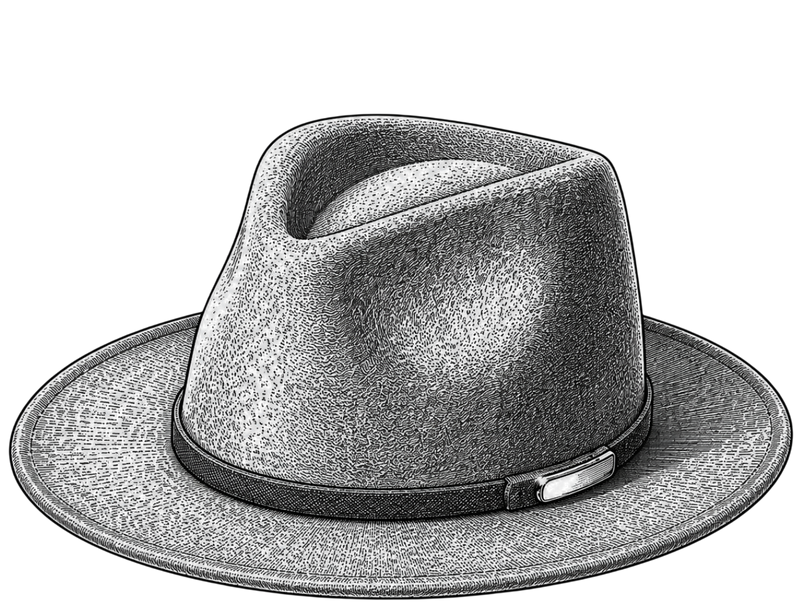
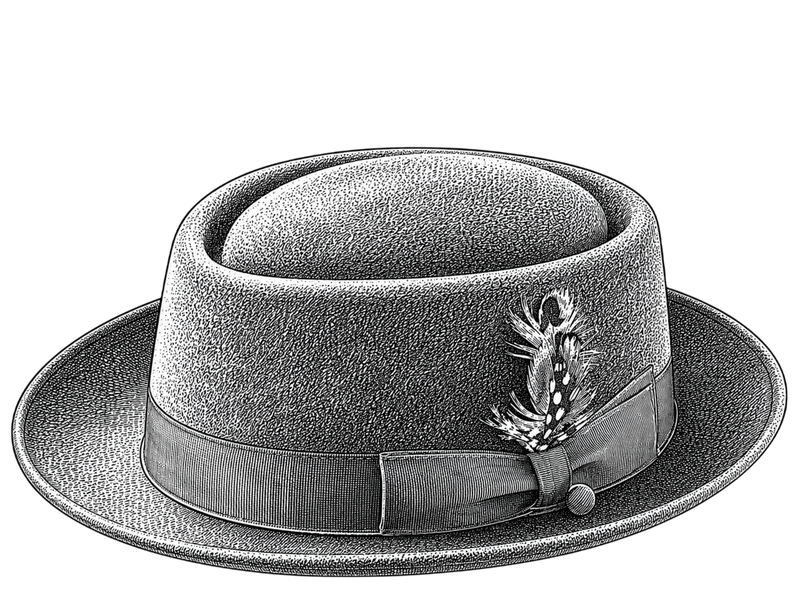
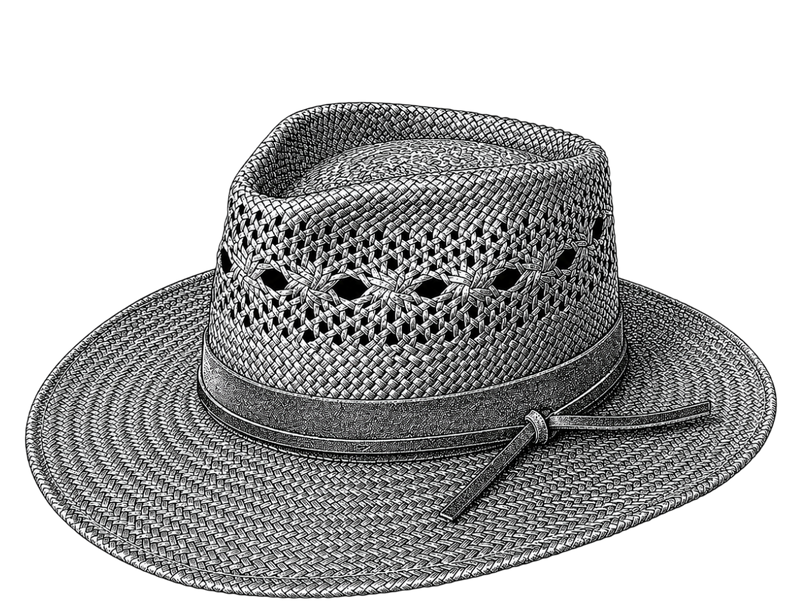
Felt isn't woven. It's formed — a distinction that explains why felt hats behave so differently from woven fabric ones.
The Process, Step by Step
- Fiber sorting: Raw wool is sorted by grade and cleaned of debris and excess lanolin.
- Carding: Fibers are mechanically aligned into a loose, even web.
- Felting: Heat, moisture, and pressure cause the fiber's natural scales to interlock, forming a dense, non-woven material — this is what makes felt felt.
- Blocking: The felted material is shaped over a wooden hat block using steam and pressure to form the crown and brim.
- Finishing: Edges are trimmed, bound, or hand-finished, and a sweatband is added.
Fact: Wool fiber has a natural scaled surface structure. When agitated under heat and moisture, these scales physically interlock with neighboring fibers — this mechanical interlocking, not adhesive or stitching, is what holds felt together as a single material.
Why This Matters for Quality
| Process Step | Quality Impact |
|---|---|
| Fiber grade at sorting | Determines final softness and durability |
| Felting density/pressure | Determines shape retention and water resistance |
| Blocking precision | Determines final fit and brim curl accuracy |
Bottom line: Felt quality is determined at every stage — from raw fiber grade through felting density to blocking precision. Each step compounds into the final hat's durability and shape.
Frequently Asked Questions
Why does felt have better shape retention than woven fabric in hats?
Because felt is a mechanically interlocked structure, not a grid of over-and-under threads. When woven fabric is compressed or bent, the threads can shift relative to each other, causing the structure to deform permanently. Felt's interlocked fiber network distributes stress across millions of bond points rather than through a grid — the result is a material that holds three-dimensional form under wear conditions that would distort woven fabric.
What part of the felt-making process most affects a hat's durability?
Felting density — the amount of fiber and pressure applied during the felting stage. A denser felt has more fiber per unit volume and more interlocking bonds per area, which translates directly to better shape retention, better weather resistance, and longer hat life. Density is determined during the felting stage but is set by fiber grade at sourcing — which is why higher-quality felt hats start with better raw fiber, not just better finishing.
Is machine-made felt hat quality inferior to handmade?
Modern mechanical felt production can achieve consistent density and shape accuracy comparable to handmade in the structural felt stages. The quality differentiators in modern hat production are more often (1) raw fiber grade before felting, (2) blocking precision during shaping, and (3) hand-finishing at the edge and trim stage, rather than the felting process itself. Fully handmade hats can achieve advantages in blocking and finishing that are harder to replicate mechanically, but the felt base material can be consistent regardless.
Related Reading
- What Grade of Wool Felt Do We Use, and Why It Matters
- How Hat Blocking Works: The Technique Behind Every Great Hat
- Wool vs. Fur Felt Hats: Which Is Worth the Upgrade?
Shop Hatloom
Wool felt hats with grade and density disclosed per listing — so the production quality described in this article is verifiable before you buy.