Neither option is universally better. The right choice depends on which trade-off matters more to you — longevity or material sourcing values.
Honest Trade-Off Comparison
| Factor | Genuine Leather | Vegan Leather |
|---|---|---|
| Longevity | Softens and improves with age | Tends to crack/peel over years |
| Sourcing | Animal-derived | Animal-free, often petroleum-based |
| Initial feel | Natural grain, variable texture | Consistent, uniform texture |
| Cost | Generally higher | Generally lower |
Insight: The vegan leather category has improved significantly with newer plant-based formulations, but most mass-market vegan leather is still petroleum-derived polyurethane, which carries its own environmental trade-offs rather than being a straightforwardly "greener" choice.
What We've Found
For trims expected to last many years, genuine leather's aging behavior (softening rather than cracking) generally outperforms standard vegan leather. For buyers prioritizing animal-free materials, vegan leather is a legitimate choice with the trade-off of likely needing replacement sooner.
Bottom line: This isn't a simple "better or worse" comparison — it's a genuine trade-off between longevity and material sourcing values, and we lay out both honestly rather than picking a side.
Frequently Asked Questions
What is vegan leather actually made from, and is it environmentally better than genuine leather?
Most mass-market vegan leather is polyurethane (PU) or polyvinyl chloride (PVC) — petroleum-derived synthetics. PU is more flexible and has better initial feel; PVC is harder and less skin-friendly. A small and growing category uses plant-based materials (cactus, apple, mushroom leather) with genuinely lower environmental footprints. But the majority of products sold as "vegan leather" are PU/PVC, which has its own environmental impact through production chemistry and non-biodegradability. The environmental comparison is not straightforward, and claiming vegan leather is automatically better for the planet requires specifying the actual material.
How long does vegan leather last on a hat trim vs. genuine leather?
Genuinely different failure timelines. Quality genuine leather at a hat trim — a full-grain piece that's not over-treated — typically lasts 8–15+ years with basic care, softening and developing patina. PU vegan leather at a hat trim typically begins showing surface cracking or peeling within 2–5 years of regular use, depending on UV and sweat exposure. This is a structural durability difference, not a care issue — the PU coating layer separates from its backing as the polymer degrades. For a hat you intend to wear for years, genuine leather's durability is a meaningful practical advantage.
Are there vegan leather options that match genuine leather for longevity?
Emerging plant-based alternatives come closer. Materials like mycelium leather (mushroom-derived) and Desserto (cactus-based) have better flexibility and aging characteristics than PU/PVC, without the polymer degradation failure mode. These materials are significantly more expensive and less widely available, but represent a genuine improvement over standard vegan leather for applications where longevity matters. If animal-free and durable are both requirements, specifying plant-based (not just "vegan") is the right distinction to make when buying.
Related Reading
- What's the Difference Between Genuine Leather and Faux Leather Hat Trims?
- The Leather Sourcing Standards Behind Our Hat Bands and Trims
- The Anatomy of a Hat: Every Component Explained
Shop Hatloom
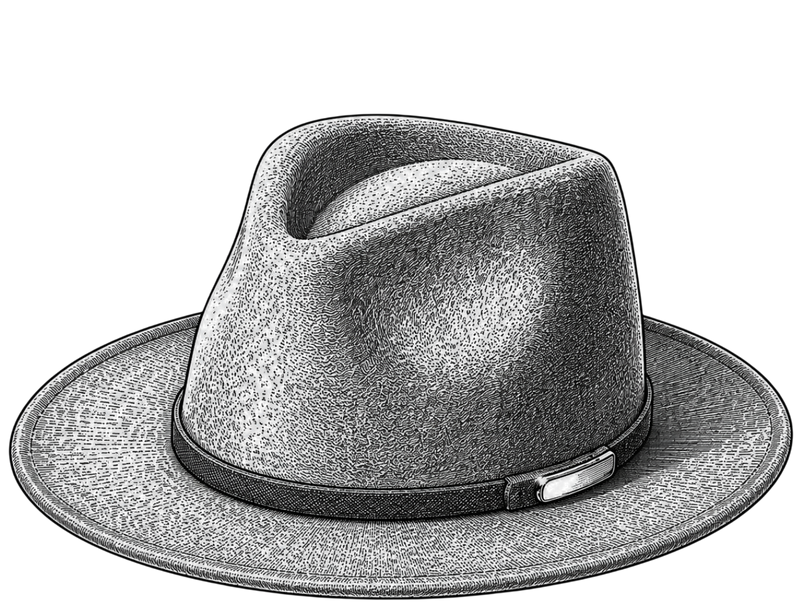
Hats with trim material type specified per listing — genuine leather or vegan leather clearly labeled with the actual material so you can choose based on your priorities, not assumptions.