"Genuine leather" is a legally loose term. The actual quality variable is tannage method and hide grade — details most product listings skip entirely.
What Determines Leather Quality
- Hide grade: Full-grain leather retains the original hide surface and is the most durable; lower grades are sanded or corrected, reducing strength and character.
- Tannage method: Vegetable-tanned leather develops a richer patina over time; chrome-tanned is faster to produce and more uniform but ages differently.
- Thickness consistency: Even thickness across a hide indicates more careful grading and selection during sourcing.
Fact: Full-grain leather is the only grade that retains the hide's natural fiber structure intact, which is why it's both the most durable and the most likely to show natural markings rather than a uniform, sanded surface.
Our Sourcing Priorities
| Factor | Standard We Prioritize |
|---|---|
| Hide grade | Full-grain where used |
| Tannage | Disclosed, consistent across batches |
| Sourcing transparency | Specified region/process, not vague claims |
Bottom line: "Genuine leather" alone doesn't indicate quality — hide grade and tannage method are the specifics that actually determine durability and aging characteristics.
Frequently Asked Questions
What is full-grain leather and why does it matter for a hat band?
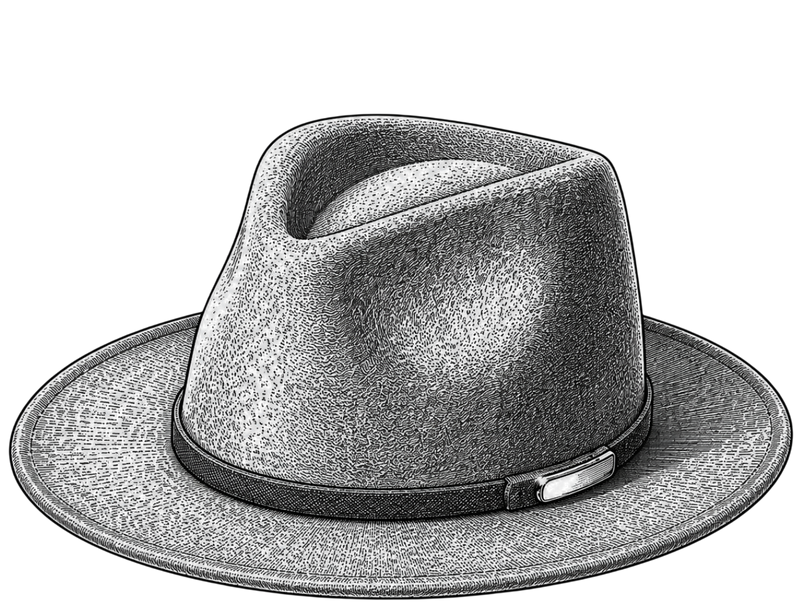
Full-grain leather retains the outermost layer of the hide with the natural fiber structure intact. That fiber structure is the strongest part of the hide — sanding or correcting the surface (as with corrected-grain or bonded leather) removes it and reduces durability. For a hat band that experiences repeated flexing, sweat exposure, and UV, full-grain's intact fiber structure lasts significantly longer than corrected grain before cracking or delaminating.
What's the difference between vegetable-tanned and chrome-tanned leather for hat trims?
Vegetable tanning uses plant-derived tannins and takes weeks; chrome tanning uses chromium salts and takes hours. Vegetable-tanned leather develops a rich patina with age and exposure, darkening and gaining character. Chrome-tanned leather is more uniform in color and texture, more consistent across batches, and more water-resistant initially, but doesn't develop the same aging character. For a hat band worn long-term, vegetable tanning produces the more distinctive aged look; chrome tanning produces more consistent initial color.
How can I tell leather quality from a hat band product listing?
Ask for hide grade and tannage method. A listing that discloses both specifically — "full-grain, vegetable-tanned" — is providing verifiable information. A listing that says "genuine leather band" without further specification is using the minimum legal standard, which includes corrected grain and bonded leather. If the seller can't answer the grade question specifically, the leather is likely not full-grain.
Related Reading
- What's the Difference Between Genuine Leather and Faux Leather Hat Trims?
- The Anatomy of a Hat: Every Component Explained
- How to Store a Felt Hat So It Keeps Its Shape
Shop Hatloom
Hats with leather trim or bands list the leather grade and tannage method per product — so you can evaluate the sourcing before it arrives.