Most hat-etiquette anxiety comes from outdated, overly rigid rules. The actual modern standard is simpler and more contextual.
Modern Practical Guidelines
- Indoors, formal meetings: Generally remove the hat — still the most widely expected norm in client-facing or formal indoor contexts.
- Indoors, casual office environments: Increasingly acceptable to keep on, particularly in creative or relaxed workplace cultures.
- Outdoors, any context: No removal expected — outdoor hat-wearing carries no formal etiquette restriction.
Insight: The traditional "remove your hat indoors" rule originated in formal social contexts and has weakened significantly in casual professional environments — the deciding factor today is the specific environment's formality, not a universal rule.
Quick Reference
| Setting | General Guidance |
|---|---|
| Formal client meeting, indoors | Remove |
| Casual/creative office, indoors | Generally acceptable to keep on |
| Outdoor work settings | No restriction |
Bottom line: Read the specific environment's formality level rather than applying a single universal rule — modern professional hat etiquette is contextual, not absolute.
Frequently Asked Questions
Where did the "remove your hat indoors" rule come from, and does it still apply?
It originated in medieval European customs around respect, status, and military practice (soldiers removing helmets as a sign of non-aggression and respect). It was codified into general social etiquette through the 18th and 19th centuries when hats were near-universal daily wear for men. Today, with hats being optional rather than universal and dress codes varying widely by environment, the rule has weakened to a default courtesy in formal settings rather than an absolute social requirement. It still applies as expected behavior in very formal contexts; in casual and creative professional environments, it's largely obsolete.
Is it ever rude to keep a hat on in a professional meeting?
In client-facing, formal indoor meetings: there's still a demographic of older professionals and clients for whom hat removal is an expected sign of respect. Keeping a hat on in that specific context can register as inattentive to social cues, regardless of your intent. In internal meetings with younger colleagues in casual companies: almost certainly not an issue. The calculation is: who is in the room and what formality signals are they using? Match your behavior to the room's norms, not a universal rule.
What about hat etiquette at formal events like weddings or funerals?
Weddings: typically acceptable to wear stylish hats to weddings, particularly in garden or outdoor ceremony contexts — this is culturally well-established, especially in British and Commonwealth traditions. Remove during indoor ceremonies as appropriate to the venue. Funerals: outdoor funerals with no restriction; formal indoor services, remove as you would in any formal indoor setting as a sign of respect. The hat itself signals consideration; the decision to remove it signals respect for the specific moment's gravity.
Related Reading
- Why Hats Are Making a Comeback in Modern Office Culture
- How Do I Style a Hat Without Looking Like I'm Trying Too Hard?
- The Psychology of Wearing a Hat: Confidence, Identity, and First Impressions
Shop Hatloom
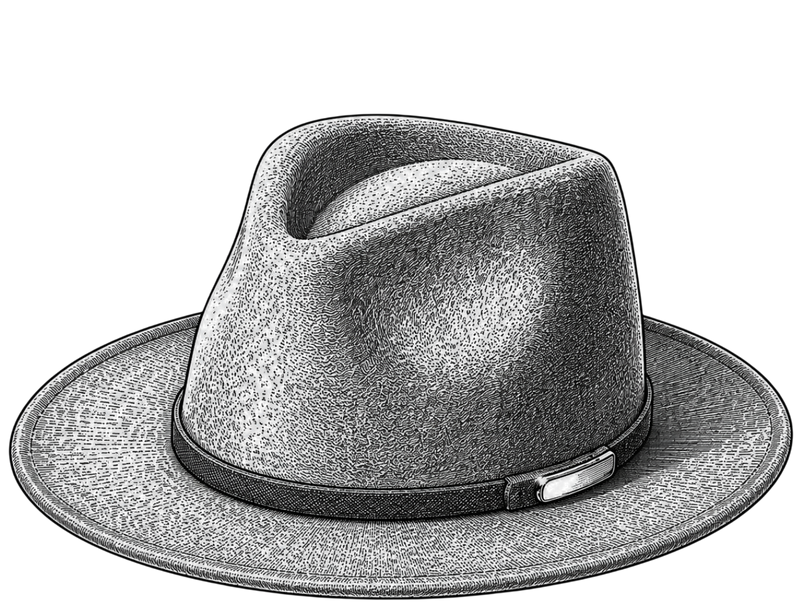
Professional-context hats in structured silhouettes — fedoras and flat caps that work in business-casual and creative settings with or without removal etiquette concerns.