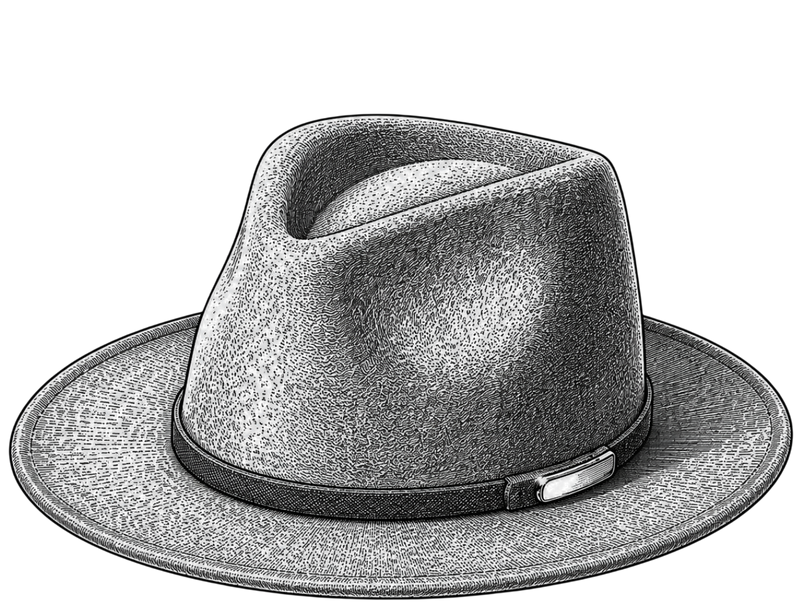
Shape retention isn't something you can verify by looking at a finished hat sitting on a shelf. It only shows up under stress — which is exactly why it needs to be tested deliberately.
What Shape Retention Testing Actually Checks
- Compression recovery: Gently flattening the crown by hand and checking how fully and quickly it returns to shape.
- Brim curl memory: Pressing the brim flat and observing whether it returns to its set curl.
- Repeated-handling simulation: Simulating the kind of folding and handling a hat experiences in shipping and storage.
Insight: A hat that looks structurally perfect when first blocked can still fail shape-retention testing if the felting density was inconsistent — visual inspection alone misses this, which is why physical compression testing is necessary.
Pass/Fail Criteria
| Test | Pass Criteria |
|---|---|
| Crown compression | Returns to shape within seconds, no lasting dent |
| Brim curl | Returns to set curl after manual flattening |
| Handling simulation | No permanent creasing after simulated transit handling |
Bottom line: Shape retention has to be tested under stress, not assumed from a finished hat's static appearance — it's the difference between a hat that looks right on day one and one that still looks right a year later.
Frequently Asked Questions
Why does a felt hat lose its shape, and what determines how well it holds?
Shape loss in felt hats has two causes: (1) moisture exposure without proper reshaping while damp — wet felt is pliable and can reset in a distorted position; (2) felting density below the threshold needed to resist mechanical deformation under normal wear. The second cause is material-level and determined at the felt-making stage. A hat with insufficient density will gradually distort under repeated compression from storage and handling even without moisture exposure.
Can a felt hat that has lost its shape be restored?
Usually yes, with steam and blocking. Steaming the felt until pliable, then reshaping by hand and allowing to cool on a hat block or curved support, restores shape in most cases. The more times a hat has been distorted and re-dried in a distorted position, the harder full restoration becomes — repeated distortion-and-drying cycles can create permanent memory in the fiber interlocking. Early intervention produces better results than repeated shape loss.
How do I prevent my felt hat from losing its shape during storage?
Store upside-down on the crown or on a hat block, never brim-down. The brim is the most vulnerable shape element under sustained pressure — storing brim-down with weight pressing on it, even from inside a hat box, can permanently flatten the curl over weeks. A hat box provides protection from dust and moisture but doesn't prevent shape loss if the hat is resting incorrectly inside it. Crown-down or blocked storage solves the problem entirely.
Related Reading
- How to Store a Felt Hat So It Keeps Its Shape
- Inside the Wool Felt-Making Process: From Raw Fiber to Finished Hat
- What Grade of Wool Felt Do We Use, and Why It Matters
Shop Hatloom
Every wool felt hat tested for crown recovery and brim curl memory before shipping — so the shape you see in the listing photo is the shape that arrives.