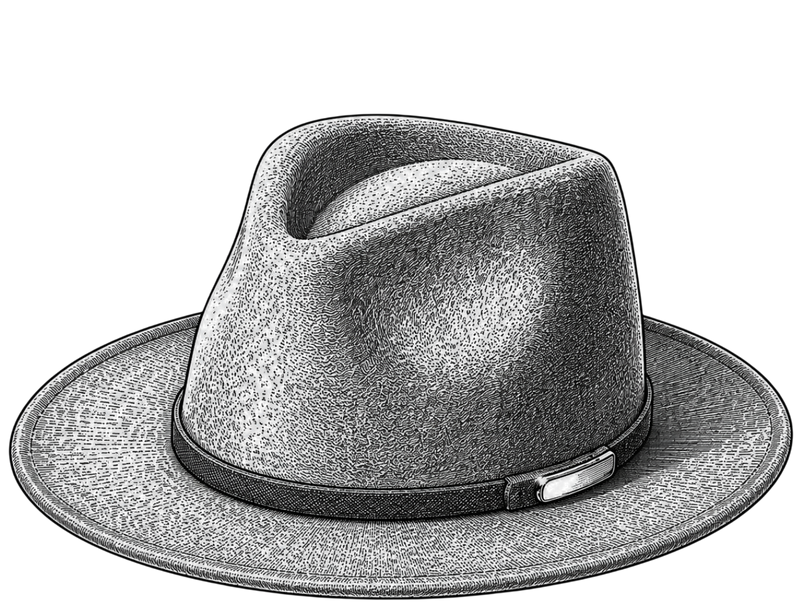
"Panama hat" is widely used as a generic style name. A genuine Panama refers to something much more specific — and most products sold under that name don't meet the definition.
The Real Definition
A genuine Panama hat is woven from toquilla straw, a fiber from a specific palm-like plant traditionally processed and hand-woven, historically associated with Ecuador despite the misleading name's origin in export history.
What's Usually Sold Instead
| Product Label | Actual Material | Genuine Panama? |
|---|---|---|
| "Panama-style hat" | Often paper straw or other plant fiber | No — style reference only |
| "Genuine Panama" | Should be toquilla straw, hand-woven | Yes, if accurately labeled |
| Unlabeled "straw hat" | Varies widely, often synthetic-blend | Unlikely |
Fact: A genuine toquilla straw Panama can be tightly rolled without cracking, due to the fiber's natural flexibility — a simple, verifiable test that most "Panama-style" imitations using stiffer substitute fibers cannot pass.
How to Verify Before Buying
Ask specifically whether the product uses toquilla straw and whether it's hand-woven. Vague "Panama-style" language without a specific fiber name is a signal it's a style reference, not the genuine material.
Bottom line: "Panama" is frequently used as a style descriptor rather than a material guarantee — verify the actual fiber (toquilla straw) before assuming authenticity.
Frequently Asked Questions
Why is it called a Panama hat if it's made in Ecuador?
Historical export routing. Toquilla straw hats have been woven in Ecuador for centuries, but their widespread international exposure came during the 19th and early 20th centuries through Panama, which was a major transit hub for trade and travelers heading to the California Gold Rush and later working on the Panama Canal. U.S. President Theodore Roosevelt was famously photographed wearing one during his 1906 Canal visit — the association with Panama stuck despite the hats' Ecuadorian origin. Ecuador has worked to reestablish the geographic designation; in 2012, UNESCO recognized Ecuadorian toquilla straw weaving as Intangible Cultural Heritage.
How can I tell if a straw hat is genuine toquilla weave vs. paper straw?
Flexibility and surface texture. Toquilla straw is a natural plant fiber with a slightly irregular, organic surface texture and significant flexibility — it can be rolled tightly without cracking. Paper straw has a more uniform, slightly shiny surface and is notably stiffer; it will crinkle or crack under tight rolling. If you can flex a section of the brim toward the crown without the weave cracking or crinkling audibly, it's likely a natural fiber. Paper straw shows damage under the same test.
Is a "Panama-style" hat worth buying if it's not toquilla straw?
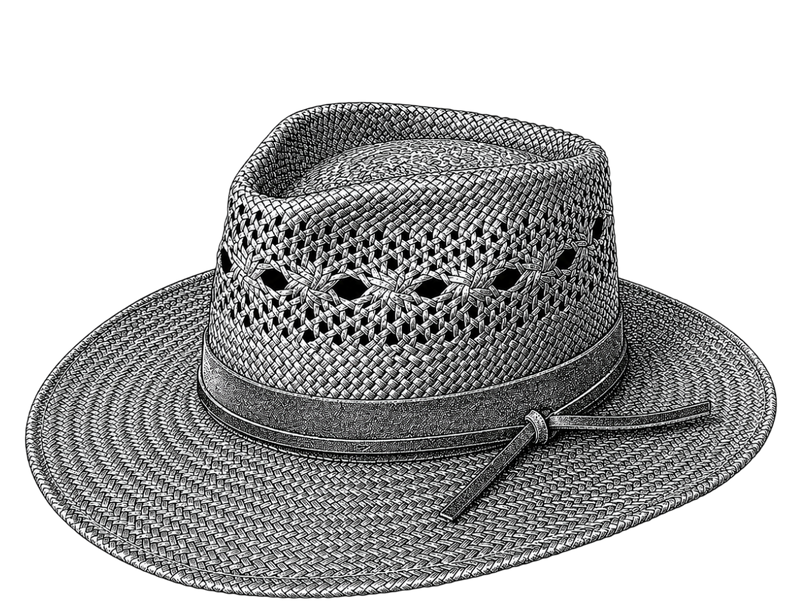
Yes, for occasional wear at a lower price point — if you understand what you're buying. A paper straw or seagrass hat in the Panama silhouette (wide brim, center-dent crown) provides the visual style without the material properties of genuine toquilla. It will be stiffer, less durable, and cannot be rolled or packed flat. For a summer hat you'll wear occasionally and store flat, that trade-off may be acceptable. For regular wear, packing, and long-term use, genuine toquilla is substantially better.
Related Reading
- Panama Hat vs. Straw Boater: The Complete Comparison
- Straw Weaving Techniques: What Separates a $20 Hat From a $200 One
- What's the Most Breathable Hat Material for Hot Climates?
Shop Hatloom
Straw hats with fiber type specified per listing — toquilla vs. seagrass vs. paper straw clearly labeled so you know exactly what you're buying.