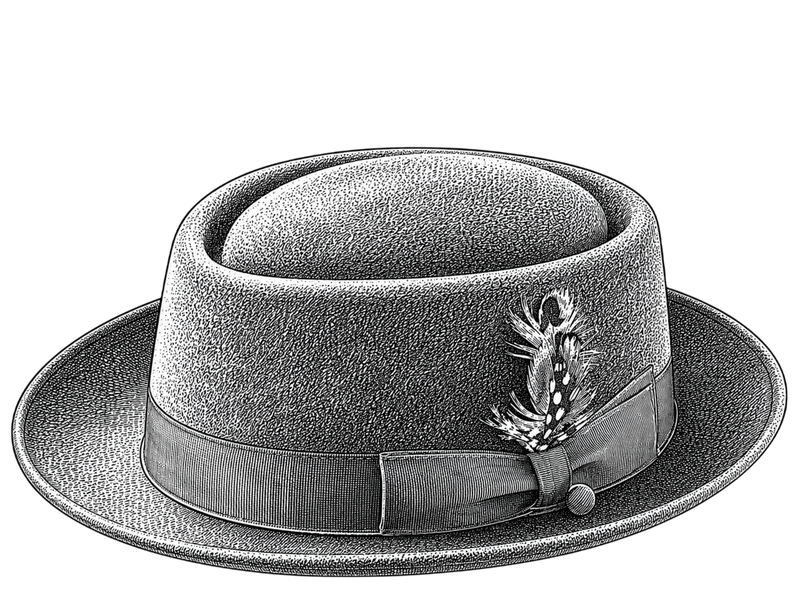
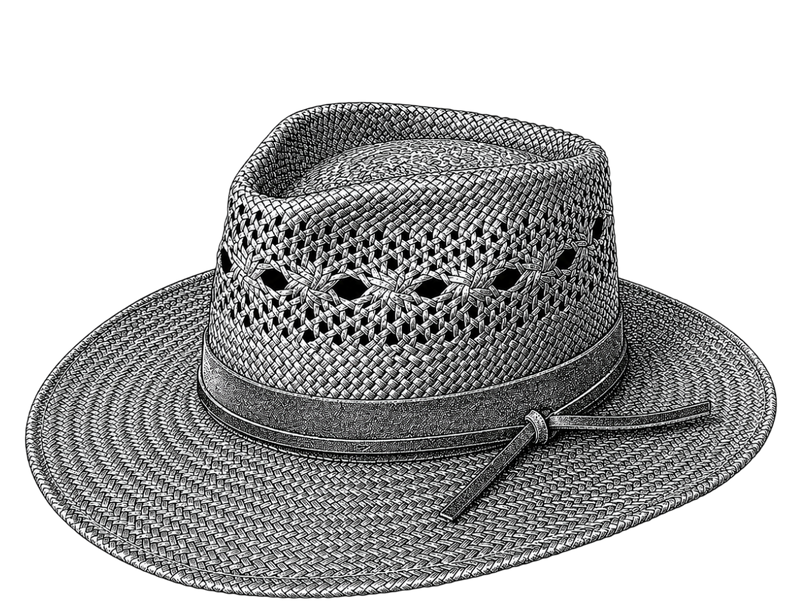
Both signal formality. They do not signal the same level of formality, and wearing the wrong one is more noticeable than wearing no hat at all.
The Formality Hierarchy
- Top hat: Reserved for the most formal tier — white tie, morning dress, traditional weddings, formal equestrian events.
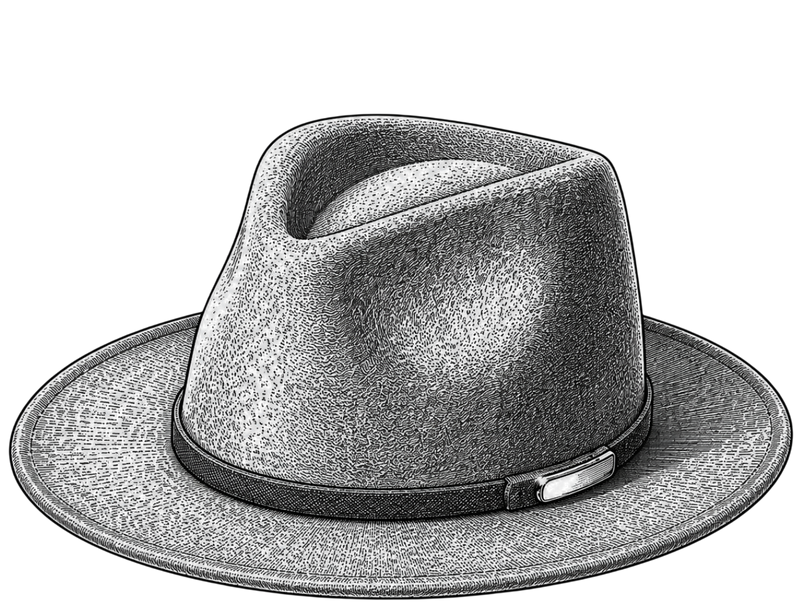
- Homburg: One tier below — business formal, dark suits, evening events that don't require white or black tie.
Fact: Wearing a top hat to an event calling for a homburg reads as costume-like overdressing. Wearing a homburg where a top hat is expected reads as underdressing. The two are not interchangeable substitutes.
Construction Differences
| Feature | Top Hat | Homburg |
|---|---|---|
| Crown height | Tall, cylindrical | Moderate, creased lengthwise |
| Brim | Flat, narrow, curled edge | Curled, slightly wider |
| Typical material | Silk plush or fur felt | Fur felt |
How to Decide
Check the event's dress code language. "White tie" or "morning dress" calls for a top hat. "Black tie" or "formal business" calls for a homburg — or often no hat at all in modern settings.
Bottom line: Match the hat to the explicit dress code tier, not personal preference. These two styles occupy different formality brackets and are not interchangeable.
Frequently Asked Questions
Can a top hat be worn at a modern formal wedding?
Yes, but only if the dress code explicitly specifies morning dress or white tie. Most modern formal weddings have dropped this requirement. Arriving in a top hat when the dress code doesn't call for it reads as theatrical rather than formal — it draws attention to the choice rather than the occasion.
What material is used in a quality Homburg hat?
Fur felt is the traditional and most durable choice — typically rabbit fur felt for mid-tier pieces and beaver fur felt for investment-grade. The fur felt holds the crown's lengthwise crease sharply over time. Wool felt Homburgs exist at lower price points but soften at the crease with wear, losing the defining silhouette.
Is the Homburg still appropriate in modern professional settings?
Rarely for daily business wear, but it remains appropriate for high-protocol occasions: state events, certain religious ceremonies, and traditional formal functions. In most modern business contexts, it reads as a deliberate personal style statement rather than a standard formality marker — which can be a strength or a risk depending on the environment.
Related Reading
- Formal Hats: A Complete Guide to Top Hats, Homburgs, Bowlers & Dress Codes
- Best Hats to Wear With a Suit: A Modern Menswear Guide
- The Unspoken Etiquette of Wearing a Hat in Professional Settings
- How Much Should You Actually Spend on a Wool Hat? A Price Tier Breakdown
Shop Hatloom
Our formal hat collection is curated for dress-code precision — each style listed with its formality tier so you can match the hat to the event without guessing.