Last updated: September 2026 · By The Hatloom Team
Quick answer: Straw hats are woven from several different fibres — toquilla (the Panama), sennit (the boater), seagrass, raffia and paper straw — and quality comes down to the fibre and how tightly it is woven. At Hatloom, that means genuine toquilla and natural fibres over paper-straw substitutes, judged by weave density rather than price alone.
Straw Hat Types, Compared
| Straw | Origin / fibre | Character | Best for |
|---|---|---|---|
| Toquilla (Panama) | Carludovica palmata, Ecuador | Fine, pliable, can be superfino-grade | Panama hats — premium, breathable, packable |
| Sennit | Flat-braided straw | Stiff, crisp, holds a rigid shape | Boater hats — structured, formal |
| Seagrass | Woven grass fibre | Rustic, textured, hard-wearing | Casual wide-brim and fedora styles |
| Raffia | Raffia palm leaf | Soft, flexible, lightweight | Packable sun hats and floppy styles |
| Paper straw | Twisted paper fibre | Cheapest, brittle, cracks with age | Budget seasonal wear only |
How to Judge a Straw Hat's Quality
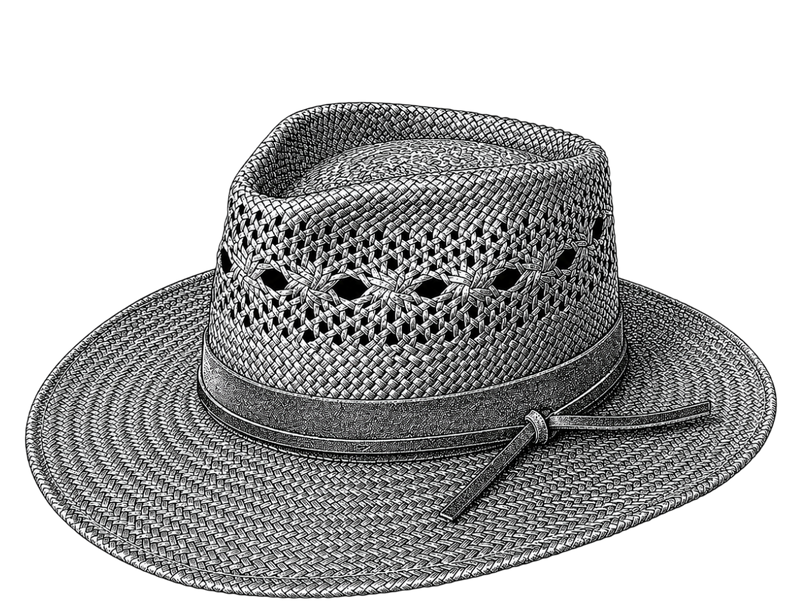
- Weave density: hold the hat up to a light — the tighter the weave and the less light through the crown, the higher the quality (and the better the sun protection).
- No glue at the joins: a genuine handwoven straw hat has no visible glue or stiffening agent where the weave meets. Glue is a sign of a cheap, assembled hat.
- Spring test: quality toquilla flexes and springs back to shape; brittle paper straw creases and cracks at the brim edge.
- Even rows: very slight irregularities signal hand construction; perfectly uniform, paper-like rows usually mean a machine-made imitation.
Insight: weave density is the single best quality signal in a straw hat — it drives durability, shape retention and UV protection all at once. Judge the weave before the label or the price.
Common Straw Hat Styles
- Panama — toquilla straw, lightweight and packable; the benchmark summer hat.
- Boater — stiff sennit straw, flat crown and brim; structured and formal.
- Wide-brim sun hat — maximum shade for the face, ears and neck.
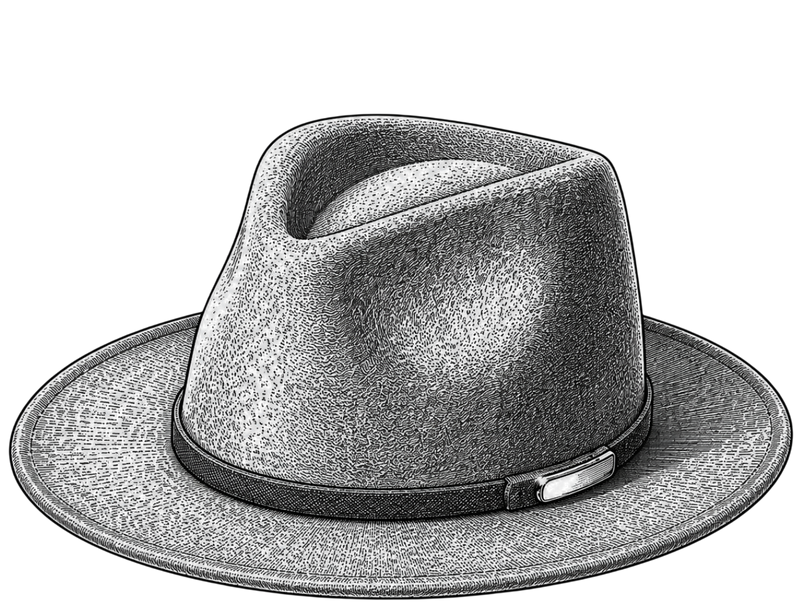
- Straw fedora / trilby — a summer take on the classic creased-crown shape.
- Straw bucket — casual, packable, 360° brim.
Caring for a Straw Hat
Store a straw hat upside down on its crown or on a hat stand — never resting on the brim, which flattens over time. Keep it dry; prolonged moisture weakens the fibres. To reshape, lightly mist with water, form by hand, and let it dry on a stand.
Bottom line: choose your straw by use — toquilla for a premium packable Panama, sennit for a structured boater, raffia or seagrass for casual shade — and judge any straw hat by its weave density before its price. Avoid paper straw for anything you want to keep.
Frequently Asked Questions
What is the best type of straw for a hat?
Toquilla straw — the fibre used for genuine Panama hats — is the finest and most versatile. It is pliable enough to weave in very fine grades, breathable, and durable enough to last years with care. Sennit straw is best where a stiff, formal shape matters (a boater), while raffia and seagrass suit casual, lightweight styles. Paper straw is the cheapest and least durable.
How can I tell if a straw hat is good quality?
Hold it up to a light: a tight weave that lets little light through is high quality and more sun-protective. Check the weave joins for glue (there should be none on a handwoven hat), and flex the brim — quality toquilla springs back, while brittle paper straw creases and cracks. Very slight weave irregularities indicate genuine hand construction.
Are paper straw hats any good?
Only for short-term, budget seasonal wear. Paper straw is inexpensive and lightweight but brittle — it creases easily and tends to crack at the brim edge within a season or two. For a straw hat you want to keep, choose a natural fibre such as toquilla, seagrass or raffia instead.
How do I care for a straw hat?
Store it on its crown or a hat stand rather than on the brim, keep it dry, and avoid crushing it. To reshape, mist lightly with water, form by hand, and let it air-dry on a stand away from direct heat. Prolonged moisture and heat both weaken straw fibres.
What is the difference between a Panama and a straw boater?
A Panama is woven from soft, pliable toquilla straw and is breathable and packable; a boater uses stiff sennit straw for a rigid, formal silhouette. The Panama is better for comfort and heat; the boater for structured formalwear. See our full Panama vs. boater comparison for the details.
Related Reading
- Panama Hat vs. Straw Boater: Which Holds Up Better in Summer Heat?
- Sun Protection Hats: The Complete UPF Guide for Men & Women
- Straw Hat vs. Wool Hat: Which Season Dictates Your Next Purchase?
- What's the Most Breathable Hat Material for Hot Climates?
Shop Hatloom
Hatloom's straw range spans genuine toquilla-straw Panamas, boaters, wide-brim sun hats and straw fedoras — each listed with fibre and weave details so you can judge quality before you buy.