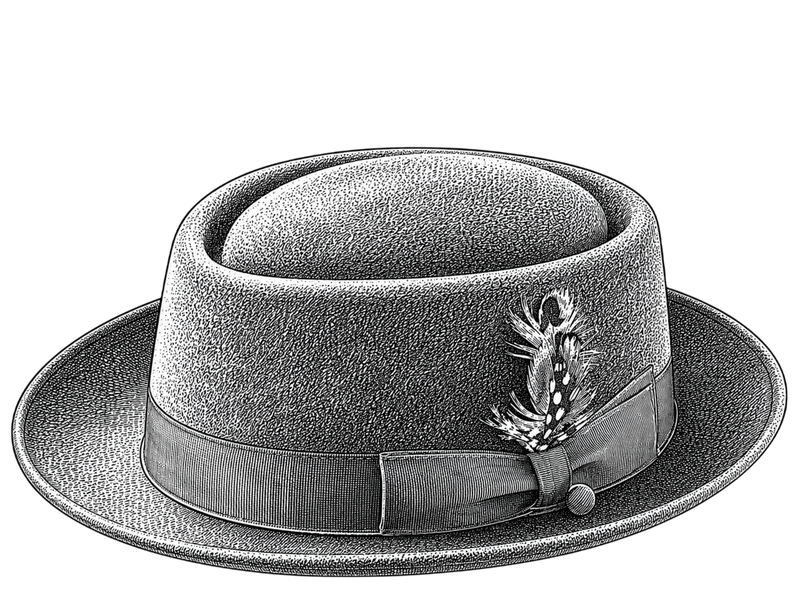
The distinction between wool felt and fur felt is the most important quality variable in hat buying that most consumers cannot identify. The two materials look similar from a distance, are often priced similarly at the lower end, and are frequently described with vague marketing language that obscures which is which. Knowing the difference -- and knowing how to identify it at purchase -- changes the quality of every felt hat decision you make.
The Core Difference
Wool felt is made from sheep's wool fibres. Fur felt is made from the underfur of animals -- most commonly rabbit, sometimes beaver, occasionally combinations of both. The fibres themselves are physically different at the microscopic level, and these differences determine the hat's performance characteristics.
Wool fibres have cuticular scales (the microscopic surface features that allow felting) but these scales are less pronounced than those on rabbit or beaver fur. Rabbit underfur has more pronounced, more densely packed scales that interlock more tightly during the felting process. Beaver fur has the most pronounced scales of any commercially available hat material and felts into the densest, most water-resistant material.
The result of these fibre differences in the finished hat:
- Density: fur felt is denser than wool felt at equivalent thickness -- more fibres per unit volume, more tightly interlocked
- Water resistance: fur felt repels water more effectively. A quality rabbit felt hat can be worn in light to moderate rain without damage; a wool felt hat absorbs moisture faster and requires more careful rain avoidance
- Shape retention: fur felt holds a blocked shape more permanently. The tighter fibre matrix is more resistant to deformation from pressure and impact
- Surface quality: fur felt has a finer, smoother surface texture with a slight natural sheen. Wool felt has a slightly more matte, coarser surface
- Weight: fur felt is lighter than wool felt of equivalent coverage because the denser fibre matrix achieves the same structural rigidity with less material

How to Identify the Difference at Purchase
Without laboratory testing, several physical tests help distinguish wool from fur felt:
The Surface Touch Test
Run the tips of your fingers lightly across the hat surface in a circular motion. Fur felt (particularly rabbit felt) has a slightly silky, smooth resistance that wool felt does not. Wool felt tends to have more fibre pilling visible under close inspection and a slightly drier texture. This requires handling multiple hats to calibrate your sense of the difference -- the first time is harder than after you have compared several examples.
The Water Test
A single drop of water on a fur felt hat will bead and roll off slowly. The same drop on a wool felt hat will be absorbed faster. This is a reliable distinction that can be performed discretely in a shop with a fingertip of water.
Weight and Rigidity
Gently press the crown of a fur felt hat -- it should have a firm resistance and spring back immediately. A wool felt hat may have slightly less resistance and less immediate recovery. This is particularly apparent in the brim: a fur felt brim maintains its position under light pressure; a lower-quality wool felt brim may flex more easily.
Price and Description
At equivalent hat styles, fur felt hats are more expensive than wool felt hats. Entry-level fur felt (rabbit) starts at approximately 60-80 EUR; entry-level wool felt is available from 30-50 EUR. Beaver felt adds a further premium. A hat priced at 25-40 EUR and described as felt without specifying the material is almost certainly wool felt or a wool-synthetic blend.
What Hat Listings Should Say
A confident hat retailer describes the felt material specifically. What to look for:
- Transparent: 100% rabbit felt, beaver-rabbit felt blend, 100% wool felt, merino wool felt
- Vague but neutral: quality felt, premium felt (may be either; ask)
- Possibly misleading: high quality felt, luxury felt (with no material specification)
If a listing does not specify the felt type and the price is in the quality range (over 60 EUR), contact the seller and ask directly what the felt composition is. A seller who cannot answer this question is not a specialist hat retailer.
Browse hats with clear material specifications at Hatloom.

Frequently Asked Questions
Is fur felt ethically sourced?
Rabbit and beaver fur felt production uses animal by-products from animals that are primarily raised for other purposes (food production for rabbit; trapping programs for beaver). The ethical assessment of fur felt depends on the specific sourcing practices of individual manufacturers. Some hat makers use certified ethical sourcing; others are less transparent. If sourcing ethics is important to your purchasing decision, asking the retailer specifically about their felt supplier's practices is the appropriate path. Alternatives: some hat makers now offer hats in synthetic felt, plant-based materials, or recycled fibre materials that avoid animal products entirely.
Can synthetic felt match the quality of natural felt?
Not currently in terms of water resistance, shape retention, or surface quality for structured hat use. Synthetic felts (polyester, acrylic) lack the natural scale structure of animal fibre that produces the dense interlocking matrix responsible for most natural felt's performance characteristics. Synthetic felt hats are less expensive, machine washable, and animal-product-free -- these are genuine advantages. They are not equivalent in performance to quality natural felt for structured hat wear.
Does beaver felt look noticeably different from rabbit felt?
To an experienced hand, yes. Beaver felt has a slightly finer surface and more pronounced water beading than rabbit felt. The difference is subtle and requires handling both to perceive reliably. Marketing materials from some hat companies claim beaver felt by feel in ways that experienced hat buyers can verify; others describe beaver-rabbit blends with varying beaver content. Pure beaver felt hats are at the top of the quality and price range and should be described specifically.
How do I care for fur felt differently from wool felt?
The care is similar but fur felt is more forgiving in wet conditions. Both should be brushed with a horsehair brush after wearing; neither should be machine washed. Fur felt can tolerate light rain more comfortably and should simply be dried at room temperature without heat after getting wet. Wool felt should be kept dry more carefully and dried slowly if it does get wet to avoid fibre distortion. Both benefit from proper storage (crown supported, away from direct light). The primary advantage of fur felt in care is its greater moisture resilience -- there are fewer wet-weather moments that require immediate attention.