Raffia is the hat material most frequently mislabeled, misidentified, and confused with other natural fibres. Hats described as raffia may actually be paper straw, seagrass, or natural palm leaf -- and the practical differences between these materials are significant in terms of durability, texture, and how they behave in water and sun exposure. Here is what raffia actually is and how it compares to the alternatives.
What Raffia Actually Is
Raffia is a natural fibre made from the leaves of the raffia palm (Raphia farinifera and related species), a feather palm native to Madagascar, sub-Saharan Africa, and introduced to other tropical regions. The fronds of the raffia palm can reach 25 metres in length -- among the longest leaves of any plant species -- and the fibres stripped from the underside of these fronds are the raw material for raffia weaving.
True raffia fibre has distinctive visual and tactile characteristics:
- Pale gold to cream colour in its natural, undyed state
- A slightly rough, matt texture with visible fibre grain
- More rigidity than paper straw, less rigidity than toquilla (Panama) straw
- A characteristic flexibility -- raffia bends without immediately cracking, unlike paper straw
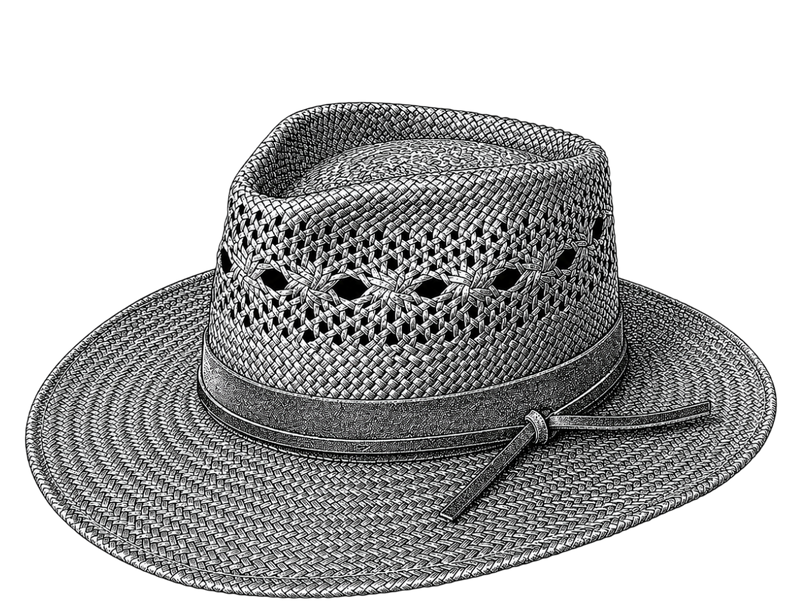
- A woven or plaited structure in which the individual fibre strips are visible to the eye

Raffia vs Paper Straw: The Most Important Distinction
The most commercially significant confusion in summer hat materials is between raffia and paper straw. Paper straw (also called cellulose straw or paper raffia) is made from tightly twisted paper strips coated with a finish to resemble natural fibre. It is manufactured to look similar to raffia or natural straw but is materially different in performance:
- Water tolerance: paper straw softens and deforms when significantly wetted; it can lose shape from a single heavy rain event. Natural raffia has much better water tolerance -- it is dampened rather than destroyed by rain.
- Durability: paper straw cracks and frays faster than raffia under regular use. At crease or bend points (where the hat flexes with movement), paper straw deteriorates faster than natural fibres.
- Recyclability: paper straw, despite its name, is often treated with chemical finishes that make it non-recyclable in standard paper recycling. Untreated natural raffia is biodegradable.
- Texture: paper straw has a slightly smoother, more uniform texture than natural raffia. This can make paper straw look more 'finished' at low resolution but is less varied and natural-looking on close inspection.
Raffia vs Toquilla Straw (Panama Hat Material)
Toquilla straw (the material used in genuine Panama hats) and raffia are both natural plant fibres but from different species and with different characteristics:
- Toquilla: finer weave, more supple when woven, higher quality ceiling (Montecristi Panamas represent the finest natural straw weaving available). Lighter in appearance and feel. Primarily associated with structured hat shapes (Panama, fedora variations in straw).
- Raffia: coarser weave in most commercially available forms, more visible fibre structure, more casual appearance. Typically used in more relaxed, less structured hat shapes (beach hats, packable hats, bucket hat variations).
A raffia hat at its best is a high-quality, natural fibre product with a characteristic casual aesthetic. It is not inferior to a Panama hat -- it occupies a different register: less formal, more textured, and more appropriate for casual beach and outdoor contexts than a Panama hat's smarter-casual range.
Seagrass as a Third Option
Seagrass hat material (from various rush and grass species, most commonly Carex or Cyperus species) is another natural alternative frequently sold alongside or confused with raffia. Seagrass hats have a slightly greenish or khaki natural colour (more so than the gold of raffia), a coarser and more rigid texture, and less flexibility. They are durable, genuinely natural, and appropriate for beach and garden use. The key difference from raffia: seagrass is stiffer and less packable; a seagrass hat holds its shape very well but does not roll or compress without risk of cracking.
How to Identify Raffia
At point of purchase, to verify a hat is genuine raffia rather than paper straw:
- Bend a small section of the brim gently. Natural raffia bends with slight resistance and some fibre sound but does not crack on a single flex. Paper straw may produce a sharper crack or show a stress mark.
- Look at the fibre surface closely. Natural raffia shows individual fibre strands with visible variation in texture and slight colour variation. Paper straw shows a more uniform, machine-produced surface.
- Check the product description. A product described as raffia that does not specify the species origin or has a price inconsistent with natural fibre material (very low) is likely paper straw or a synthetic raffia substitute.
Browse hats in natural raffia, toquilla straw, and seagrass at Hatloom.

Frequently Asked Questions
Is raffia sustainable?
Natural raffia is one of the more sustainable natural textile fibres. Raffia palms are harvested for their fronds without felling the tree (the fronds are stripped rather than the palm cut down), and the palms regrow fronds within a few years. Madagascar and parts of sub-Saharan Africa have established raffia production industries that support local craft communities. The environmental comparison with paper straw is complex -- paper straw requires tree pulp, processing, and chemical finishing, while raffia requires harvesting and minimal processing. Raffia that is not chemically dyed is biodegradable at end of life.
What is synthetic raffia?
Synthetic raffia is polypropylene or polyester ribbon that is manufactured to resemble natural raffia in texture and colour. It is used for craft work, hat trims, and lower-cost hat production. Synthetic raffia is more water-resistant than natural raffia and does not degrade in sunlight as quickly -- which gives it some functional advantages in outdoor use. It is not biodegradable and does not have the same natural texture and colour variation as genuine plant-fibre raffia. In the hat market, synthetic raffia is rarely labeled as synthetic; checking for the words natural, plant-based, or the specific species name is the most reliable way to confirm natural origin.
Can raffia hats be cleaned?
Yes. Natural raffia hats can be spot-cleaned with a damp cloth for surface dust and light staining. For more thorough cleaning, a very mild detergent solution applied with a soft cloth and gently worked into the stained area, then wiped clean with a damp cloth and allowed to air dry, is effective. Avoid submerging a raffia hat in water or soaking for extended periods -- the fibres can soften and the hat can lose shape when thoroughly wet. Paper straw hats are more fragile in cleaning contexts and should be spot-cleaned only.
Does raffia fade in sunlight?
Natural raffia lightens gradually with extended sun exposure -- the initial gold colour becomes lighter and more cream or ivory over time. This lightening is generally considered an acceptable natural ageing process rather than a defect. Dyed raffia (hats in non-natural colours) can fade more noticeably with sun exposure, as the dye fades faster than the fibre itself. Storing a raffia hat out of direct sunlight between uses preserves its colour longer.