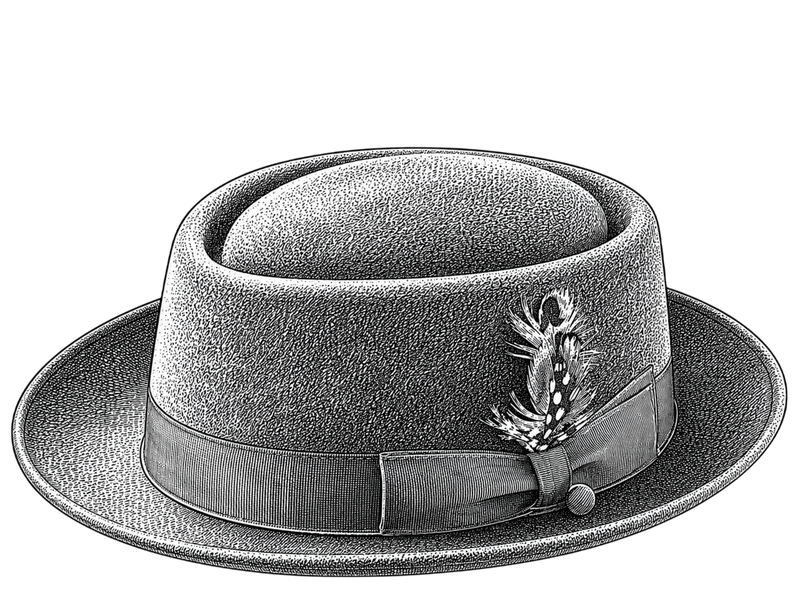
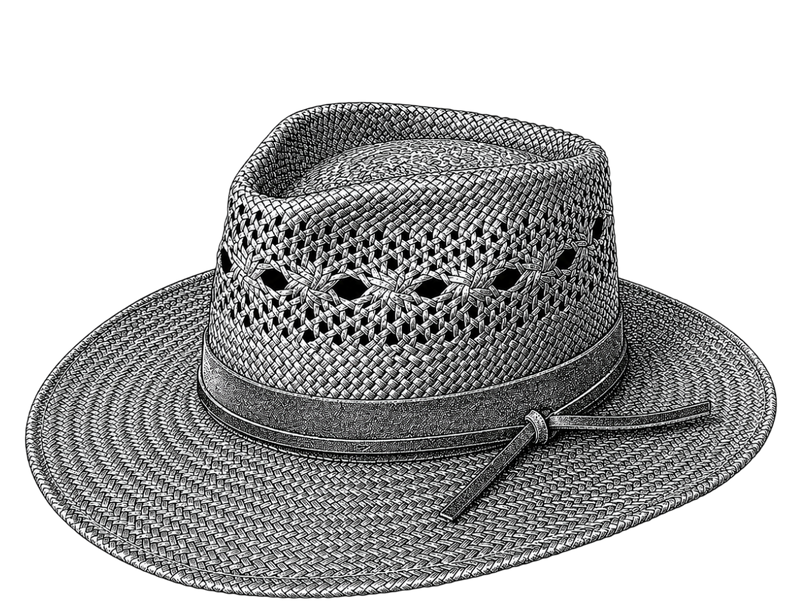
Felt is one of the oldest manufactured materials in human history -- older than woven textiles, older than pottery in some cultural sequences. It is also poorly understood by most hat buyers, who know that felt hats cost more than synthetic alternatives and last longer, but do not know why. The material science is not complicated, and understanding it makes the difference between a 40 EUR hat and a 150 EUR hat immediately legible.
What Felt Actually Is
Felt is a non-woven textile created by matting and pressing fibres together through a combination of moisture, heat, and mechanical pressure. Unlike woven or knitted textiles (which are made by interlacing or looping threads that have first been spun), felt is formed directly from loose fibres that interlock during the felting process without being spun or woven.
The felting process works because of a specific property of animal fibre: the cortical layer (outer surface) of wool, rabbit, beaver, and similar fibres is covered in microscopic scales (cuticular scales) that project from the fibre shaft at an angle, like roof tiles. When these fibres are subjected to moisture and mechanical agitation, the scales lock together with adjacent fibres in a random, dense matrix. The resulting structure is self-reinforcing -- the more tightly the fibres are matted, the more difficult they are to separate. This interlocking is permanent without chemical treatment to release it.

Why Fibre Type Matters
Wool Felt
Wool felt is the most common felt material for hat production. Sheep's wool fibres have pronounced cuticular scales that felt well, producing a dense, relatively inexpensive felt. The quality of wool felt varies significantly by:
- Fibre fineness: finer wool (lower micron count -- merino wool at 18-22 microns vs standard wool at 26-34 microns) produces softer felt with a smoother surface. Coarser wool produces a more textured, scratchier surface.
- Fibre length: longer fibres produce stronger felt; shorter fibres felt faster but produce slightly weaker material.
- Processing quality: how thoroughly the fibre is cleaned, combed, and processed before felting affects the final surface quality.
Rabbit Fur Felt
Rabbit fur felt uses the underfur (the short, fine fibres beneath the longer guard hairs) from rabbit pelts. Rabbit underfur felts more easily than sheep's wool because the cuticular scales are more pronounced and interlock more tightly. The resulting felt is denser, softer to the touch, and more water-resistant than comparable wool felt. Most commercially available fur felt hats use rabbit fur as the primary material, sometimes blended with wool.
Beaver Fur Felt
Beaver underfur is the historically highest-quality hat felt material, used in quality hats from the 16th through early 20th centuries. Beaver underfur produces an exceptionally dense felt because the microscopic barbs on beaver fur are particularly well-suited to interlocking. The resulting felt is:
- Highly water-resistant (beaver fur is naturally hydrophobic -- it evolved to repel water in aquatic environments)
- More shapeable (holds formed shapes more permanently after blocking)
- More durable over time
- Significantly more expensive due to material costs
Modern beaver felt hats typically use a blend of beaver and rabbit fur felt, which provides much of the beaver's performance at reduced cost compared to 100% beaver felt.
How Felt is Made Into a Hat
The basic process:
- Fibre preparation: the raw fibre (fur or wool) is cleaned, de-haired if necessary, and carded (combed into alignment) to produce a consistent mass of loose fibre.
- Batt formation: the loose fibre is formed into a flat sheet (batt) of uniform density.
- Hardening: the batt is subjected to moisture and mechanical pressure -- in industrial production, this involves roller presses; in artisan production, it involves hand rolling and manipulation. The scales begin to interlock during this stage.
- Shaping (cone or capeline): the partially-hardened felt is formed into a cone or capeline shape on a mold, which is the raw form that will become the hat.
- Blocking: the cone is stretched over a hat block using steam, forming the crown shape. The felt sets in this position as it cools.
- Finishing: the surface is treated (ironed, brushed, or veloured) to produce the final texture.
Why Felt Holds Its Shape
The quality of a felt hat's shape retention depends on the density and interlocking of the fibre matrix. A hat with very tightly interlocked fibres returns to its blocked shape after minor deformation because the fibre matrix is rigid enough to resist the deformation. A hat with less tightly felted material -- whether from lower quality fibre, less thorough felting, or insufficient steaming during blocking -- is more easily permanently deformed because the matrix yields more readily to external pressure.
This is why a hat that has been sat on may or may not recover its shape depending on the quality of the felt: a quality fur felt hat that is sat on briefly may spring back completely; a lower-quality wool felt hat may retain a permanent impression. The fibre interlocking density, not the hat's price or brand, is the direct determinant of shape recovery.
Browse quality felt hats at Hatloom.

Frequently Asked Questions
What is the difference between felt and wool?
Wool is a raw fibre from sheep (or other animals). Felt is a processed material made from wool or other animal fibres through the felting process. Not all wool is felt, and not all felt is made from wool -- felt can also be made from synthetic fibres (acrylic felt is manufactured for craft use). In hat terms, felt specifically refers to the matted, non-woven material used for hat bodies; the wool is the raw input to this material.
Why does better felt cost more?
Three cost drivers: the quality of the raw fibre (beaver fur is more expensive than rabbit fur, which is more expensive than wool); the processing quality (more thorough cleaning, carding, and felting produces better material but takes more time and labour); and the fibre quantity (a denser, heavier felt -- more insulating and more shape-retentive -- uses more fibre per unit of material). A heavy beaver felt hat uses more of a more expensive material with more manufacturing steps than a light wool felt hat, which explains most of the price difference.
Can synthetic felt hats be as good as natural felt?
No. Synthetic felt (typically polyester or acrylic) is produced by melting and bonding synthetic fibres rather than interlocking natural fibre scales. The resulting material lacks the key properties of natural felt: the natural cuticular scale interlocking produces a shape-retentive matrix that synthetic bonding cannot replicate; natural felt is breathable in a way that synthetic fibres are not; and the surface texture and appearance of natural felt is distinct from synthetic alternatives in ways that are visible and perceptible to any observer who has handled both. Synthetic felt hats are less expensive but functionally inferior in shape retention, breathability, and durability.
How do I care for felt to maximise longevity?
Three practices maximise felt hat life: brush with a horsehair hat brush in the direction of the nap after each wear (this removes dust and debris that can mat and damage fibres over time); store in a hat box or on a hat stand (rather than brim-down or in a bag that can compress the crown); and protect from extended rain exposure, which can cause the fibres to swell and then contract unevenly as they dry, potentially distorting the hat's shape. Quality natural felt can survive many years of regular use with these three practices; quality felt hats from the early-to-mid 20th century are regularly found in wearable condition in vintage markets 50-80 years after manufacture.