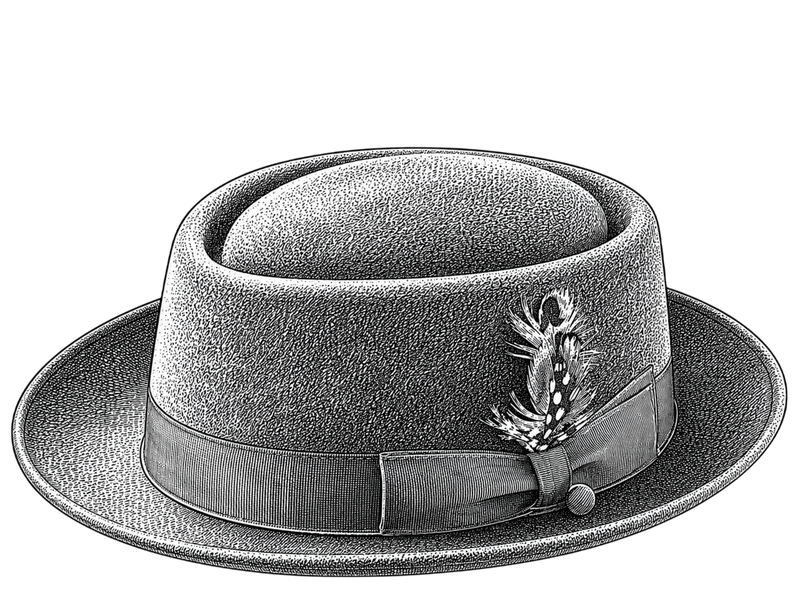
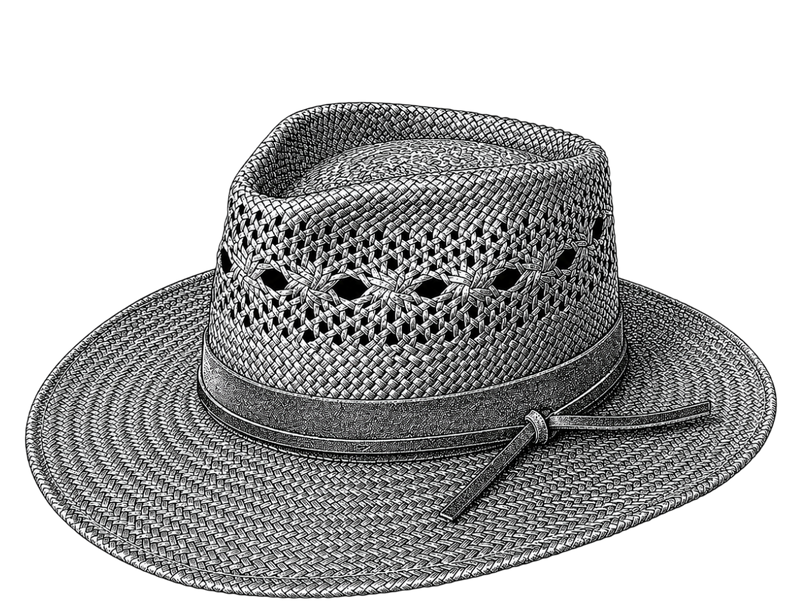
The trilby and the fedora are the most consistently confused hats in Western fashion, and the confusion matters because the two hats behave differently visually, fit differently, and have different cultural contexts. Calling a trilby a fedora is not merely a naming error -- it leads to incorrect proportion decisions and styling choices built on a wrong foundation. Here is the actual difference.
The Structural Difference
The distinction between a trilby and a fedora comes down to two measurements:
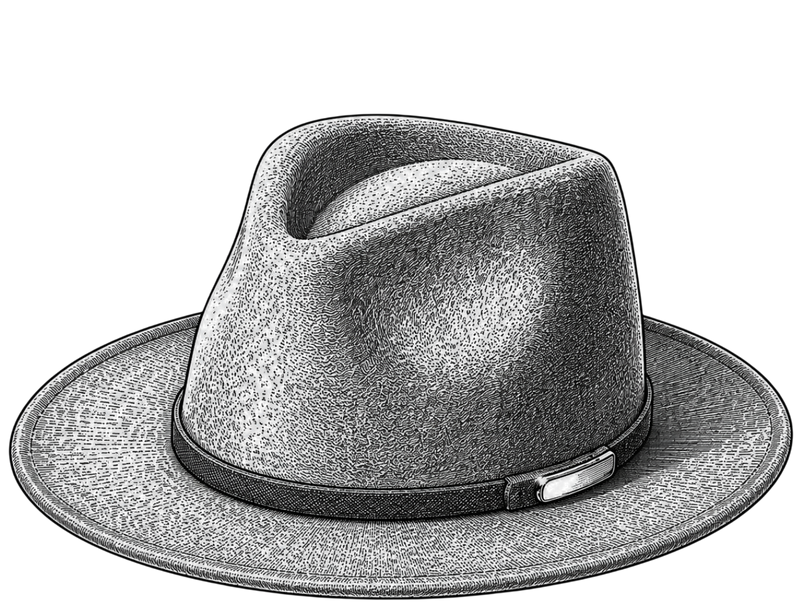
- Brim width: a trilby has a narrow brim, typically 4-6 cm. A fedora has a wider brim, typically 6-9 cm or wider. This is the most visually significant difference -- the brim's width relative to the face changes the entire proportional relationship between hat and wearer.
- Brim angle: a trilby's brim is characteristically angled sharply upward at the back, with the front dipping down toward the face. A fedora's brim is typically worn more level, or with the front edge angled only slightly downward. The trilby's upturned back brim creates a specific profile that is immediately identifiable once you know what you are looking at.
Both hats have a pinched, dented crown -- the similarity in crown shape is why they are so frequently confused. The crown is not the distinguishing feature; the brim is.

Crown and Proportions
Fedora crowns are typically taller than trilby crowns -- the fedora's greater overall size makes it a more commanding hat. A trilby's smaller brim and slightly lower crown make it a more compact hat that sits closer to the head visually. The fedora projects further from the head; the trilby stays closer to it.
This has practical implications:
- The fedora provides more face and neck sun protection (wider brim)
- The trilby is more practical in crowded or indoor spaces (less likely to clip a doorframe or shoulder)
- The fedora has more visual presence in a room
- The trilby integrates more quietly into an outfit
The Trilby's Specific Proportions and Face Shapes
The trilby's narrow brim means it works differently across face shapes:
- Oval face: the trilby works well because oval faces have balanced proportions that any hat can complement
- Round face: the narrow brim of a trilby provides less horizontal visual counterweight to a round face than a fedora's wider brim. A fedora is generally a better choice for round faces because the wider brim creates a visual relationship that the narrow trilby brim cannot.
- Long face: the trilby can be challenging for very long faces because the narrow brim does not provide horizontal width at the face level -- it elongates rather than balances.
- Square face: the trilby works reasonably well with square faces because its narrow brim does not add horizontal emphasis to an already wide jawline.
Cultural and Historical Differences
The fedora was the dominant men's formal hat from approximately the 1920s through the 1960s -- worn by businessmen, politicians, and everyday men as standard formal and semi-formal outdoor headwear. Its cultural associations run from classic Hollywood and film noir to generic mid-century American formality.
The trilby emerged as a slightly later, more fashion-forward alternative. It shares the fedora's pinched crown aesthetic but in a smaller, trimmer package that was associated with a more modern and less conventional wearing choice. The trilby appeared prominently in British Mod culture in the 1960s and has periodic fashion revivals that position it as the slightly more fashion-conscious, less traditional alternative to the fedora.
Which to Choose
Choose a fedora when:
- Sun protection from the brim is a functional requirement
- The occasion warrants a more commanding hat presence
- The face is round or oval and benefits from the wider brim's visual balance
- The outfit is in the smart-casual to semi-formal range where the fedora's larger presence is appropriate
Choose a trilby when:
- A hat that integrates more quietly into the outfit is preferred over one that makes a statement
- The face is square or oval and the narrower brim works proportionally
- The wearing context is urban and the compact hat is more practical
- The fashion register is slightly younger or more contemporary and the fedora's heavier cultural associations are not desired
Browse fedoras and trilbies across materials and styles at Hatloom.

Frequently Asked Questions
Can a trilby be worn formally?
A trilby in quality felt with a clean grosgrain band can be worn in smart-casual and some semi-formal contexts, but it sits one register below the fedora in terms of formal appropriateness due to its narrower brim and slightly trimmer profile. For formal business or event contexts where a hat is worn, a fedora is the more conventionally appropriate choice. For creative professional or fashion-forward smart-casual contexts, a trilby is entirely appropriate.
Why is the trilby often called a fedora?
The confusion arises because both hats share the same crown shape -- the characteristic pinched crown with front and side dents. The crown is the element most visible in photographs and the element most people focus on when identifying a hat. The brim difference (the actual distinguishing feature) is less visible in front-facing photography, which is where most people encounter hat images. Additionally, marketing by hat retailers often calls trilbies fedoras because fedora is a more widely recognised term, which has amplified the confusion over time.
Is a trilby more or less formal than a fedora?
Less formal, for two reasons: the narrow brim is proportionally smaller and less commanding, which creates a less imposing presence appropriate for more casual contexts; and the trilby's historical associations are more fashion-forward and youth-culture-adjacent than the fedora's mainstream formality associations. A quality trilby in felt approaches the fedora's smart-casual range, but the fedora has more range into semi-formal territory than the trilby can comfortably achieve.
What is the correct brim width for a fedora vs a trilby?
A standard trilby brim is approximately 4-6 cm wide (measured from the crown base to the brim edge). A standard fedora brim is 6-9 cm wide. Hats with brims under 4 cm are sometimes called snap brims or ultra-narrow brims and are even more compact than standard trilbies. Hats with brims over 9 cm enter wide-brim territory that goes beyond standard fedora proportions. These are general ranges -- specific manufacturer products vary, and some hats sit exactly at the border of both categories, which is why the confusion persists.