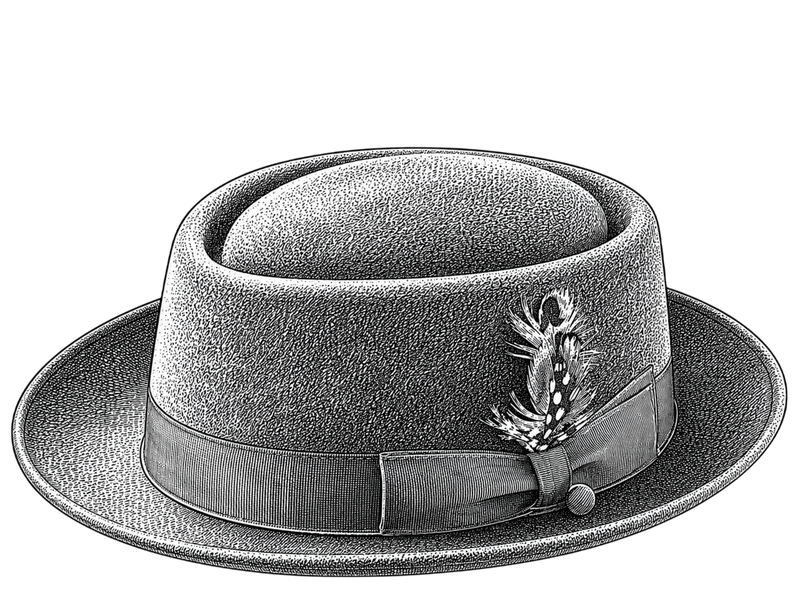
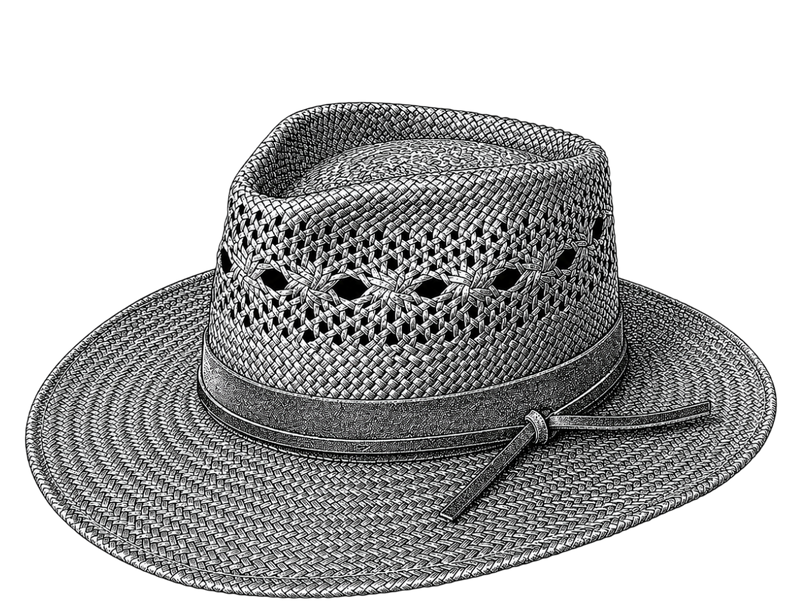
The trilby is routinely misidentified as a fedora, regularly criticized by fedora enthusiasts, and frequently worn by people who would benefit from a different hat. None of this reflects any fundamental problem with the trilby as a hat — it is a specific object with specific proportions and a specific history that make it correct in some contexts and wrong in others. Understanding what it actually is clarifies when it works.
What Defines a Trilby
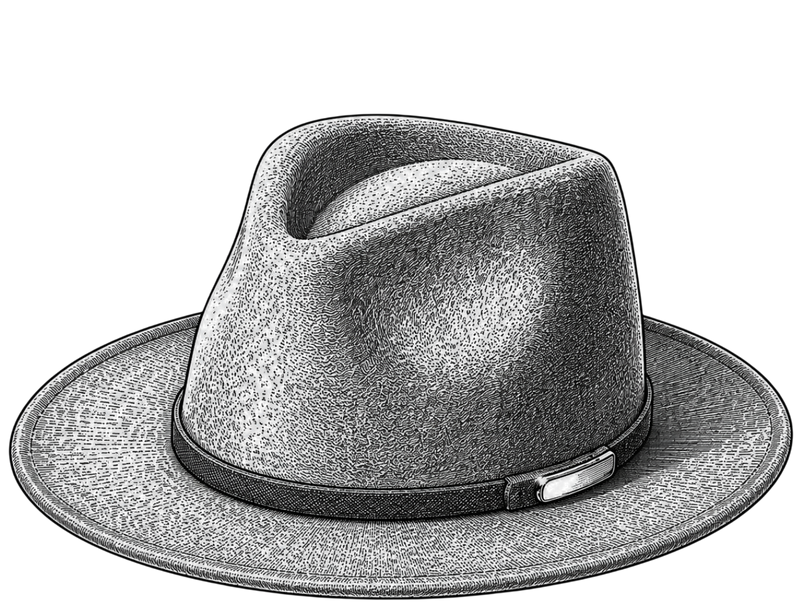
The trilby is distinguished from the fedora by two structural measurements:
- Brim width: A trilby brim is typically 3–5 cm — narrow compared to the classic fedora at 6–8 cm. This is the primary visual difference.
- Brim angle: The trilby brim is sharply angled downward at the front and rolled or turned up steeply at the back, creating a pronounced angle. The fedora brim is more level or gently snapped in the front, with a less extreme back upturn.
The crown is similar in both styles — both use a pinched, center-creased crown — but the trilby crown is often slightly shorter and less structured than a classic deep-crown fedora.
These proportional differences create two very different silhouettes despite similar crown shapes. The narrow trilby brim reads as small, close to the head, and modern. The wider fedora brim reads as more expansive, more formal, and more historically referential.
The Origin of the Trilby Hat
The name comes from George Du Maurier's 1894 novel Trilby, in which the hat appeared as part of the stage costume for the theatrical adaptation. The association with the character and the show gave the hat its name — a relatively rare case of a hat style named after a work of fiction rather than a place of origin or manufacture method.
The trilby emerged from the same era as the fedora — both are 19th-century soft felt hats — but diverged in proportion and cultural association through the early 20th century. The fedora became the broader-brim mainstream hat; the trilby developed as a slightly more rakish, less formal variant.
In the UK, the trilby has specific associations with horse racing — it was and remains a common choice for male race-goers at events like Cheltenham and Ascot, where its narrow brim and angular back-upturn created a distinctive silhouette. It also became associated with musicians and artists in mid-20th-century Britain — jazz musicians, writers, and creative figures who wore it as a slightly anti-establishment alternative to the more conventional fedora.
The Trilby and the Internet
The trilby became a target of online mockery in the 2000s and 2010s through a specific internet dynamic: the conflation of the trilby (which was being worn by a specific demographic) with the fedora (a different hat entirely). The meme about fedora-wearing became culturally established even though the hat most often pictured in the mockery was actually a trilby. This created a period during which both hats suffered reputational damage through association with an internet meme — despite the fact that the fedora had not particularly changed and the trilby had been worn by respected wearers for over a century.
The distinction matters practically: the narrow brim of a trilby is the proportional element that reads as internet-meme adjacent in certain styling contexts, not the crown shape or the material. A wide-brim fedora in quality felt does not share this association.
When the Trilby Works
The trilby is correct for specific contexts and body types where the narrow brim is an advantage rather than a limitation:
Long or oblong faces: The narrow brim of a trilby does not add horizontal visual lines in the way a wide fedora brim does. For faces that are already wide and do not need width-adding elements, the trilby is less problematic than for faces that need horizontal balance.
British occasion wear: At horse racing events — Cheltenham Festival, Royal Ascot — the trilby remains traditional and appropriate for men, particularly in tweed or herringbone felt. The hat's racing associations make it contextually correct in a way it is not in other contexts.
Small or slight body frames: The proportions of a trilby are scaled appropriately for smaller frames where a full-width fedora can appear oversized. The narrow brim and compact crown are proportionally matched to lighter builds in a way the broader fedora is not.
Smart casual in European contexts: In continental European cities — particularly Italian and French style contexts — the narrow-brim felt hat has a specific history of smart casual wear that makes it more culturally legible than in American or British everyday contexts.
When the Fedora Is the Better Choice
In most contexts where a person is considering a trilby, a classic fedora with a properly proportioned brim (6–8 cm) is a more flattering and more versatile choice. The fedora brim:
- Creates a stronger face-framing effect through the horizontal line at the brow level
- Provides more sun protection and weather utility
- Works across a broader range of face shapes
- Has historically wider associations that are not as context-specific as the trilby
The main case for choosing a trilby over a fedora is specific: the wearer wants the narrow-brim look intentionally and has the right body proportions and context to carry it without the narrow brim reading as a limitation rather than a choice.
Explore quality felt fedoras and trilby-style hats in classic proportions in the Hatloom fedora collection.
Frequently Asked Questions
What is the difference between a trilby and a fedora?
Brim width and angle are the primary differences. A trilby has a narrow brim (3–5 cm) sharply angled downward at the front and steeply turned up at the back. A fedora has a wider brim (5–8 cm) that is more level or gently angled, with a less extreme back upturn. Both have pinched, center-creased crowns, but the visual silhouette created by the different brim proportions is distinctly different. A fedora's wider brim makes it appear larger and more expansive; a trilby's narrow brim creates a smaller, more compact silhouette.
Why is the trilby considered inferior to the fedora?
It is not objectively inferior — it is proportionally different in a way that suits fewer face shapes and more limited styling contexts. The narrow brim of a trilby does not add the face-framing horizontal line that a fedora brim provides, which means it works less well for the majority of face shapes that benefit from width-adding elements. Additionally, the internet association of the narrow-brim hat with a specific mid-2000s demographic created reputational friction that quality and correct proportion can overcome but that remains a contextual reality in some wearing environments.
What does a trilby look like?
A trilby has a soft felt crown with a center crease and pinched front, a very narrow brim (3–5 cm) that angles significantly downward at the front and turns up sharply at the back. The back upturn is the most visually distinctive element when viewing from behind — far more pronounced than on a standard fedora. The overall silhouette is more compact and angular than the more generous proportions of a classic fedora.
Is a trilby appropriate for formal occasions?
For British horse racing events — Cheltenham, Royal Ascot — the trilby is traditionally appropriate and widely worn. For other formal occasions (weddings, funerals, formal dinners), the wider brim and more generous crown of a fedora or a homburg provides a more formal silhouette. The trilby's formal associations are specifically racing-related in UK context and less established in other formal settings.
Can women wear a trilby?
Yes. Women have worn trilby-style narrow-brim hats throughout the 20th century — the narrow brim and angled silhouette have a specific fashion history in women's wear, particularly in the 1960s and 1970s. The same proportional considerations apply for women as for men: the trilby is most flattering on longer or more balanced face shapes where the narrow brim is not reducing an already-present horizontal visual line. Women with round or wide faces will typically be better served by a hat with more brim width.