Round face shape guides almost universally tell you to 'add height and angles.' This is correct as far as it goes, but most guides stop there without explaining why this works, what specific hat properties achieve it, or what to do about the fact that some of the most popular hat styles are structurally incompatible with adding height. Understanding the proportional reasoning behind the advice allows you to apply it flexibly across different contexts and styles.
What Makes a Face Shape Round
A round face has approximately equal width and height measurements, with soft curves at the forehead, cheeks, and jawline rather than angular features. The cheekbones are typically the widest point of the face, and the jaw and forehead are similarly wide -- there is no strong taper at the chin or strong projection at the forehead to break the circular outline.
The hat challenge for round faces is that the circular outline is echoed by many hat shapes and brim styles. A circular brim above a round face doubles the circular visual element and can make the face appear wider and flatter. The goal with hat selection is to introduce contrast -- angular elements, vertical elongation, or asymmetry -- that creates a visual counterpoint to the face's soft roundness.

What Achieves Elongation in a Hat
Several hat properties contribute to vertical elongation or angular contrast:
- Crown height: a taller crown adds visual mass above the face in the vertical dimension. A 10 cm crown on a round face extends the total head-and-hat silhouette vertically, making the face appear proportionally less wide relative to its height
- Angular crown shape: a crown with defined angles or creases (the fedora's pinched front crease, the trilby's oval crown, the homburg's centre crease) introduces edges that contrast with the face's soft curves
- Asymmetric brim: a brim that is tilted slightly to one side or worn at an angle adds asymmetry to the silhouette, which breaks the circular outline more effectively than a level, even brim
- Narrow brim width: a brim that does not extend beyond the face's widest point (the cheekbones) avoids adding lateral visual width. A brim equal to or narrower than the cheekbone width is preferable to one that extends significantly beyond the face
Best Hat Styles for Round Faces
Fedoras and Trilbies With Taller Crowns
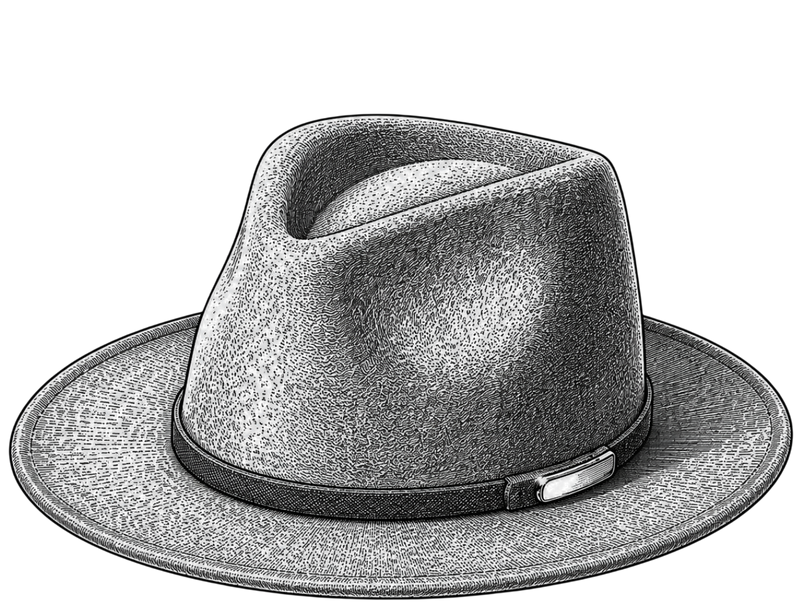
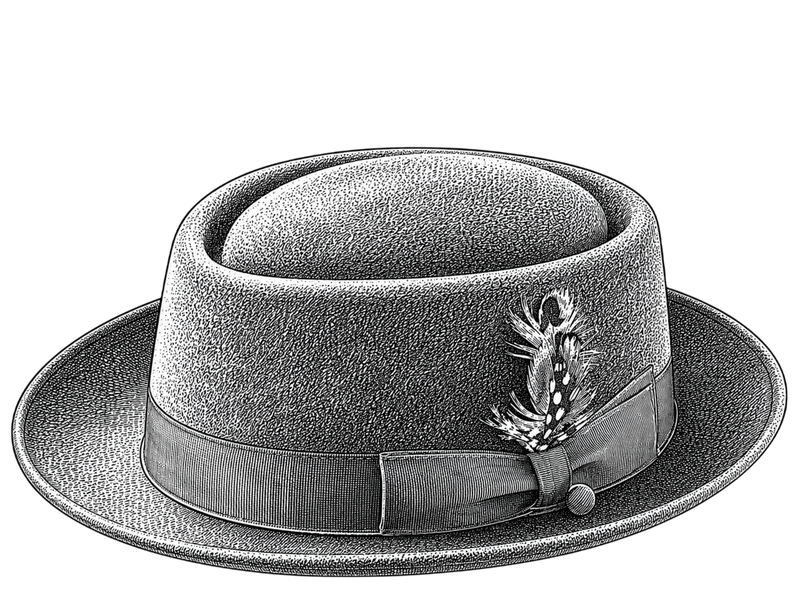
A fedora with a medium to tall crown (8-11 cm) and a medium brim width (5-7 cm) is the most recommended structured hat for round faces. The crown height adds vertical elongation; the angular crown crease adds definition; and a brim that sits approximately at cheekbone width avoids adding lateral width. The trilby -- a shorter-brimmed, slightly narrower-crowned fedora variant -- works for the same reasons and is appropriate in more casual contexts.
Flat Caps With Angular Crowns
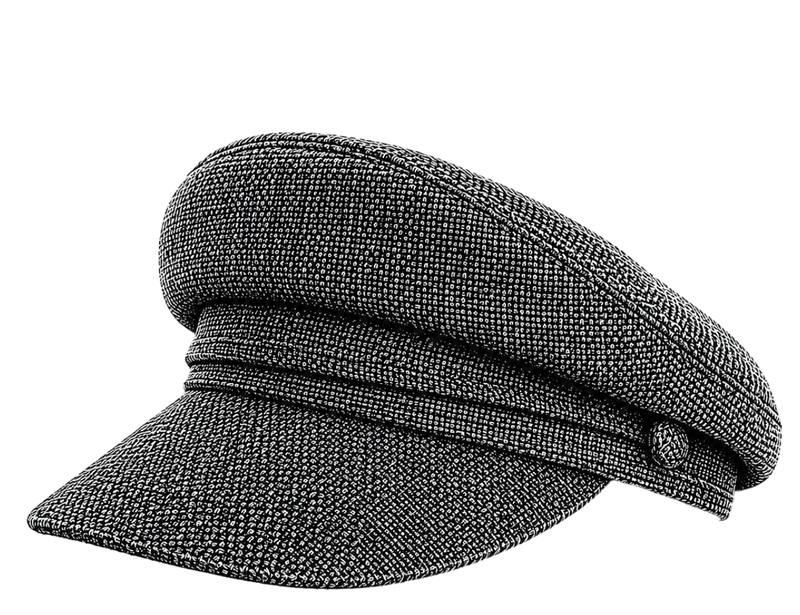
The flat cap, when it has a reasonably defined angular top (rather than a very puffy or rounded crown), adds horizontal visual length at the back of the head and an angular front visor. From the front, the flat cap's defined peak adds a downward angular element at the forehead, which provides the kind of linear contrast that balances a round face. Choose flat caps with a slightly forward-angled peak rather than a very short, nearly horizontal one.
Wide-Brim Hats in Asymmetric Positions
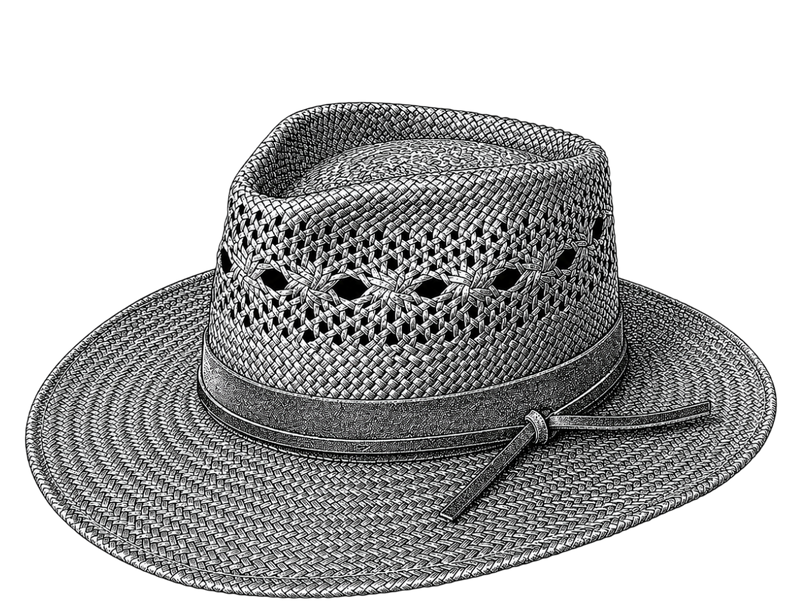
A wide-brim sun hat or floppy hat worn tilted slightly to one side rather than perfectly level creates the asymmetric silhouette that round faces benefit from. A tilted brim breaks the circular outline of the face with a diagonal rather than echoing the roundness with a level circular brim. The tilt does not need to be extreme -- 15-20 degrees is sufficient to create visual asymmetry without looking accidental.
Cloches
A cloche hat's deep, close-fitting crown and small brim create a different silhouette than most other styles for round faces. By fitting closely to the head, the cloche eliminates the hat's visual width (there is little or no brim projection) and the deep crown extends the silhouette downward around the face rather than outward. This can work well for round faces as a counter-intuitive approach: instead of adding height above, the cloche extends the hat's visual presence downward alongside the face, creating an elongating effect from a different direction.

Styles to Approach With Care
Very Wide, Level Brims
A wide, perfectly level brim on a round face extends the horizontal visual dimension at exactly the face's widest point, which can make the face appear even wider. If wearing a wide-brim hat on a round face, a slight tilt or a soft brim that drapes slightly rather than projecting perfectly horizontal moderates this effect.
Short, Circular Brims
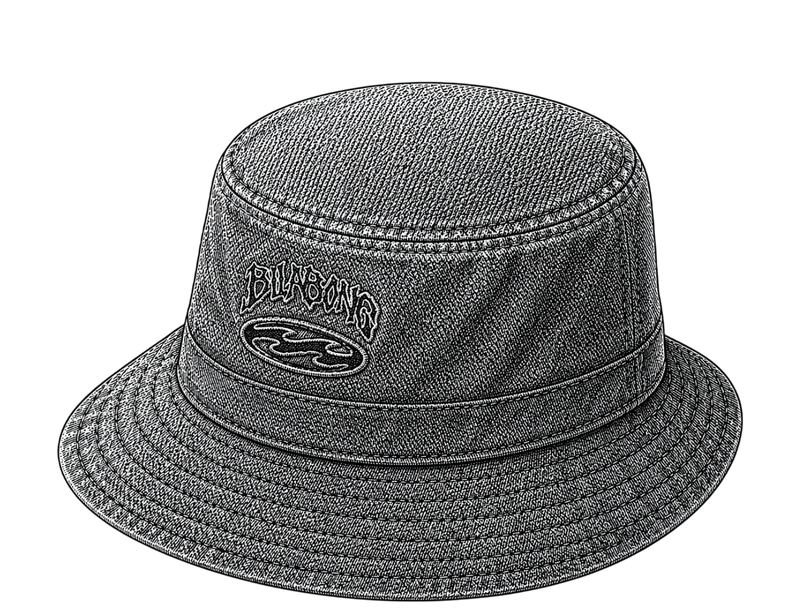
Bucket hats with short, circular brims (3-4 cm) create a halo of uniform width around the round face. This can amplify the roundness by introducing another circular element at the same width as the face below it. A wider-brim bucket hat (5+ cm) or one tilted slightly asymmetrically does not have this problem to the same degree.
Very Low-Crown Hats
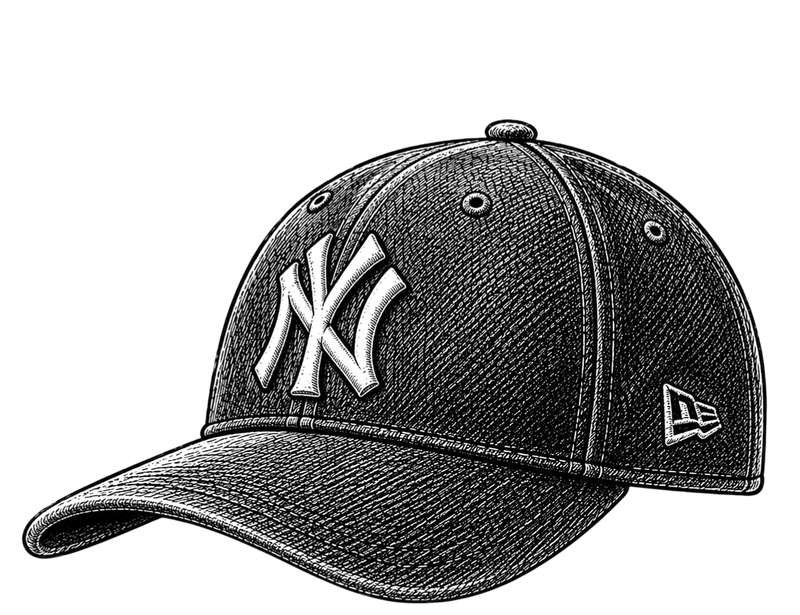
A very low crown (under 6 cm) on a round face does nothing to add vertical elongation and may add visual width instead. Low-crowned baseball caps, trucker hats, and very short-crowned flat caps are the harder cases for round faces. This does not mean they cannot be worn -- casual contexts have their own rules -- but if elongation is the goal, a higher crown is a more direct solution.
Browse fedoras, flat caps, wide-brim hats, and structured styles at Hatloom.
Frequently Asked Questions
Can people with round faces wear baseball caps?
Yes, with awareness of the placement variable. A baseball cap on a round face works best when it is worn with the peak slightly forward and the overall fit is snug enough that the cap does not add significant width at the sides. The baseball cap's short forward peak adds some angular contrast to the forehead, which is moderately useful. Where baseball caps are most problematic for round faces is when they are worn slightly too large and puff outward at the sides, adding visual width to the crown that increases the perceived roundness. A well-fitted baseball cap in the correct size is significantly more flattering than an oversized one on a round face.
What hat crown height should a round face aim for?
For maximum elongation effect, a crown of 9-12 cm provides substantial vertical mass above the face. For more everyday wear where extreme elongation is not the goal, 7-9 cm is a practical range that adds some height without making the hat the dominant visual element. The minimum to get meaningful elongation effect is approximately 8 cm; below this, the crown is providing minimal vertical contrast. Note that very tall crowns (12+ cm) can look proportionally exaggerated if the brim width is very narrow -- the crown and brim should be in proportion with each other as well as with the face.
Does hat colour affect how round a face looks?
Colour affects contrast and attention direction, which has some indirect effect on how face shape reads. A very light-coloured hat (white, cream, pale tan) above a face creates strong contrast that draws attention to the hat and the face together, making the face's shape very visible. A hat in a colour close to the wearer's hair tone creates less contrast, drawing less attention to the hat-face relationship. For round faces that are self-conscious about proportions, a hat in a moderate rather than maximum contrast colour is slightly more forgiving. This is a subtle effect -- the structural variables (crown height, brim width) are far more significant than colour choice.