The newsboy cap is frequently confused with the flat cap, often mislabeled as a Gatsby hat, and has been worn by enough disparate cultural figures over 130 years that it carries almost too many associations to read clearly. Understanding what it actually is -- structurally and historically -- clarifies when and how it works as a contemporary hat choice.
What Defines a Newsboy Cap
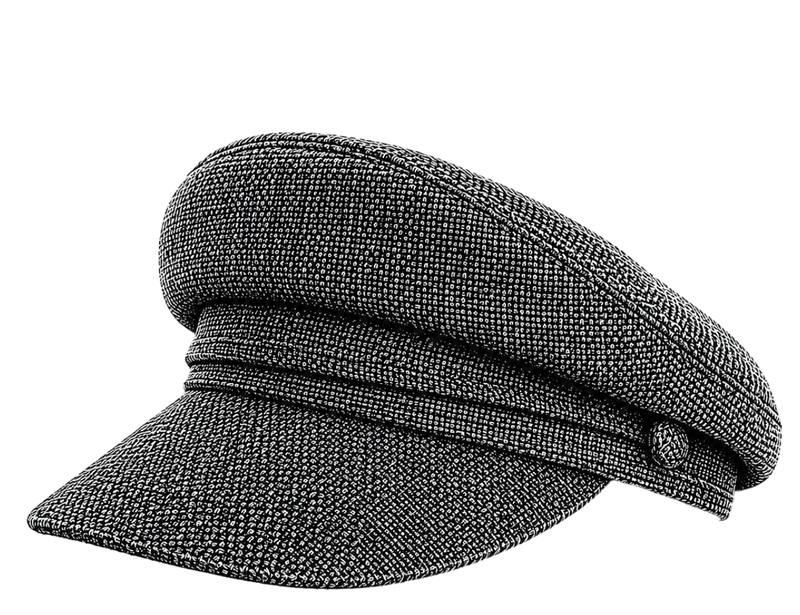
The newsboy cap is distinguished from the flat cap by one critical structural difference: the crown consists of multiple panels (usually eight) with significant fullness, creating a pouched or rounded crown that sits above the brim rather than lying flat against it. This fuller crown is what distinguishes the newsboy from the flat cap -- both have a front visor brim, but the flat cap lies flat and close to the head where the newsboy cap rises above the head with volume.
The eight-panel construction gives the newsboy cap its other common names: eight-panel cap, eight-quarter cap, Gatsby cap (in American vernacular). All refer to the same structural object: a soft, multi-panel crown with volume, a flat visor brim, and typically a small button at the center top where the panels meet.
Historical Origins
The newsboy cap name derives from its association with urban working-class boys in the late 19th and early 20th century, particularly news vendors (newsboys) who wore the style as affordable, durable everyday headwear. The eight-panel construction was practical: multiple smaller fabric pieces could be cut from remnants and assembled without the waste of a single large piece, making the cap economical to produce.
In the British Isles, the equivalent style was widespread among working-class men and boys throughout the Victorian and Edwardian eras. The cap migrated into sporting contexts as well -- golf caps, driving caps, and cycling caps of the period all used similar eight-panel constructions with slight variations in proportion.
The style gained renewed cultural visibility in the 1920s and 1930s as the dominant casual headwear for working-class men in both the UK and US. Film records from this period show the eight-panel cap as ubiquitous street wear. The film Newsies (1992) and multiple period dramas set in early 20th-century New York have reinforced the cap's American cultural associations.
In the UK, the newsboy cap appears most prominently in Peaky Blinders (2013-2022), which created significant renewed interest in the style -- though the cap worn in the series was actually a flat cap rather than an eight-panel newsboy, another instance of the common conflation.
The Gatsby Cap Confusion
In American retail and vernacular, newsboy caps are often sold as Gatsby caps or Gatsby hats. This naming comes from the 1974 and 2013 film adaptations of F. Scott Fitzgerald's The Great Gatsby, in which Robert Redford and Leonardo DiCaprio respectively wore variations of the eight-panel cap. The name stuck as a commercial label despite not referring to anything Fitzgerald actually described -- Gatsby himself wore various hats in the novel, none specifically identified as newsboy style.
The term Gatsby cap is used interchangeably with newsboy cap in most retail contexts. For clarity: both refer to the eight-panel, full-crown, visor-brimmed cap.
How to Wear a Newsboy Cap Today
Positioning
The newsboy cap is worn level on the head, with the visor extending forward above the brow line. The full crown naturally rises above the head, creating height -- the cap sits higher than a flat cap and creates more volume above the face. This volume is the defining aesthetic quality of the style and should be embraced rather than flattened.
The classic wearing position has the cap slightly forward, with the front of the brim sitting 1-2 cm above the eyebrows. Worn too far back, the cap loses its visor function and the volume becomes exaggerated. Worn pulled down, the cap looks too close-fitted and the crown volume collapses.
With What to Wear It
The newsboy cap has a strong heritage register -- it reads as early 20th century, British working-class or American urban. This heritage quality works naturally with certain contemporary styling approaches:
Natural fits: Heritage menswear -- wool trousers, tweed or flannel jackets, quality knitwear, leather accessories. The cap's heritage reads as coherent within this aesthetic. Also works with contemporary casual clothing in tonal, textured combinations -- the cap's volume adds visual interest without requiring a heritage outfit to make sense.
Challenging fits: Very formal outerwear (full dress coat, business suit), athletic wear, or highly trend-specific contemporary clothing where the newsboy's heritage aesthetic creates register conflict.
Materials and Season
The newsboy cap is produced in materials that suggest its wearing season:
- Wool and wool blends: The most traditional material. Winter to spring wearing. The heaviness varies significantly -- a light wool flannel cap works in mild weather where a Harris Tweed version is genuinely warm.
- Tweed: Classic heritage material with strong country-house associations. Autumn and winter.
- Cotton: A cotton newsboy cap moves the style toward spring and summer casual wear. Less heritage in reading, more contemporary.
- Linen: The most casual and summer-appropriate newsboy material. Least heritage-heavy in reading.
Find quality newsboy caps and flat caps in classic wool and heritage fabrics in the Hatloom cap collection.
Frequently Asked Questions
What is the difference between a newsboy cap and a flat cap?
The crown structure is the defining difference. A flat cap has a flat, close-fitting crown that lies against the head with minimal volume. A newsboy cap has a multi-panel (typically eight-panel) construction with significant fullness, creating a round, pouched crown that rises above the head. Both have flat visor brims. From the side, a flat cap reads as streamlined and low-profile; a newsboy cap reads as fuller and more voluminous above the brow line.
Is a newsboy cap the same as a Gatsby cap?
In practice, yes. Gatsby cap is a commercial name used primarily in American retail for the eight-panel newsboy cap style. The name derives from cultural associations with 1920s period films rather than from a technical hat category. The structure of a Gatsby cap and a newsboy cap are identical -- if you see both terms used for hats, they describe the same object.
What face shapes suit a newsboy cap?
The newsboy cap's fuller crown adds height and volume above the face, which suits round and wide face shapes well -- the added height above the face creates vertical emphasis that balances horizontal face width. For long faces, the volume of the newsboy crown can add further height, making it less ideal than a flatter cap. Oval faces handle the newsboy well, as they handle most hat styles. The visor extends forward, creating an angular reference point that contrasts with softer or rounder face shapes.
Is a newsboy cap formal or casual?
Casual to smart casual. The newsboy cap does not have a formal application -- its working-class heritage and soft construction place it firmly below the formality level of structured hats like the fedora or homburg. It is appropriate for casual and smart casual everyday wear, outdoor heritage-inspired occasions, and country settings. It is not appropriate for formal occasions where a structured hat would be expected.
How do I choose the right size newsboy cap?
Measure the head circumference 1 cm above the ears and across the mid-forehead. Most newsboy caps are sized by this measurement in centimeters or converted to S/M/L/XL. The cap should sit on the head without moving when shaken moderately and without creating pressure marks on the forehead. Because the eight-panel crown has some inherent flexibility, the fit may be slightly more forgiving than a structured felt hat -- but do not use this as a reason to buy a significantly incorrect size, as the cap will still sit and look wrong if substantially undersized or oversized.