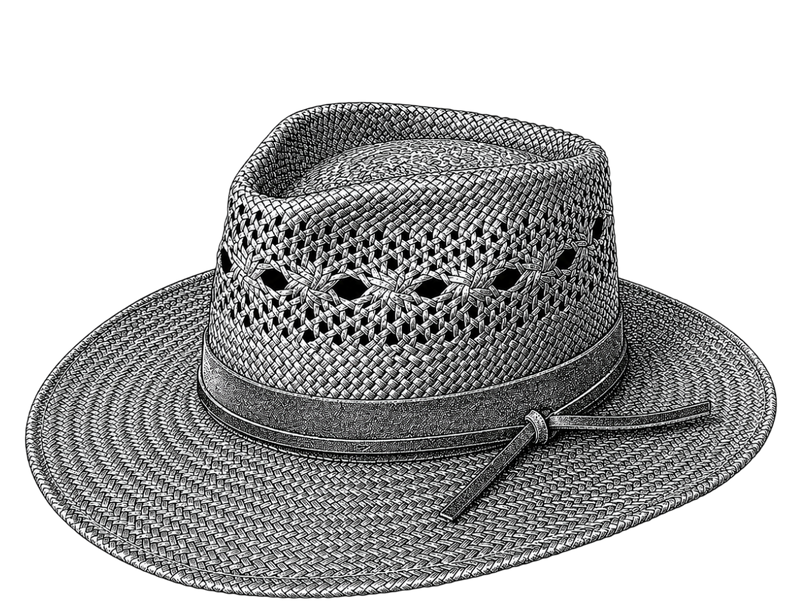
The gaucho hat is one of South America's most recognisable contributions to global hat culture -- a wide-brimmed, flat-topped hat with a cord chin strap that was developed by the gauchos of the Pampas to solve specific outdoor problems. Unlike the fedora or cowboy hat, which evolved through decades of commercial production, the gaucho hat has a narrower cultural origin point and a more specific functional identity. Understanding where it comes from makes wearing it -- and understanding when you see it in fashion -- considerably more legible.
The Gaucho and the Hat's Origin
The gaucho is the horseman-herder of the Pampas -- the vast grassland region stretching across Argentina, Uruguay, southern Brazil, and parts of Paraguay. Gauchos developed a distinctive material culture adapted to life on horseback in an environment of extreme sun, wind, and variable weather. The gaucho hat was the headwear solution for this environment.
The original gaucho hat -- the sombrero gaucho or sombrero pampa -- is characterised by:
- A wide, flat brim: typically 7-12 cm, projecting horizontally rather than being curved or rolled. The flat horizontal brim provides maximum shade at the lateral sun angles common when riding across open plains.
- A low, flat crown: unlike the tall cowboy hat, the gaucho hat has a low crown -- typically 7-9 cm high -- with a flat or nearly flat top. This reduces wind resistance and prevents the hat from being lifted by riding speed.
- A chin cord (barbijo): a cord attached to the inside of the brim and worn under the chin to secure the hat against wind when riding at speed. The chin cord is a defining functional feature -- a wide-brimmed hat without a chin cord is impractical at gallop.
- Felt or straw construction: typically wool felt for cooler seasons, straw for summer and hot conditions.

Regional Variations
The gaucho hat has regional variants across South America that differ in specific proportions:
- Argentine sombrero gaucho: classic flat brim, low flat crown, prominent chin cord. Often in black felt or natural straw.
- Uruguayan variation: similar profile but often slightly smaller brim width.
- Brazilian gaúcho hat: in Rio Grande do Sul, the Brazilian gaucho culture maintains hat traditions similar to the Argentine form, with some regional distinctions in decoration and brim curl.
- Chilean huaso hat: the Chilean horseman tradition (the huaso rather than gaucho) uses a similar wide-brimmed flat hat but with distinct regional characteristics in colour and decoration.
The Fashion Adoption
The gaucho hat entered fashion periodically through the 20th century -- notably in the early 1970s when gaucho-inspired fashion (wide-leg trousers called gaucho pants, flat-brimmed hats, South American-influenced outerwear) had a moment in Western high fashion. The hat appeared again in festival fashion from the 2000s onward as part of the broader wide-brim flat hat trend.
In contemporary fashion, a flat-brimmed hat with a low crown in felt or straw is often described as a gaucho-inspired or gaucho-style hat without necessarily being constructed in the specific way that traditional gaucho hats are made. The key visual elements -- the very flat brim, the low flat crown, the possible chin cord -- are what identify a hat as gaucho-style rather than cowboy or fedora style.
How to Wear a Gaucho Hat
The gaucho hat's proportions are specific -- the flat brim and low crown create a silhouette unlike the domed crown of a fedora or the tall crown of a cowboy hat. Wearing it correctly:
- Placement: the hat sits low on the forehead, approximately 2-3 cm above the eyebrows. The flat brim should project horizontally -- any downward slant at the front creates a different and less intentional look.
- Chin cord: for decorative wearing without wind, the chin cord can be left hanging at the back. For outdoor or active use, the cord is worn under the chin to secure the hat.
- Outfit pairing: the gaucho hat's flat geometric profile works well with strong vertical or horizontal outfit lines -- wide-leg trousers, straight-cut coats, horizontal-stripe patterns. It is less suited to very fluid or frilly outfit styles where the geometric flat brim creates a hard contrast with soft silhouettes.
Colour: natural straw and black felt are the most authentic; a medium-tan or sand felt is neutral and versatile; dark colours (navy, brown) work in autumn contexts.
Browse wide-brim hats and flat-brim styles at Hatloom.

Frequently Asked Questions
Is the gaucho hat the same as a sombrero?
No. The sombrero -- properly the Mexican sombrero -- is a significantly different hat: much larger brim (sometimes 30+ cm wide), a high conical or domed crown, and specific Mexican regional characteristics. The Spanish word sombrero literally means hat (from sombra, shadow) and is used in Spanish as a generic word for hat, which is why the Argentine gaucho hat is sometimes called a sombrero gaucho in Spanish -- but it is describing a gaucho hat, not the Mexican sombrero. The two hats are visually and culturally distinct; the confusion arises from the generic Spanish word being applied as a specific type name in English.
What material is best for a gaucho hat?
For traditional functional use (outdoor riding and work), a quality wool felt in autumn and winter and a natural straw in summer. For fashion use, the same seasonal logic applies -- felt for cooler months, straw for warmer. A felt gaucho hat in a quality mid-weight felt (not too heavy, not too light) holds the flat brim shape better than very lightweight felt, which can develop a curl over time. Natural straw versions should be in a straw with enough stiffness to hold the flat brim horizontal -- very pliable straw bends too easily and loses the flat profile that defines the style.
Is the gaucho hat appropriate for everyday casual wear?
Yes, with awareness of its proportional specificity. The flat brim and low crown are visually distinctive -- the hat makes a clearer silhouette statement than a fedora's curved crown or a Panama's gently domed crown. This is a virtue in fashion contexts where a strong visual statement is appropriate. For very low-key casual contexts where an unobtrusive hat is preferred, a less geometrically specific hat may be a better fit. For summer outdoor use, beach wear, and festival contexts, the gaucho hat's wide flat brim is both functional (excellent shade coverage) and visually appropriate.
Where can I find authentic gaucho hats?
Authentic gaucho hats are manufactured in Argentina and Uruguay by traditional hat makers, and are available through importers specialising in South American goods. In the wider market, gaucho-style or gaucho-inspired hats are available from hat retailers who carry wide-brim flat styles. The distinction between an authentic South American-made gaucho hat and a fashion interpretation of the style is visible in the construction details: authentic versions typically have a more substantial brim stiffening, a functional chin cord with proper attachment, and construction methods specific to the regional craft tradition.