The cloche hat presents a paradox that most fashion history skips: it was designed specifically for women with short hair, for exactly one decade, and has never fully gone away in the century since. The bob haircut and the cloche hat appeared together in the early 1920s, were declared over by 1933, and have been periodically revived in every decade since -- consistently identified as a nostalgic style even while being worn by people who have no particular attachment to nostalgia. Something in the silhouette works independently of its era.
What Defines a Cloche Hat
A cloche (French for bell) is defined by:
- Bell-shaped crown: a deep, rounded crown that fits closely to the head and skull, without the angular lines of a fedora or the flat geometry of a cap
- Small or absent brim: a cloche may have a narrow, downward-turned brim or virtually no brim at all. What it does not have is a wide, projecting brim -- that would make it a different category of hat entirely
- Low placement: the cloche sits very low on the head, often to the level of the eyebrows, sometimes lower. The low positioning is a defining characteristic, not an incidental styling choice
- Close fit: the hat is fitted, designed to sit snugly on the head. In the 1920s this was achieved partly because women had very short hair. A cloche on a woman with long, full hair will necessarily sit higher and looser

The 1920s Context
The cloche did not exist before approximately 1908 (first attributed to milliner Caroline Reboux) and did not dominate until the early 1920s. Its rise was directly tied to the bob haircut -- the short, ear-length women's hairstyle that itself was tied to the social and physical freedom movements of the post-World War One era.
The hat's close fit required short hair. Women with the longer, pinned hairstyles of the Edwardian era could not wear a cloche without significant adjustment. The hat was therefore both a functional response to a new hairstyle and a signifier of the cultural break from pre-war femininity that the bob itself represented.
By the late 1920s, the cloche was one of the most widely worn hats in the Western world across all income levels. By 1933, as women's hairstyles began to lengthen again under the influence of Hollywood, the cloche declined sharply. The hat genuinely requires short or pinned hair to work as designed.
Materials and Construction
Original 1920s cloches were primarily made in felt -- the same pressed wool or fur felt used in men's fedoras and women's more structured hats. Felt's pliability allowed the close, smooth shaping the cloche required, and the material was durable enough to maintain its bell shape without an internal wire frame.
Later iterations added:
- Straw and woven materials for spring and summer versions (a summer cloche has a lighter look and different seasonal appropriateness than the classic felt version)
- Velvet for formal and evening versions, particularly in the late 1920s as the hat became more dressy
- Knit wool for contemporary versions, which have a distinctly different, more casual character than the original pressed felt constructions
How to Wear a Cloche Hat Now
Modern cloche wearing benefits from understanding what made the hat work in its original context and what adjustments the current context requires.
With Short Hair
This is the closest to the original design intent. A cloche on very short hair -- a pixie cut, a closely cropped style -- sits the way it was designed to sit: close to the head, at or near eyebrow level, following the skull's natural curve. This is the cleanest, most authentic cloche silhouette available.
With Medium or Long Hair
Women with longer hair can wear a cloche with hair pinned or tucked under the hat, which recreates something closer to the original proportions, or with hair falling out from under the hat's edge, which creates a different and distinctly modern look. The second option works well in contemporary casual contexts; the first works better for more formal or retro-influenced dressing.
Outfit Contexts
A felt cloche sits most comfortably in an autumn-winter wardrobe: wool coats, structured blazers, high-necked sweaters. The hat's close fit and small brim make it a detail-focused piece -- it reads as deliberate and considered. A straw cloche can work in a spring-summer wardrobe in a way that references the original without the weight of the felt version.
Explore cloche hats and structured close-fitting styles at Hatloom.

Frequently Asked Questions
Is a cloche hat the same as a bucket hat?
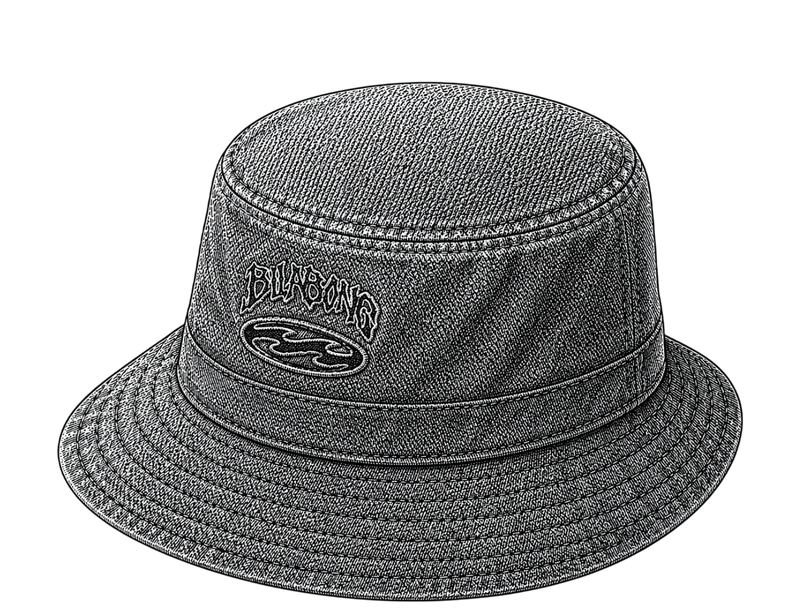
No, though both fit closely to the head. A bucket hat is an unstructured or lightly structured hat that sits on top of the head with a wide, downward-sloping brim going all the way around the hat. A cloche has a much smaller brim (or no brim), a deeper bell-shaped crown that sits lower on the head, and is typically made in a structured material like felt rather than the casual nylon or cotton of a bucket hat. The visual profile of the two styles is immediately distinct once you know what to look for.
What face shapes suit a cloche hat?
A cloche is particularly flattering on oval and long face shapes. The hat's close fit and low placement reduce the apparent vertical height of the face, which is useful for longer face shapes. On very round face shapes, the close-fitting bell may exaggerate the roundness -- in that case, choosing a cloche with a slightly more defined brim helps create some angular contrast. On heart-shaped faces (wider forehead, narrower chin), the cloche can sit nicely as the hat's crown width tends to match the natural forehead width without emphasizing it.
Can men wear a cloche hat?
The cloche is predominantly a women's style with a specific women's fashion history. Men wearing a cloche hat would be making a deliberate non-conventional style choice rather than drawing on any male hat-wearing tradition. The hat does not appear in men's hat history in any significant way, so wearing one as a man is either avant-garde or costume, depending on context and intent.