Most hat buyers judge quality by price, and most hat retailers justify price with vague terms like premium or artisanal that mean nothing without definition. The actual quality variables in a hat are specific, verifiable, and observable at the point of purchase. Understanding them converts hat buying from a price-and-brand exercise into an informed material assessment that produces better outcomes at every budget level.
The Five Quality Variables
1. Material Grade
The raw material from which the hat is made is the first and largest quality determinant. In felt hats:
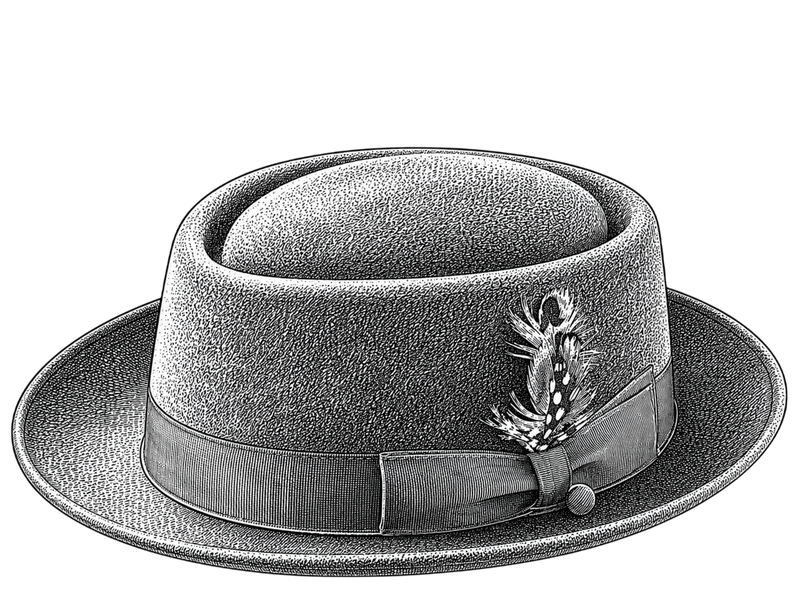
- Fine rabbit fiber felt: Dense, smooth surface with a subtle luster. The individual fiber scales are microscopic but contribute to a surface that reflects light evenly. High-grade versions are noticeably lighter for their thickness than wool alternatives.
- Mid-grade wool felt: Slightly coarser texture, adequate density for shape retention. Good durability. The majority of mid-market felt hats.
- Low-grade wool or synthetic felt: Coarser texture, often visible as a slightly fuzzy or irregular surface under close inspection. Lower density means less shape retention and less water resistance.
In straw hats:
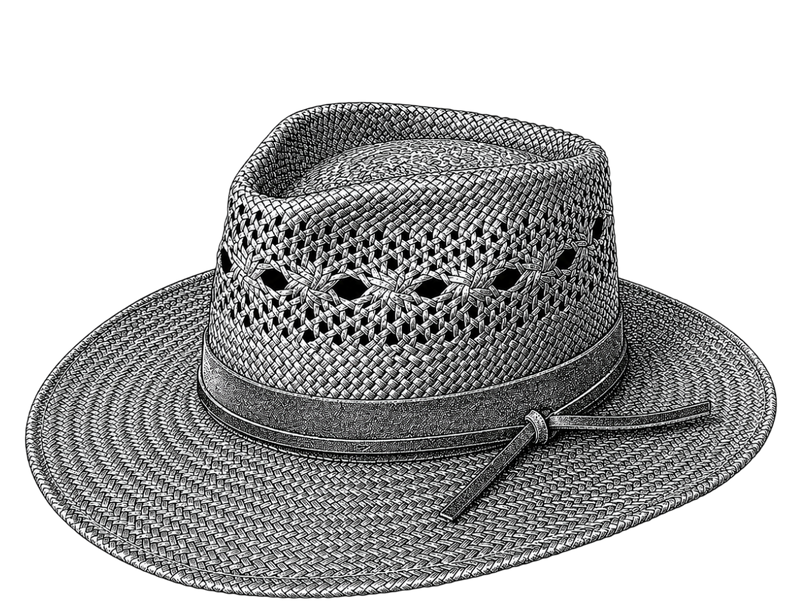
- Fine toquilla (Panama): The weave is tight enough to appear almost solid at normal viewing distance. The straw is pale, uniform, and smooth. High grades can be rolled and recover their shape.
- Mid-grade toquilla: The weave is visible at normal viewing distance. The straw is still pale and clean. Does not roll without some permanent marking.
- Raffia and natural rush: Open, irregular weave with natural color variation. A different aesthetic category from toquilla, not inferior to it.
- Paper straw and synthetic: Very uniform weave (machine-made), slight sheen on paper straw. Paper straw softens when wet; synthetic does not.
2. Construction Method
How the hat is shaped and finished matters as much as the material it is made from.
Hand-blocked: The hat is stretched over a wooden form (block) by a craftsperson. The wooden block creates a precise, consistent shape. The tension applied by the craftsperson ensures the felt or straw is uniformly distributed over the block. Hand-blocked hats hold their shape better over time because the forming tension is even.
Machine-pressed: The hat body is formed by mechanical pressing rather than by hand-stretching over a block. Faster and less expensive. The result is often adequate but may show slight asymmetries or less precise proportion than a hand-blocked equivalent.
How to assess: Look at the crown from directly above. A well-blocked hat has a clean, symmetrical crown with consistent crease depth and a uniform transition from the crown to the brim. An imprecisely made hat may show a crown that is slightly off-center, a crease that varies in depth, or a brim that is not perfectly level.
3. Brim Stiffness and Shape Retention
The brim of a felt hat is typically stiffened with shellac or a synthetic stiffener. The quality of this stiffening affects how well the brim holds its set shape over time.
A quality brim holds the intended angle and curvature without being squeezed into position before putting the hat on. Pick up the hat and let the brim hang freely -- it should sit in its set position without spring-loading or drooping. A brim that requires manual positioning before wearing every time is under-stiffened.
Conversely, an over-stiffened brim is brittle and can crack rather than flex. Quality brim stiffness is firm enough to hold shape but with slight give under pressure rather than cracking.
4. Sweatband Quality
The sweatband is the element in most direct contact with the wearer and the first element to show quality difference in daily use.
Leather sweatband: The traditional quality choice. A genuine leather sweatband (usually calfskin or pigskin) conforms to the head over time, develops a patina, and lasts for the life of the hat with reasonable maintenance. The brand or maker name is typically embossed or stamped into a leather sweatband.
Grosgrain ribbon sweatband: A fabric alternative. In quality hats, this is fine grosgrain with a clean, even finish. In lower-quality hats, it may be a simple cotton or synthetic tape that is uncomfortable and absorbs moisture without releasing it cleanly.
Synthetic or flock sweatband: Found in inexpensive hats. Typically a narrow band of synthetic material. Does not develop, does not improve, and in poor examples can become uncomfortable or malodorous quickly.
5. Finishing Quality
The ribbon, bow, stitching, and overall finish of the hat indicate the attention given to the production:
Ribbon: The hat ribbon should be tight-fitting around the base of the crown, with the join (usually at the back) clean and flat. A ribbon that is puckered, has visible gaps, or joins unevenly is a quality indicator.
Stitching: On the brim edge and where the brim joins the crown, stitching should be fine, even, and consistent. Irregular stitch spacing or loose thread ends indicate hurried or low-quality finishing.
Crown interior: The inside of the crown (the dome above the sweatband) in a quality hat is finished cleanly, often with a silk or synthetic lining. In inexpensive hats this area may be rough or show adhesive residue from the manufacturing process.
Testing Quality at Purchase
Five quick assessments at the point of purchase:
- Surface texture: Run a finger across the crown surface. Quality felt has a smooth, even nap with a subtle resistance. Coarse or irregular texture indicates lower fiber grade.
- Crown symmetry: Look at the crown from directly above. It should be symmetrical, with a consistent crease and a clean, even brim edge.
- Brim rigidity: Press lightly on the brim edge. It should hold its position and return without collapse or excessive springback. If it droops easily, it is under-stiffened.
- Sweatband: Run a finger along the inside of the sweatband. It should be smooth, uniform, and firmly attached to the interior of the hat.
- Weight: Quality felt is denser than the equivalent inexpensive version. A quality hat feels substantial for its size; an inexpensive hat of the same style often feels light and slightly hollow.
Find quality felt and straw hats built to these standards in the Hatloom collection.
Frequently Asked Questions
What is the difference between wool felt and rabbit felt?
Rabbit fiber felt is made from the fine underfelt of rabbits, which has microscopic scales that interlock during processing more tightly than wool. The result is a denser, smoother, more lustrous felt that is lighter in weight and more water-resistant than wool felt at equivalent thicknesses. Wool felt is slightly coarser in texture and generally less water-resistant but is more durable in heavy daily use. The best quality felt hats are rabbit fiber; the best quality everyday hats may be wool felt for its practical durability.
How can I tell if a straw hat is toquilla or paper straw?
Under close inspection: toquilla weave has a chevron pattern caused by the alternating hand-weaving technique. The straw is pale, natural, and slightly irregular in width due to natural variation in the fiber strips. Paper straw has a very uniform weave with consistent strand width and no chevron pattern. Paper straw also softens and may leave slight indentations when firmly squeezed -- toquilla does not. The easiest field test: lightly dampen a small area of the brim interior with a finger. Paper straw feels slightly soft when wet; toquilla and genuine natural straw do not change texture noticeably from light moisture.
Does price reliably indicate hat quality?
Price is correlated with quality but not determined by it. The most reliable quality indicators are material-specific: felt surface texture, weave density in straw, sweatband material, and finishing quality. A $200 hat from a quality producer and a $200 hat from a brand-premium producer with lower production standards can be significantly different objects at the same price. Price filters out the lowest quality more reliably than it identifies the highest quality at any given price point.
How long should a quality hat last?
A quality rabbit fiber felt hat, well cared for, lasts 10-30 years. Quality wool felt hats last 5-15 years with typical use. Quality toquilla Panama hats from established producers last 10-40 years at the highest grades. Inexpensive felt hats (synthetic or low-grade wool) typically show significant quality decline within 2-4 seasons of regular wear. The price-per-year calculation often favors quality purchases for regular hat wearers.
What should I look for in a hat ribbon?
The ribbon should be grosgrain (ribbed texture) rather than satin or plain weave -- grosgrain is more resistant to abrasion and sits more flattering against the crown than smoother materials. The width should be proportional to the crown: a tall crown carries a wider ribbon (3-4 cm) more effectively than a wide band on a low crown. The join at the back should be clean and flat, typically with a small bow or a flat overlap secured with a stitch. A ribbon that is puckering, has visible gaps between itself and the crown, or has a bulky, unclean join is a finishing quality indicator.