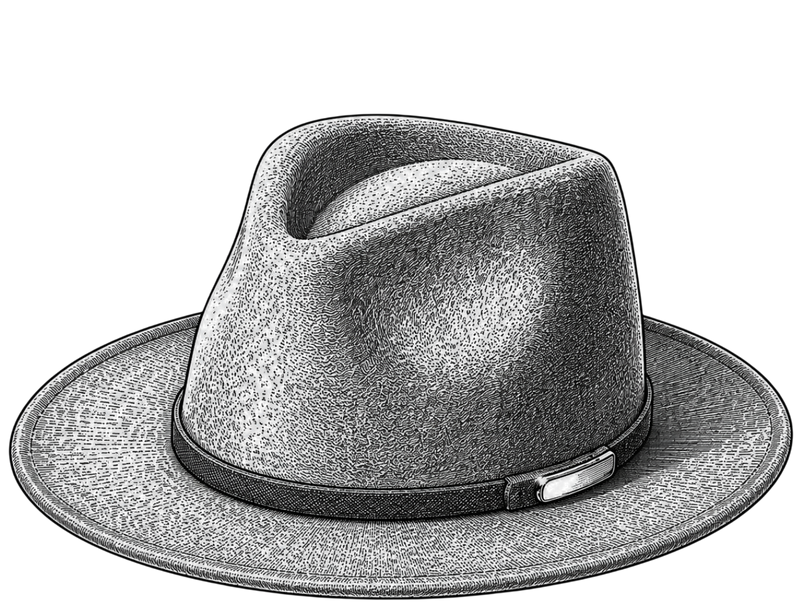
The Panama hat has never been made in Panama. It has never been designed in Panama, exported from Panama, or historically connected to Panama in any meaningful way. The name is one of the great geographical misattributions in fashion history — and understanding how it happened explains why the hat itself is remarkable.
Where Panama Hats Actually Come From
Panama hats are made in Ecuador — specifically in the coastal and Andean regions, with the towns of Montecristi and Cuenca as the primary production centers for fine and commercial grades respectively.
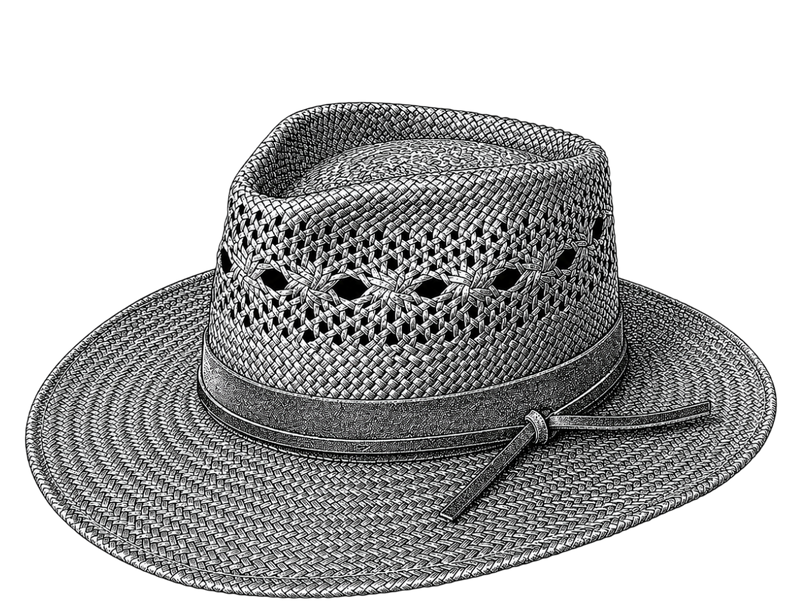
The hat is woven from the fiber of the Carludovica palmata plant — commonly called the toquilla palm, though it is technically not a palm but a palm-like plant native to Ecuador and coastal South America. The fiber is harvested from young, unopened fronds, bleached, and split into fine strands before weaving. The process is entirely handmade. There is no mechanical substitute for the fine-weave grades that define the premium tier of the category.
Key fact: In 2012, UNESCO added Traditional Ecuadorian Toquilla Straw Weaving to its Intangible Cultural Heritage list — formally recognizing it as the property of Ecuador's artisan communities, not a generic production technique.
How Panama Got the Name
The misattribution traces to two separate 19th-century incidents that compounded each other:
The transit trade: Ecuador exported its toquilla hats through the port of Panama, which was a major transit hub for trade between the Pacific coast of South America and North America and Europe. Merchants and travelers who encountered the hats in Panama assumed they were a local product. The hats arrived in North American and European markets labeled by their point of purchase rather than their origin.
The canal and Theodore Roosevelt: The misattribution was cemented internationally by a single photograph. During the construction of the Panama Canal (begun 1904), President Theodore Roosevelt visited the construction site in 1906 — the first sitting US president to leave the country during his term. Photographs of the visit were widely published. In them, Roosevelt wore a wide-brimmed toquilla straw hat. The combination of a globally famous political figure, a globally significant construction project, and a widely distributed image locked the geographical misnaming into English-language consciousness permanently.
Within ten years of those photographs, American and European consumers were asking for Panama hats by name — meaning toquilla straw hats from Ecuador, called by the wrong country.
The Montecristi: The Finest Hat in the World
Within the Panama hat category, a specific grade of hat from the town of Montecristi, Ecuador occupies a place in the luxury goods market comparable to bespoke Savile Row tailoring or Grande Maison perfumery. These hats — called Montecristis — are woven to a fineness measured in weaves per square inch that has no parallel in any other straw hat production tradition.
Grading the Montecristi:
- Commercial grade (bajo fino): 100–200 weaves per square inch. The starting point of genuine Montecristi production. Light, flexible, and water-resistant to a meaningful degree.
- Fine (fino): 200–400 weaves per square inch. The weave is visible but tight. These hats are sold by specialist hat retailers globally at $100–$500+.
- Superfino: 400–800 weaves per square inch. The individual strands become nearly invisible to the naked eye. The hat has a smooth, almost fabric-like surface. Price: $500–$2,000+.
- Fino fino / Museum grade: 1,000+ weaves per square inch. These hats take a single artisan 3–6 months of full-time work to complete. Fewer than 50 are produced annually. Price: $2,000–$10,000+. Can be rolled to the diameter of a wine bottle and returned to perfect shape.
Measurement method: A Montecristi grade is assessed by counting weaves per lineal inch along the weave rows and multiplying. A jeweler loupe is typically used for grades above superfino. This is not a marketing metric — it directly corresponds to production time, material quality, and functional performance.
Cuenca vs. Montecristi: Understanding the Market
The Ecuadorian Panama hat market divides into two primary production traditions with different aesthetics and price points:
Cuenca: Located in the Andean highlands, Cuenca produces the majority of Ecuador's toquilla straw hat volume. Cuenca hats are typically woven with a tighter, stiffer technique that produces a more structured, less flexible hat. They are more consistent in commercial production, less expensive than fine Montecristis, and the source of most Panama hats sold in the global mid-market. A quality Cuenca Panama hat at $80–$200 is a genuinely good hat — well-made, durable, and attractive.
Montecristi: Coastal, lower altitude, different humidity conditions. The softer fiber produced at lower altitude creates a more pliable, finer weave. Montecristi is the prestige tier — fewer makers, slower production, higher prices, and the exclusive source of the finest grades. A genuine fine Montecristi hat is identifiable by its weave quality and flexibility; it will not sustain a crease from gentle rolling.
How to Identify a Genuine Toquilla Hat
The Panama hat market has a significant authenticity problem. Many hats sold as Panama hats are made from paper braid, synthetic materials, or other natural straws with none of the properties of genuine toquilla fiber.
Genuine toquilla indicators:
- Flexibility: A genuine toquilla hat is pliable — it bends without cracking. Paper braid and cheap straw crack or crease permanently under bending pressure.
- Weave consistency: Hold the hat up to a light source. Genuine toquilla has a consistent, regular weave with uniform strand thickness. Mixed strands, gaps, or irregular weave patterns indicate lower-quality materials.
- Interior label: Genuine Montecristi hats typically carry documentation from the maker or the certifying body. Cuenca hats from reputable manufacturers carry Ecuador origin labeling.
- Weight: Fine toquilla is surprisingly light for its apparent solidity. A hat that feels heavy for its size is likely made from a denser, cheaper material.
- Price signal: A genuine fine toquilla Panama hat cannot be produced for less than $80–$100 at the absolute minimum. A $20–$40 Panama hat is not made from toquilla.
Care and Longevity
A genuine toquilla straw hat, cared for correctly, has a realistic lifespan of decades. The fiber does not degrade rapidly under normal use. The primary threats are:
- Sustained water exposure: Saturation causes fiber swelling and shape distortion. Light rain on a treated hat is manageable; sustained rain is not.
- Compression storage: Storing the hat flattened or stacked destroys the brim structure. Store on a hat stand or in a round box.
- Improper drying: A wet toquilla hat must be reshaped and dried on a form. Drying flat or compressed sets a distorted shape permanently.
For fine Montecristis at luxury price points, professional cleaning and blocking by a specialist familiar with the material is recommended over home care for any significant cleaning or reshaping.
Explore Panama and toquilla straw hats in the Hatloom summer collection.
Key Facts at a Glance
- Origin: Ecuador — specifically Montecristi and Cuenca
- Raw material: Fiber from Carludovica palmata (toquilla palm), hand-harvested and hand-woven
- Why the name: Exported through Panama; name fixed by Roosevelt 1906 photographs at the Canal
- UNESCO recognition: Traditional Ecuadorian Toquilla Straw Weaving — Intangible Cultural Heritage, 2012
- Finest grade production time: 3–6 months per hat for museo-grade Montecristi
- Weave count range: 100 weaves/sq. in. (commercial) to 1,000+ (museum grade)
- Rollable property: Specific to fine-grade toquilla — coarser and commercial grades are not rollable
Frequently Asked Questions
Are Panama hats really from Panama?
No. Panama hats are made in Ecuador, primarily in Montecristi and Cuenca. The name comes from 19th-century transit trade through the port of Panama and was cemented by photographs of Theodore Roosevelt wearing one during the Panama Canal construction in 1906. Ecuador is the sole origin of genuine toquilla straw hats.
What is the difference between a cheap and expensive Panama hat?
The primary difference is weave fineness, measured in weaves per square inch. Commercial grades at 100–200 weaves/sq. in. produce a visible, coarser weave. Fine and superfino grades at 400–800+ weaves/sq. in. produce a nearly smooth, fabric-like surface. Production time scales directly — a commercial hat takes days; a fine Montecristi takes weeks to months.
Can you really roll a Panama hat?
Fine-grade toquilla straw hats — genuine Montecristi superfino and above — can be rolled into a cylinder without damaging the weave, then unrolled to their original shape. This is a specific property of fine toquilla fiber at high weave density. Commercial-grade and Cuenca-style hats should not be rolled — the weave is too coarse and the brim too stiff.
How do I know if my Panama hat is genuine toquilla?
Test flexibility: genuine toquilla bends without cracking. Check weave consistency under a light source. Verify origin labeling. Price is a signal — a genuine toquilla hat cannot be manufactured for less than $80–$100. Anything cheaper is made from paper braid, synthetic material, or another natural straw.
How long does a Panama hat last?
A genuine toquilla straw hat cared for correctly — stored on a form, kept from sustained moisture, reshaped when damp if needed — has a lifespan measured in decades. The fiber does not degrade rapidly under normal use. The limiting factors are typically the sweatband (replaceable) and accidental structural damage to the brim.