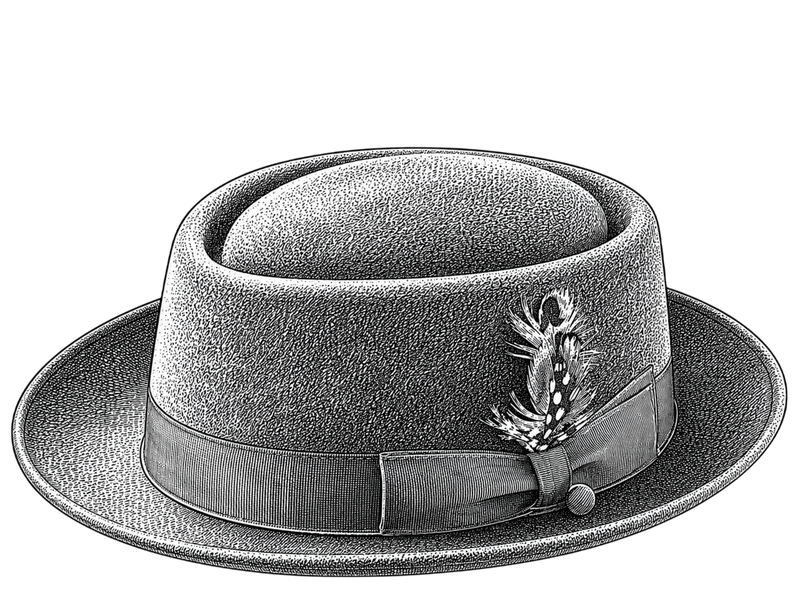
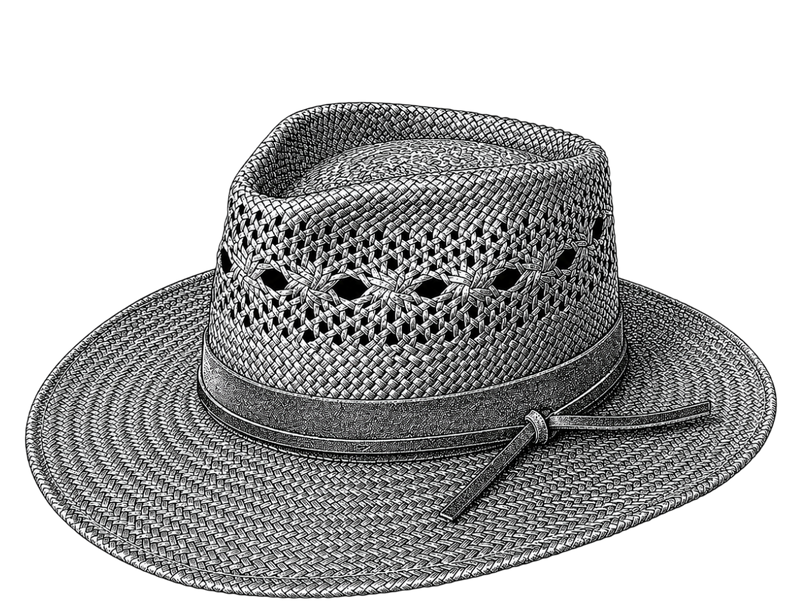
Hat terminology is inconsistently used even by people who sell hats for a living. Brim, brím edge, crown, band, block -- these terms have specific meanings in hat making and hat trade contexts, but they are used loosely in retail product descriptions in ways that create genuine confusion. A buyer who does not know what a 'pinch front' is cannot evaluate whether a hat has one; someone who does not know the difference between a grosgrain band and a petersham ribbon cannot compare materials. This glossary defines the terms with the precision they deserve.
Basic Structural Terms
Crown
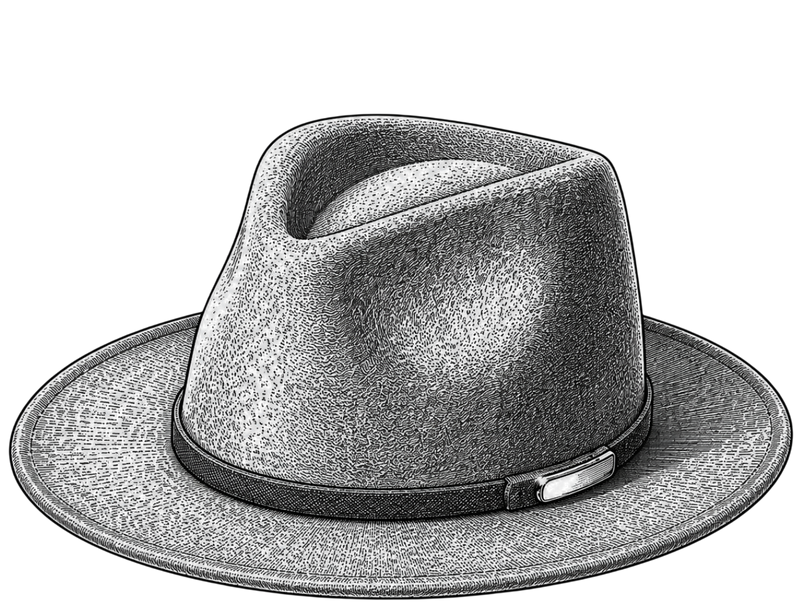
The crown is the part of the hat that covers the head -- the elevated, enclosed upper portion. Crowns vary in height (measured from the hat's interior, from where it rests on the head to the top of the interior), shape (teardrop, oval, round, pinched), and construction material. When someone says a hat has a 'high crown,' they mean the vertical measurement of this portion is greater than standard -- typically 10+ cm is considered a high crown; 7-9 cm is medium; under 7 cm is low.
Brim
The brim is the projecting edge of the hat that extends beyond the crown circumference. It provides shade, adds visual width, and is the primary sun-protection mechanism of the hat. Brims are measured from the edge of the hat band to the outer edge of the brim. 'Brim width' refers to how far the brim extends from the crown.
Inner Brim
The underside surface of the brim that faces the wearer. On quality hats, the inner brim is finished differently from the exterior -- often in a contrasting fabric or with a ribbon edge. The inner brim's colour can affect the light reflected onto the face, which is why some hat makers finish inner brims in black (neutral, no colour reflection) or natural (warm reflected light).
Sweatband
The interior band at the base of the crown that comes into contact with the forehead and temples. The sweatband absorbs perspiration and helps the hat maintain its position on the head. Sweatbands are made in leather (in quality hats), synthetic materials, or cotton ribbon. The sweatband's width and material affect comfort and the hat's ability to wick moisture.
Hat Band (Ribbon)
The decorative band at the junction of crown and brim on the exterior of the hat. This is typically a grosgrain ribbon (a ribbed textile ribbon) in a colour that contrasts or complements the hat's main colour. The hat band's width, material, and the position of its bow or seam (typically at the back or left side) are part of the hat's finishing details.

Crown Shape Terms
Teardrop Crown
A crown that is slightly wider at the bottom and tapers toward the top, creating an oval cross-section. This is the most common crown shape in classical fedoras and trilbies.
Centre Crease
A single lengthwise crease pressed along the centre of the crown from front to back. Characteristic of the homburg hat.
Pinch Front
A crown shape where the front of the hat is pinched inward and downward at both sides, creating a front crease and a characteristic V-shape when viewed from the front. Standard on classic fedoras and trilbies. Sometimes called a 'C-crown pinch' or an 'open road crown' depending on the specific shape of the pinch.
Diamond Crown
A crown creased at four points to create a diamond shape when viewed from above -- two creases running front-to-back and two side-to-side, meeting at the crown's apex. Used on some cowboy hat styles.
Cattleman Crown
A specific cowboy hat crown with a single centre crease front-to-back and two symmetrical side creases, creating a three-crease crown shape. The most common cowboy hat crown style.
Brim Shape and Position Terms
Raw Edge
A brim edge that is cut without any additional finishing ribbon or binding, relying on the felt or fabric's own structure to maintain a clean edge. Quality raw-edge felt hats require firm felt that does not fray or curl.
Bound Edge
A brim edge finished with a ribbon or tape wrapped around the edge to protect it, finish it, and create a defined visual line. Grosgrain ribbon binding is the most common formal hat brim finish.
Snap Brim
A brim that is designed to be turned up or down in different positions -- 'snapped' into position. Common in mid-20th century fedoras and some contemporary flat-cap styles.
Open Road
A brim shape and crown crease combination associated with classic western-influenced felt hats: the brim is flat or slightly turned up at the sides, and the crown has a specific open shape (varies by tradition).
Material and Construction Terms
Felt
A non-woven material created by compressing fibres through heat, moisture, and pressure. Used in quality hats in two main forms: wool felt (from sheep's wool) and fur felt (from rabbit, hare, or beaver underfur). Fur felt is finer, smoother, and more water-resistant than wool felt.
Blocking
The process of shaping a felt hat by pressing it over a hat block (a solid form) while wet, then allowing it to dry and set in that shape. Hat blocking determines the hat's crown shape, brim width, and overall profile.
Toquilla Straw
The natural fibre from the Carludovica palmata plant used to weave genuine Panama hats. The quality of toquilla straw hats is graded by the fineness of the weave, measured in weaves per linear inch.
Grosgrain
A ribbed, sturdy ribbon material used for hat bands, brim bindings, and interior sweatbands in quality hats. The ribbing is a characteristic visual and tactile texture that distinguishes grosgrain from plain weave ribbons.
Browse the full range of hat styles with quality materials and construction at Hatloom.

Frequently Asked Questions
What is the difference between a hat band and a sweatband?
A hat band is the decorative exterior ribbon that runs around the outside of the hat at the base of the crown. It is a visible design element -- typically grosgrain ribbon in a contrasting or complementary colour -- that is part of the hat's visual presentation. A sweatband is the interior band at the base of the crown that contacts the wearer's forehead and temples. It is functional rather than decorative, absorbing perspiration and helping the hat maintain its position. Both are bands associated with the lower crown area, but one is exterior and decorative; the other is interior and functional.
What does UPF mean on a hat tag?
UPF stands for Ultraviolet Protection Factor. It is the standard rating for textile and fabric sun protection (as distinct from SPF, which is used for sunscreen applied to skin). UPF measures how much UV radiation passes through the fabric. UPF 50 means 1/50th (2%) of UV passes through; UPF 50+ means less than 2%. This is the testing standard for hats and sun-protective clothing. A hat with a UPF 50+ rating has been tested and confirmed to block 98% or more of UV radiation through the hat's fabric. The brim's shade provides additional UV protection for the skin underneath it.
What is the difference between a hat's size and its head circumference?
Hat size numbers (6 7/8, 7, 7 1/4, etc. in the traditional US/UK hat sizing system) correspond to head circumference measurements but are not the circumference themselves. The US/UK hat size is derived from dividing the head circumference in inches by pi (approximately 3.14) and rounding to the nearest eighth of an inch. European hat sizes (53, 55, 57, etc.) are the head circumference in centimetres, which is more intuitive. If you know your European hat size (head circumference), you can directly compare it to a hat's interior measurement. US/UK sizes require the conversion calculation. When in doubt, measure your head circumference directly with a flexible tape measure and compare to the hat's stated interior measurement.