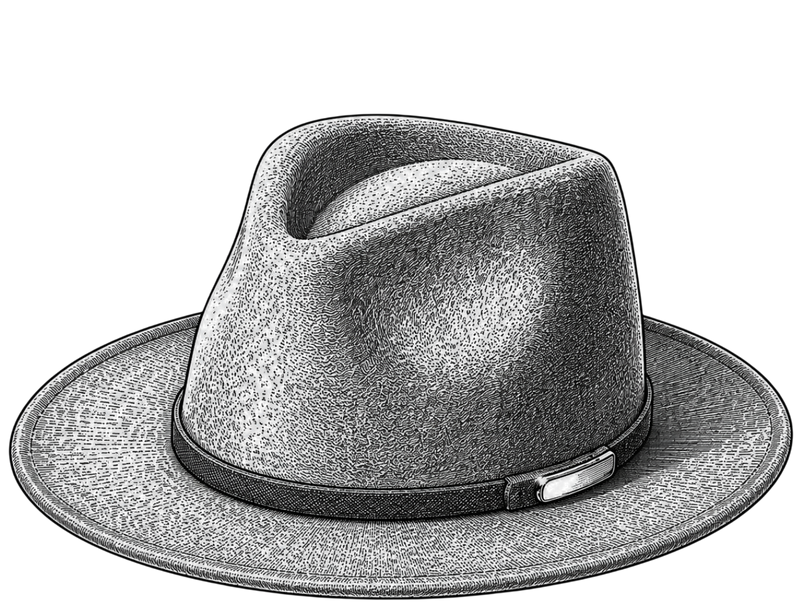
The Panama hat is one of the most misnamed objects in fashion. Despite the name, it has never been made in Panama, is not a Panamanian invention, and has no geographic connection to Panama beyond a 150-year-old shipping accident that stuck.
The real story is more interesting: a centuries-old indigenous craft tradition from Ecuador, adopted by colonial traders, accidentally named by a president's photograph, and now one of the most recognized hat styles in the world.
Where Panama Hats Are Actually Made
Panama hats are made in Ecuador — specifically in the coastal and mountain regions of Ecuador, primarily in the provinces of Manabí and Azuay. The two main centers of production are the city of Montecristi in Manabí (known for the finest quality hats) and the city of Cuenca in Azuay (the largest-volume producer).
The hat is woven from the fibers of the toquilla palm (Carludovica palmata), a plant native to Ecuador. The fiber is harvested, prepared by hand through a laborious bleaching and drying process, and then woven into hats that range from coarse everyday wear to extraordinarily fine luxury hats that can take months to complete.
How Did It Get the Name "Panama"?
The naming is a coincidence of geography and timing. In the mid-1800s, Ecuador was a significant supplier of toquilla straw hats to workers and travelers across the Americas. The hats moved through trading routes and were sold in Panama — then the primary transit point for anyone traveling between the Atlantic and Pacific coasts of the Americas.
Because travelers encountered the hats in Panama (and because the Panama Canal construction brought enormous attention to the region), the hats became associated with Panama in the popular imagination. The name stuck.
The association was permanently cemented in 1906, when a widely-circulated photograph showed US President Theodore Roosevelt wearing a white straw hat while visiting the Panama Canal construction site. The hat was Ecuadorian. The photo was taken in Panama. The international press called it a Panama hat, and the name became permanent.
The Toquilla Weaving Tradition
The craft of weaving toquilla straw hats predates European contact in South America. Indigenous communities on the Ecuadorian coast wove hats from toquilla fiber for practical use — protection from the equatorial sun — long before the Spanish arrived.
The Spanish colonial administration recorded the hat-weaving tradition in the 1600s, and by the 1700s the hats were being traded beyond Ecuador. By the 1800s, the craft had become a significant part of the Ecuadorian economy, employing tens of thousands of weavers.
In 2012, UNESCO recognized the traditional weaving of toquilla straw hats as an Intangible Cultural Heritage of Humanity. The recognition specifically names Ecuador and the Ecuadorian tradition — a formal acknowledgment of what hat enthusiasts have known for years.
How Quality Is Graded
Panama hat quality is measured by the fineness and evenness of the weave — counted as the number of weaves per linear inch. A higher count means a finer, more uniform, and more expensive hat.
- Grades 1–5: Coarse weave, mass production, low price. These are tourist-market hats, often machine-finished.
- Grades 6–10: Good quality, even weave. This is the standard for reputable hat retailers.
- Grades 11–15: Fine weave, noticeable suppleness and uniformity. Premium hats in this range command $200–$500+.
- Grades 16–25 (Superfino/Montecristi): These are the finest straw hats in the world. A Montecristi superfino hat can have 1,500–2,000+ weaves per square inch, is virtually waterproof when wet, and can be rolled tightly into a tube and stored in a glass without damage. Exceptional examples from master weavers in Montecristi sell for $1,000–$10,000 or more.
How to Identify an Authentic Panama Hat
Not all hats sold as "Panama hats" are toquilla straw hats woven in Ecuador. The term has no legal protection in most markets, so synthetic, Chinese-made, and machine-produced versions are often sold under the same name.
Signs of an authentic, quality toquilla straw hat:
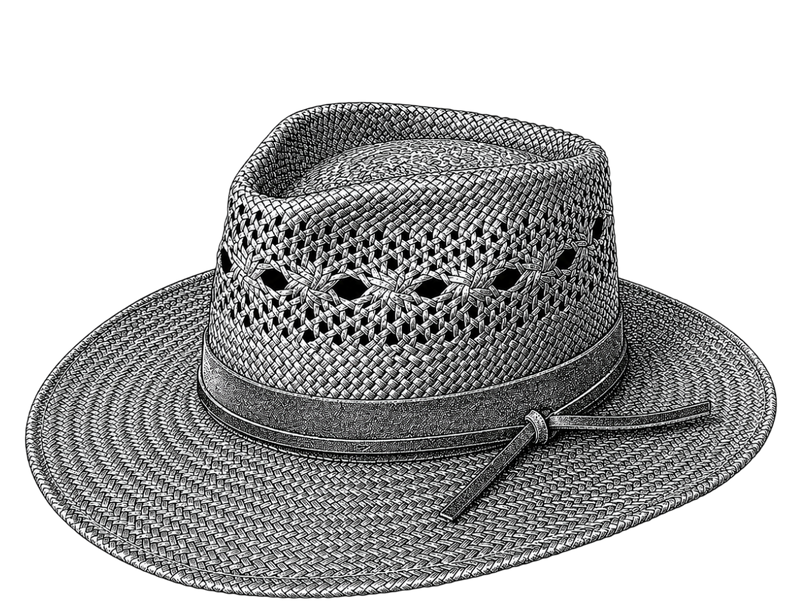
- The weave runs in a circular chevron pattern from the crown outward — a distinctive "V" herringbone pattern visible when you look at the inside of the crown
- The weave is tight, even, and consistent — no loose or broken fibers in quality examples
- The hat is lightweight and breathable — toquilla fiber has natural porosity that synthetic imitations lack
- The inside of the crown often has a label indicating Ecuador origin and grade
- A quality authentic hat is pliable — it can be slightly rolled without cracking or breaking
The Montecristi: The World's Finest Hat
Within the Panama hat tradition, the Montecristi occupies a special position. Woven in the coastal town of Montecristi, Manabí, by master weavers who have spent decades developing their skill, the finest Montecristi hats are objects of extraordinary craftsmanship.
A superfino Montecristi can take 4–8 months to weave. Weaving must be done in the early morning when the humidity is highest (toquilla fiber is more pliable in humid conditions and breaks in dry heat). Each weaver has a personal style that an expert can identify, similar to how a trained eye identifies a painter's brushwork.
These hats are luxury goods on par with high-end Swiss watches — not in marketing position but in the genuine skill, time, and irreplaceable craft knowledge required to produce them.
The Panama Hat Today
The contemporary Panama hat occupies a curious position: widely recognized, often misunderstood, and genuinely beloved by those who know the tradition. The style has remained essentially unchanged for two centuries — a testament to how well-adapted the toquilla weave hat is to warm weather and sun exposure.
Today, a quality Panama hat is one of the few accessories where buying "less" in quantity and "more" in quality has a clear and long-lasting payoff. A well-made toquilla straw hat, cared for properly, outlasts multiple cheaper alternatives and improves in character with age.
Explore straw hats and summer headwear in our full collection.
Frequently Asked Questions
Are Panama hats actually made in Panama?
No. Panama hats are made in Ecuador, woven from toquilla palm fiber by Ecuadorian craftspeople. The name comes from a historical association with Panama as a transit hub and from a famous photograph of Theodore Roosevelt taken at the Panama Canal — but the hat has never been manufactured in Panama.
What is a toquilla palm?
Toquilla (Carludovica palmata) is a palm-like plant native to Ecuador. Its young fronds are harvested, split into fine fibers, boiled, bleached, and dried to produce the raw material for toquilla straw hats — the authentic Panama hat fiber.
How can I tell if my Panama hat is real?
Look for a circular chevron weave pattern on the inside of the crown, consistent and even weave quality, a lightweight and breathable feel, and ideally a label indicating Ecuador origin. Mass-produced synthetic imitations have a uniform, plastic-like texture and lack the natural variation of real toquilla fiber.
What is a Montecristi hat?
A Montecristi is a Panama hat woven in the town of Montecristi, Ecuador — the traditional home of the finest toquilla weaving. The finest Montecristi superfino hats have over 1,500 weaves per square inch, take months to produce, and represent the pinnacle of the hat-weaving craft worldwide.
Why is the Panama hat associated with summer?
Toquilla straw has natural breathability and UV-blocking properties. The open weave structure allows airflow while the fiber itself reflects and absorbs UV radiation. This makes it naturally suited to warm, sunny weather — which is also why it became associated with tropical travel, resort wear, and summer occasions.