The flat cap is the only hat style in history that has been worn by coal miners, golf champions, English lords, and fashion week attendees — often in the same decade. That range is not accidental. It reflects a design that solved a practical problem so cleanly that it transcended every social boundary that tried to contain it.
Medieval Origins: The Statute Cap
The flat cap predates the word fashion by several centuries. In medieval England, working men wore simple woolen caps with a small forward-facing brim — practical headwear that kept wind and rain from the face without the expense or formality of a hat with a full brim.
In 1571, the English Parliament passed the Statute of Caps — a protectionist law requiring all English males over the age of six to wear a woolen cap on Sundays and holidays. The law was designed to support domestic wool and cap-making industries. Its unintended effect was to codify the simple woolen cap as specifically working-class dress. The aristocracy and merchant class wore hats — structured, broad-brimmed felt hats that the statute did not cover. The cap became legally associated with the laboring class.
The statute was repealed in 1597, but the class association it formalized persisted for centuries.
The Industrial Era: The Cap as Uniform
Through the 18th and 19th centuries, the flat cap evolved from a generic woolen covering into a recognizable silhouette — a soft, low crown with a small, stiffened front brim, typically made from tweed, herringbone, or check wool fabric. In industrial Britain, it became near-universal workwear among men in manufacturing, mining, and agricultural labor.
The reasons were practical:
- Low cost — wool cap fabric was inexpensive and widely available
- Warmth without excessive bulk — the close-fitting crown retained heat efficiently
- Low profile — it did not catch wind or obstruct movement in low-clearance environments like mine shafts and machinery areas
- Durability — a wool cap handled rough use better than any structured felt hat
Key context: By 1900, the flat cap was so ubiquitous among British working-class men that a hatless working man was more conspicuous than one wearing a cap. The cap was not a style choice — it was the default male head covering for roughly half the population.
Golf and the Cap Cross Class Boundary
The flat cap first crossed the class boundary through sport — specifically golf, which developed as a Scottish game played across all social levels in a way that most Victorian leisure activities did not.
The practical demands of golf — outdoor, active, requiring clear vision — made structured felt hats impractical. Players across class backgrounds adopted the flat cap as sporting headwear through the late 19th and early 20th centuries. Photographs of early Open Championship competitors show flat caps on players from working and upper-class backgrounds alike.
This sporting association gave the flat cap a neutral social meaning it had not previously had. A style worn by both miners and golfers could not remain exclusively working-class signifier. By the 1920s, the cap appeared regularly on wealthy and middle-class men in sporting and country contexts without social incongruity.
The 20th Century: Divergence and Revival
Through the first half of the 20th century, the flat cap maintained its dual identity — simultaneously workwear and country wear, depending on fabric and context. A tweed flat cap in herringbone or check was appropriate country dress for the landed gentry. The same silhouette in plain wool was working-class urban dress.
The 1960s brought a sharp decline. Youth culture rejected hats comprehensively — the Beatles appeared hatless; the mod aesthetic was built around hair, not headwear. The flat cap became associated with the old and the unfashionable in a way that proved difficult to shake for two decades.
The revival came from an unexpected direction. In the 1990s and early 2000s, the flat cap was adopted by streetwear and hip-hop adjacent fashion — worn in ways deliberately divorced from its British working-class associations. Samuel L. Jackson, LL Cool J, and other artists wore flat caps as part of sharp, deliberate aesthetics. The hat had been claimed by a new context.
The more durable revival came through the heritage fashion movement of the 2010s. As consumers reacted against disposable fashion, traditional British menswear — tweed, wool, natural materials with documented histories — became desirable precisely for what had previously made it seem unfashionable: its age, its associations, its resistance to trend cycles.
Peaky Blinders and the Modern Context
The BBC television series Peaky Blinders (2013–2022) brought the flat cap to a global audience that had no prior personal connection to its history. The show's costume design — specifically the newsboy and flat cap styles worn by the Shelby family — created a visual aesthetic that was simultaneously period-accurate and visually striking enough for contemporary fashion adoption.
Measurable effect: Google Trends data shows a sustained increase in flat cap searches beginning with the show first series in 2013, peaking around series three (2016) and remaining elevated through the early 2020s. Hat retailers across the UK and Ireland reported significant flat cap sales increases correlated with each new series release.
The Peaky Blinders association is culturally specific — it connected the flat cap to a mythology of working-class Birmingham in the 1920s that resonated globally without requiring prior knowledge of British social history. The hat became a cultural reference point independent of its origins.
Construction: What Makes a Flat Cap
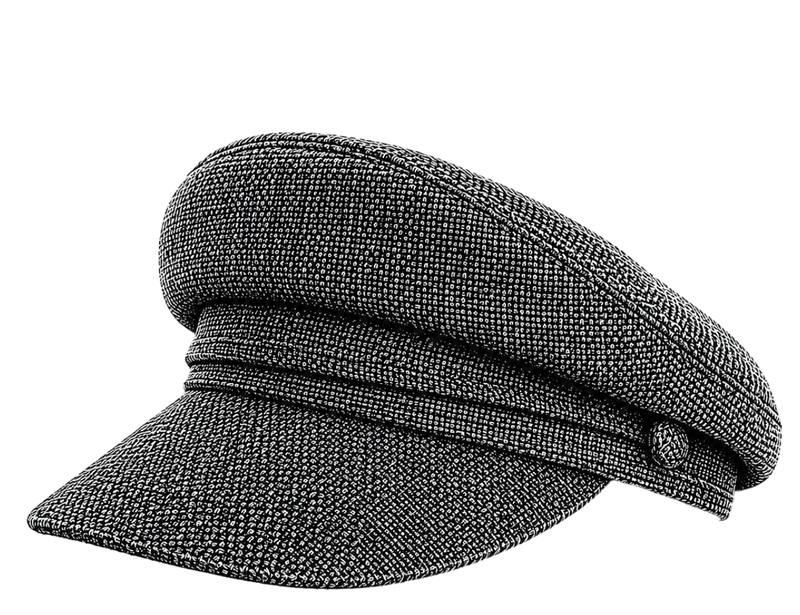
The flat cap has one defining structural element: a small, stiffened front brim attached to a low, rounded crown. Beyond this, the style encompasses significant variation:
- Number of panels: Four-panel (a divided crown with a center seam), six-panel, and eight-panel constructions each produce a slightly different crown shape and visual texture
- The newsboy variation: A fuller, more rounded crown with a button on top and a slightly longer brim — related to but distinct from the classic flat cap. The newsboy (also called the baker boy or gatsby cap) has more crown volume and a more casual, dimensional appearance
- Materials: Traditionally tweed, herringbone, or check wool. Modern variants include cotton, linen, corduroy, leather, and technical fabrics for seasonal and functional alternatives
- Lining: Quality flat caps have a full fabric lining that protects the crown interior and the sweatband — unlined caps are a construction economy that shows over time
The Flat Cap in 2025
The flat cap occupies a specific and stable position in contemporary menswear: it is the most wearable heritage hat style for daily urban use. It lacks the formality demands of the fedora, the specificity of the pork pie, and the sporting context of the straw boater. It fits into casual, smart-casual, and business-casual dress codes without requiring significant adjustment to the rest of the outfit.
Its class associations — the feature that both defined and limited it for centuries — have largely dissolved outside specific British contexts. Globally, the flat cap reads as considered, slightly heritage-inflected, and masculine without aggression. It is the hat that requires the least explanation.
Explore tweed, wool, and contemporary flat cap styles in the Hatloom flat cap collection.
Key Facts at a Glance
- Medieval origin: Simple woolen work cap, precursor to the modern flat cap
- Statute of Caps: 1571 English law requiring working men to wear woolen caps — codified the class association
- First cross-class adoption: Golf culture, late 19th century — sport wore down the class boundary
- Peak working-class ubiquity: 1880s–1940s in industrial Britain
- Post-war decline: 1960s — youth culture rejected hats comprehensively
- Heritage revival: 2010s — natural materials, documented history, reaction against disposable fashion
- Modern cultural marker: Peaky Blinders (2013–2022) — global audience, measurable sales effect
Frequently Asked Questions
What is the difference between a flat cap and a newsboy cap?
A flat cap has a lower, flatter crown that sits close to the head, with a short stiffened brim. A newsboy cap (also called baker boy or gatsby) has a fuller, more rounded, puffier crown with more volume, a button on top, and a slightly longer brim. The newsboy is often confused with the flat cap — both are related styles with distinct silhouettes.
Where did the flat cap originate?
The flat cap has English and Scottish origins, evolving from medieval woolen work caps. The 1571 Statute of Caps formalized its association with working-class dress in England. The style developed through industrial Britain and became particularly associated with the working-class North of England, Scotland, and Ireland through the 19th and early 20th centuries.
Why is it called a flat cap?
The name describes the construction: a crown that sits relatively flat and low on the head compared to structured hats with tall crowns. The brim is also flat — a short, stiffened horizontal projection rather than the curved or full-brim profiles of other hat styles.
What fabric is traditional for flat caps?
Tweed — a rough, durable wool fabric originally from Scotland and Ireland — is the traditional flat cap material. Herringbone weave and windowpane or glen check patterns are the most historically associated patterns. Wool flannel, melton, and Harris Tweed are premium traditional variants. Contemporary flat caps are also made in cotton, linen, and corduroy for warmer seasons.
Did Peaky Blinders really increase flat cap sales?
Yes — measurably so. UK and Irish hat retailers reported significant flat cap sales increases correlated with each new series release from 2013 onward. The show costuming created a visual reference point that introduced the style to a global audience with no prior connection to British working-class dress history.