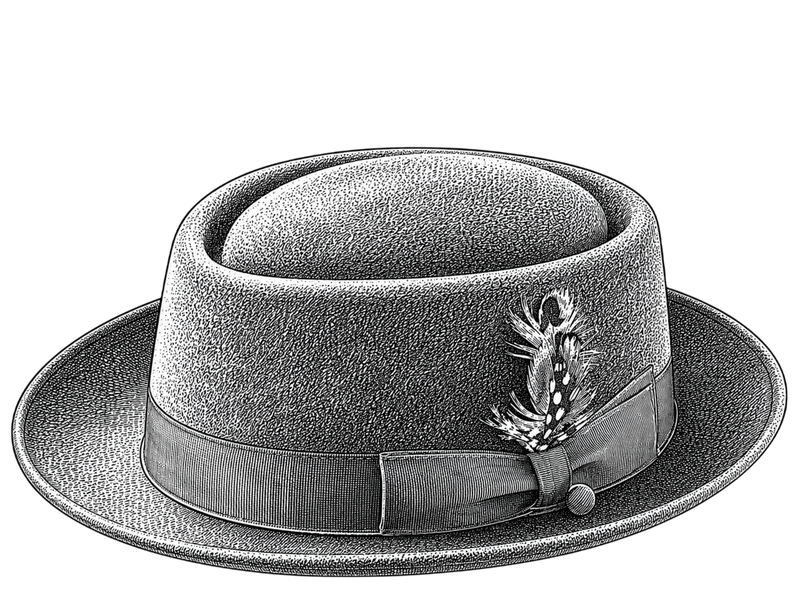
The fedora did not start as a men's hat. It started as a play. In 1882, the French playwright Victorien Sardou wrote a drama called Fedora, named after its heroine Princess Fedora Romazov. The actress Sarah Bernhardt played Fedora in the lead role and wore a centre-creased, soft felt hat as part of the costume. The style was adopted by women's rights advocates in the years following as a symbol of progressive femininity, was subsequently taken up by men, dominated male fashion for approximately sixty years, declined sharply through the 1960s, and has been in various states of revival and irony ever since. Almost nothing about the fedora's journey was predictable from its beginning.
The Stage to Street Transition: 1882-1900s
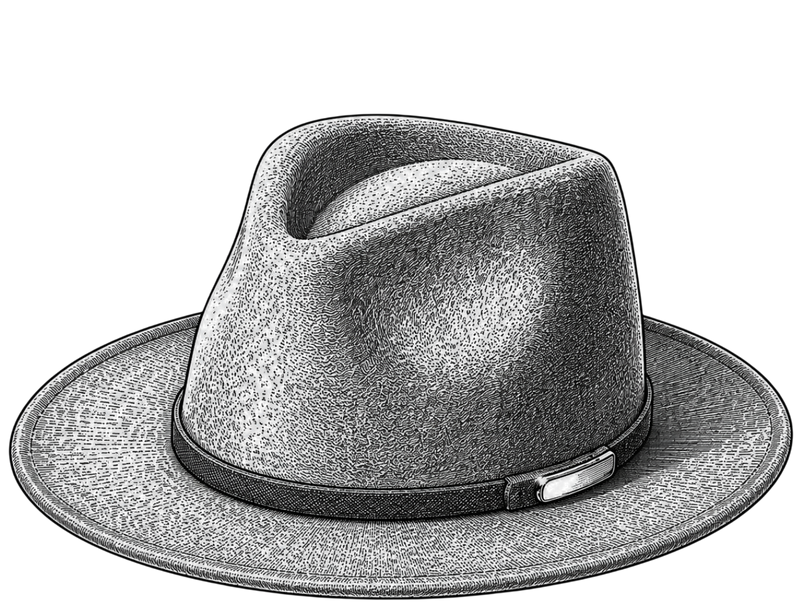
The hat Bernhardt wore in Fedora had a soft crown with a lengthwise crease (what became the standard fedora crown crease), a relatively wide brim, and a defined pinch at the front. After the play's success, the style was produced commercially for women under the name 'fedora' -- directly referencing the play's title character.
Women's rights and suffrage advocates in the United States and Europe adopted the fedora through the 1890s as part of a broader adoption of traditionally male clothing elements as a statement of gender equality. This women's progressive association was the hat's primary identity for its first decade of existence.
The Men's Takeover: 1900s-1920s
By the early 20th century, men had adopted the fedora and it was rapidly becoming the dominant men's hat style in both the United States and Europe. The derby (bowler) and top hat remained in formal contexts, but the fedora's practical advantages -- lightweight, soft, packable, rain-resistant -- made it the preferred hat for everyday wear across social classes.
The First World War contributed to the fedora's rise by interrupting the tradition of more formal headwear and establishing a preference for practical, less rigidly formal dress. Returning soldiers in the 1920s brought the preference for comfortable, less ceremonial clothing, and the fedora fit this preference exactly.
During the 1920s and 1930s, the fedora became the de facto men's hat. In the United States, it was worn across class lines -- factory workers, businessmen, politicians, and criminals wore essentially the same hat. This egalitarian ubiquity is unusual in hat history, where style has usually tracked closely to social class.

The Gangster and Detective Era: 1920s-1940s
The fedora's most culturally loaded associations come from this period. Prohibition-era gangsters wore fedoras. Private detectives in film noir wore fedoras. FBI agents wore fedoras. Police officers wore fedoras. The same hat covered both sides of every confrontation in the dominant popular culture of the era, which gave it an enduring dual association with authority and criminality that has never entirely left the style's cultural image.
Film was particularly significant. Humphrey Bogart's characters wore fedoras so consistently that the hat became inseparable from the hard-boiled detective or morally complex protagonist archetype. Bogart as Sam Spade in The Maltese Falcon (1941) is the most referenced fedora image in Western popular culture.
The Decline: 1960s
The fedora declined sharply in the 1960s for reasons that have been attributed to several causes, of which the most significant was almost certainly the generational break in hat-wearing culture. The postwar generation in the United States and Europe was significantly less interested in formal and semi-formal dress conventions than their parents, and the hat -- more than any other clothing item -- was the visible casualty of this shift.
President Kennedy's decision not to wear a hat at his 1961 inauguration is frequently cited as a turning point, and the story has been repeated often enough to achieve mythological status. Whether Kennedy actually caused the hat's decline or was simply a visible symptom of it is debated by hat historians, but the fact that a president not wearing a hat was culturally significant enough to be remembered decades later illustrates how central hat-wearing norms were to mid-century masculine identity.
Revivals and Irony: 1970s-Present
Since the 1960s, the fedora has been revived multiple times in different cultural contexts:
- 1970s and 1980s: the Indiana Jones franchise (beginning 1981) created the most significant pop-culture re-association of the fedora since film noir -- the adventurer-academic archetype gave the hat a non-nostalgic reason to be worn again
- 1990s and 2000s: the fedora appeared in neo-swing revival culture and then in what became broadly known as 'neckbeard' or 'fedora tipping' culture -- an online association of the hat with a particular type of social awkwardness that became a lasting meme. This association, though based on a relatively small group of wearers, created genuine cultural baggage for the hat that persists in online discourse
- 2010s-present: quality felt fedoras have steadily maintained a presence in premium fashion, menswear, and style communities independent of the online mockery, largely because a well-made fedora worn appropriately has nothing to do with its meme associations
The Fedora Today
A quality felt fedora in 2025 occupies an interesting cultural position: it is simultaneously a historically loaded hat with complex associations, a genuinely elegant and functional piece of headwear, and a style that rewards knowing exactly what you are doing with it. The people who wear fedoras well today are typically either knowledgeable about hat culture or simply wearing what they like without excessive concern for cultural commentary. Both approaches work.
Explore felt fedoras in classic and contemporary styles at Hatloom.

Frequently Asked Questions
Why is the fedora associated with the internet 'fedora' meme?
The meme association emerged in the early 2010s from the observation that a particular online demographic -- often described as self-styled 'intellectual' men with certain social patterns -- frequently wore fedoras combined with other anachronistic elements like bowties and trench coats. The hat became a visual shorthand for this demographic type. The meme's persistence comes from its specificity -- it targets a combination of hat, wearer type, and attitude rather than the hat alone. A well-dressed man in a quality felt fedora bears no resemblance to the meme archetype, which is why fashion communities and hat enthusiasts have never considered the meme relevant to actual hat wearing.
What is the difference between a fedora and a trilby?
A trilby has a shorter, downward-angled brim (typically 4-5 cm) and a narrower crown than a fedora. A fedora has a wider brim (typically 5-8 cm or more) and a fuller crown. The trilby emerged slightly later than the fedora and has its own separate cultural associations -- it was prominent in the Mod era of the 1960s in Britain. Both have the characteristic crown crease and pinch front, which is why they are frequently confused. The brim width and angle is the primary visual distinction.
What materials are traditional fedoras made from?
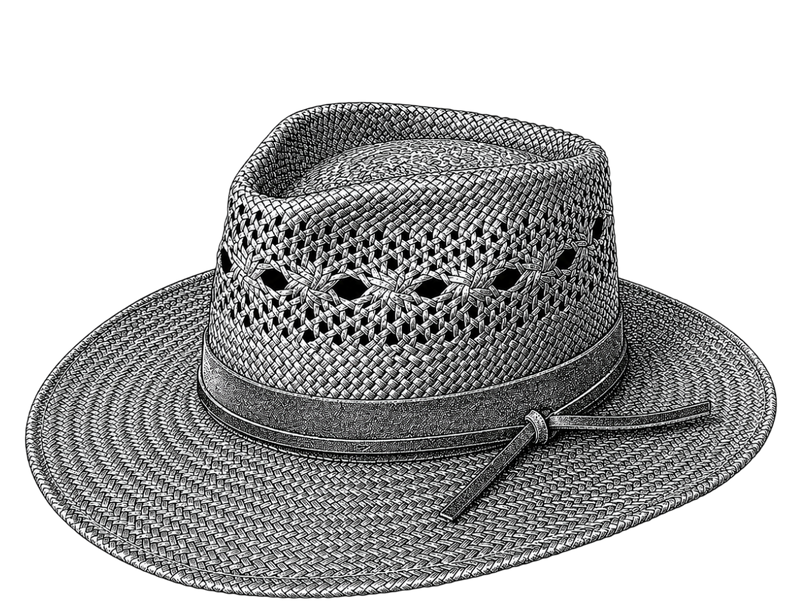
Traditional fedoras are made from felt -- either wool felt or fur felt (made from rabbit, beaver, or hare fur). Fur felt is generally considered superior: it is lighter, more water-resistant, and holds its shape more reliably than wool felt. The quality of the felt is the single most important factor in a fedora's performance and appearance. Panama-straw fedoras exist as warm-weather equivalents, though a Panama in the traditional sense is a different hat category.