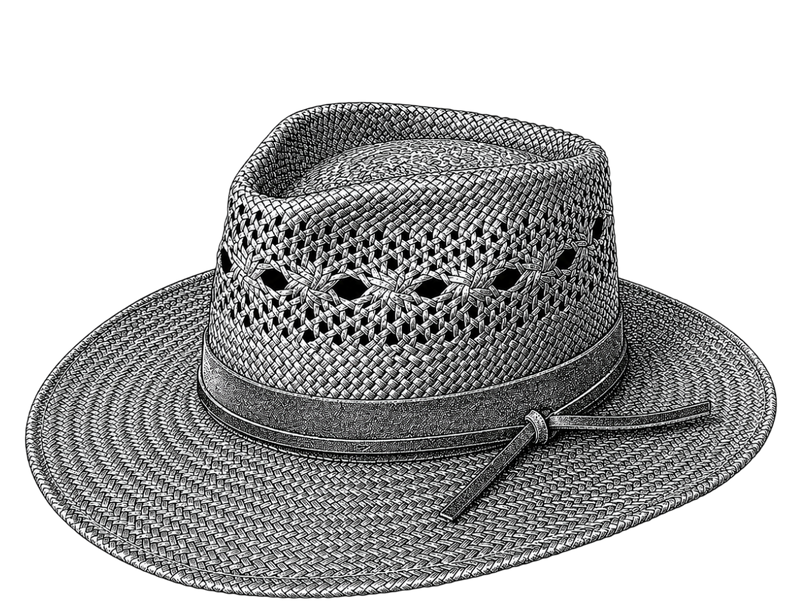
Britain has the most legislated hat history of any nation. A country that passed an Act of Parliament requiring its citizens to wear a specific type of hat on Sundays -- the Statute of Caps in 1571, mandating woollen caps for all but the nobility -- takes hat wearing more seriously as a matter of social and economic policy than anywhere else in the recorded hat-wearing world. Understanding British hat history means understanding not just fashion and function but the complex intersection of sumptuary law, economic protectionism, class signalling, and the gradual democratisation of dress that hat wearing embodies over five centuries.
The Medieval Foundation: Social Control Through Hat Wearing
In medieval England, sumptuary laws regulated who could wear what materials, colours, and styles of clothing including hats. The intent was partly economic (keeping English subjects buying English goods) and partly social (maintaining visible class distinctions through dress). A merchant was prohibited from wearing the same styles as a nobleman, and a nobleman from wearing the styles reserved for royalty.
Hat wearing was particularly regulated because headwear was among the most visible clothing elements -- the hat communicated social position to observers at a distance in a way that shoes or undergarments could not. This visibility made hats useful targets for sumptuary regulation and social convention simultaneously.

The 1571 Statute of Caps
The Statute of Caps was extraordinary even by the standards of Tudor economic legislation. It required all English males over the age of six years (with specific exemptions for the nobility and certain professions) to wear a knitted woollen cap on Sundays and holidays. The statute was not primarily a fashion law -- it was an economic intervention designed to protect the English cap-knitting industry, which was suffering from competition from imported felt hats.
The statute remained on the books for decades but was difficult to enforce and widely evaded, particularly in urban areas and among rising merchant classes who preferred imported felt hats as status markers. The law was eventually repealed in 1597 but left a lasting association between legislation and hat wearing in English cultural memory.
The Hat Industry: From Craft to Commerce
English hat making became a significant industry through the 16th and 17th centuries, centred in specific towns where the craft organised into guilds and later commercial enterprises. Southwark, London, Bermondsey, and later Stockport and Manchester became hat-making centres. Beaver felt hats required beaver fur, which came from North American trading networks; the demand for beaver fur for hat making was a significant driver of early North American colonisation and the fur trade.
The Haberdashers' Company -- one of the oldest livery companies in the City of London -- dealt partly in hat and cap trade from the medieval period, reflecting how commercially significant hat making and selling was in the English economy for centuries before industrial hat production.
Class and Hat Wearing: Victorian England
Victorian England codified class differences in hat wearing with particular clarity. The top hat was the aspiration marker of the middle and upper classes across the century. The flat cap was working-class. The bowler (invented in the 1850s for gamekeepers and quickly adopted by the middle management classes) occupied the crucial middle ground between the top hat's extreme formality and the flat cap's working-class identity.
George and William Bowler, who made the hat that bears their name for Locks of St James's (the hatters in business since 1676), created a hat that perfectly matched a class category in formation: the Victorian professional, technical, and clerical middle class who needed to signal their distinction from manual workers without claiming aristocratic identity.
The British Hat Industry's Peak and Decline
The British hat industry peaked in the early 20th century when millions of hats per year were produced for domestic consumption and export. The interwar period maintained significant production; the post-war casualisation of dress hit the formal hat market severely. Factories that had employed thousands in Manchester, Sheffield, and London contracted or closed through the 1950s, 1960s, and 1970s.
What survived the decline was not volume production but luxury and specialist craft. Locks of St James's (the oldest hat shop in the world, est. 1676) continues to operate. British milliners for formal and occasion wear (the Royal Ascot context sustains significant seasonal trade) maintain the craft at the high end. Small-batch producers of quality flat caps and tweed hats in Scotland, Wales, and the English north maintain artisan production.
The Royal Connection
The British monarchy's relationship with hat wearing is extensive and ongoing. Royal Ascot (the annual racing event attended by the royal family) is the most visible occasion that sustains formal hat culture in contemporary Britain. Royal Warrant holders in millinery -- hat makers who supply the Crown -- represent a specific tier of British hat quality that the royal connection sustains.
Browse quality British-heritage hat styles and classic cap traditions at Hatloom.
Frequently Asked Questions
What is the oldest hat shop in the world?
James Lock and Co. of 6 St James's Street, London, is generally considered the oldest hat shop in continuous operation in the world, established in 1676. The shop is notable for having made hats for Horatio Nelson, the Duke of Wellington, Oscar Wilde, and numerous other historical figures, and continues to operate as a hat retailer and maker on the same premises today. Their most famous contribution to hat history is having made the first bowler hat (developed with hat makers Thomas and William Bowler) for a customer in the 1850s. The shop holds Royal Warrants and remains a functioning retail hat business rather than a museum piece.
What is the significance of the flat cap in British culture?
The flat cap has carried working-class British cultural identity for over a century. In the late Victorian and Edwardian periods it was the universal cap of industrial and agricultural workers, while their employers wore bowlers and their betters wore top hats. This class coding was so embedded that cultural representations of working class northern England still use the flat cap as an immediate visual shorthand -- the cap in a 'cloth cap' character. The television series Peaky Blinders (which uses the flat cap and its variant the newsboy cap prominently) and Last of the Summer Wine (in which flat caps are part of the character identity coding for working-class Yorkshire men) are two of the most recent cultural reinforcements of this association. The flat cap has simultaneously been adopted by a much broader range of wearers outside its original class context, but the original coding remains legible.
Why do British people care so much about hats at formal occasions?
The persistence of hat conventions at British formal occasions (weddings, Royal Ascot, christenings) reflects the longer general retention of formal dress conventions in British social life compared to most other Western countries, and the specific role that the royal family and its social events play in maintaining formal dress norms. When the monarch attends an event, the dress code is formal, and formal British dress has included hats for women for centuries. The social aspiration of dressing as the occasion requires when the occasion has royal associations helps sustain hat wearing as an expected element of smart formal dress in contexts that have no equivalent in most other countries.