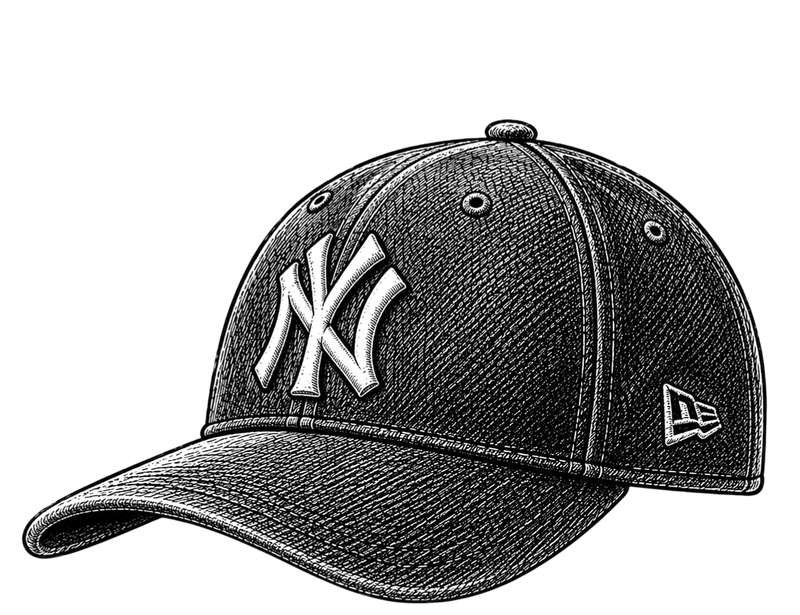
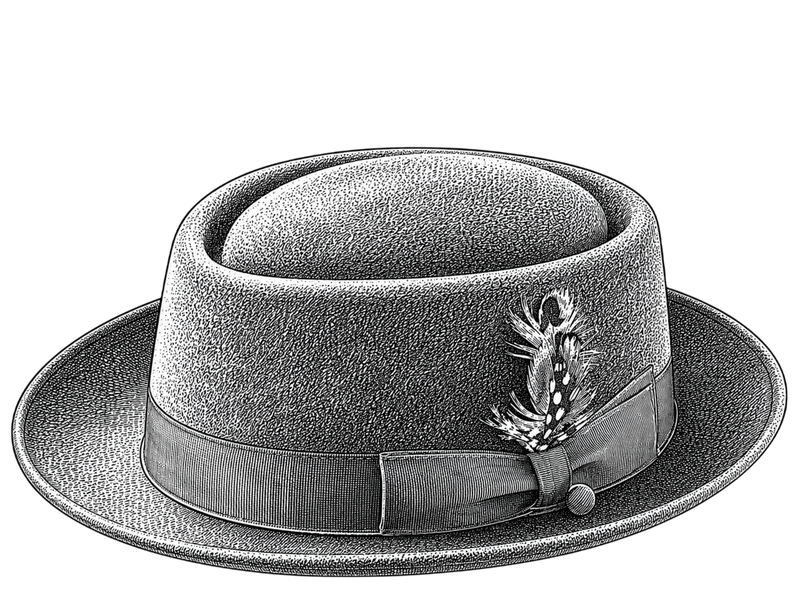
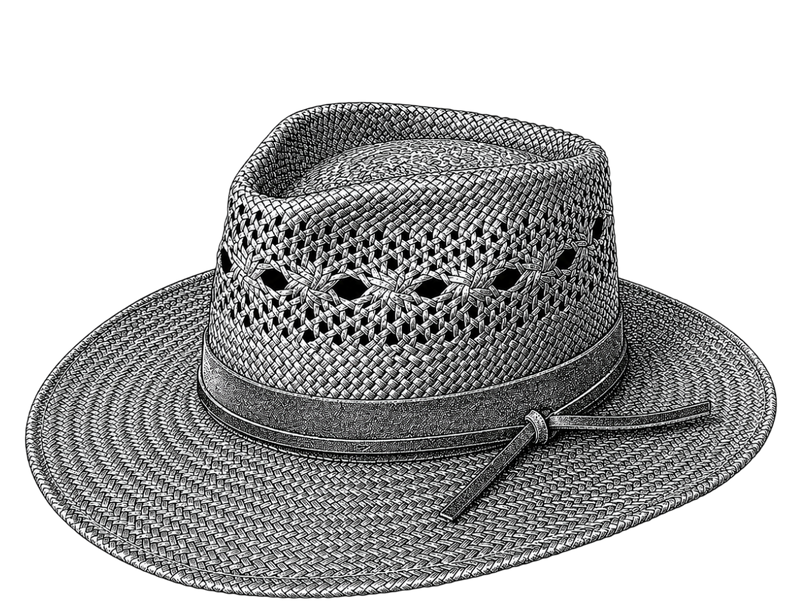
These represent two entirely different manufacturing approaches, and the method used affects fit, durability, and how the cap ages.
The Two Methods
- Cut-and-sew: Flat fabric panels are cut to pattern and stitched together to form the cap's structure — traditional 6-panel construction.
- Molded: A single piece of fabric is heat-molded over a form into a seamless, structured shape — no panel seams.
Fact: Molded caps eliminate panel seams entirely, which removes a common point of structural failure in cut-and-sew construction — but molding requires specific synthetic-blend fabrics that respond to heat-forming, limiting material choice compared to cut-and-sew.
Comparison
| Factor | Cut-and-Sew | Molded |
|---|---|---|
| Seams | Visible panel seams | Seamless |
| Material flexibility | Wide range (cotton, wool, etc.) | Limited to heat-formable synthetics |
| Failure points | Seam stress points | Fewer structural failure points |
Which Is Better
Cut-and-sew offers broader material choice and a more traditional aesthetic. Molded offers structural simplicity but at the cost of material flexibility — neither is universally superior.
Bottom line: Cut-and-sew and molded construction trade off material flexibility against seam-related failure points — the right choice depends on priorities, not a clear quality hierarchy.
Frequently Asked Questions
Why do cut-and-sew caps use 6 panels specifically?
Geometry. A curved dome shape cannot be formed from a single flat piece of fabric without cutting and seaming — the panels allow the flat material to approximate the curved surface of the head. Six panels (two front, two side, two back) is the most efficient distribution for a baseball cap crown profile, balancing the number of seam points against the accuracy of the resulting curve. More panels (8-panel caps) produce a rounder crown profile; fewer panels (4-panel) produce a flatter, more fitted look.
Do molded caps fit differently than cut-and-sew caps?
Often yes, particularly at the crown. Molded caps follow the exact geometry of the mold form, which may or may not match individual head shapes as well as cut-and-sew construction, which has slightly more flexibility in how panels conform to the head. Molded caps can feel more uniform in pressure but less adaptable to irregular head shapes. Cut-and-sew panels have seams that can flex slightly differently around an individual head's contours. Many people find cut-and-sew fits more comfortably for long-duration wear for this reason.
Which manufacturing method produces more consistent quality across a production run?
Molded caps, for shape consistency. Because the mold defines the exact geometry, every unit produced with the same mold has identical crown geometry. Cut-and-sew introduces variation at each stitching step — small differences in panel alignment, seam tension, and stitching angle accumulate into subtle crown geometry differences unit-to-unit. For high-volume production where shape consistency matters more than material flexibility, molded construction has an advantage. For premium material and traditional aesthetic, cut-and-sew remains the standard.
Related Reading
- The Hidden Engineering Inside a Structured Baseball Cap
- Snapback vs. Fitted Caps: What's the Actual Difference?
- Why Stitch Count Per Inch Matters More Than You Think
Shop Hatloom
Cut-and-sew caps in cotton twill and wool blends with panel seam construction details per listing.