Most cowboy hats sold outside the American West are purchased for the wrong reasons and fitted incorrectly. The cowboy hat is one of the most precisely engineered hat designs in Western history -- its proportions, brim width, and crown height serve specific functional purposes developed over more than a century of working outdoors in extreme conditions. Understanding what the hat was designed to do makes buying and wearing decisions straightforward.
What the Cowboy Hat Was Actually Designed to Do
The cowboy hat's design elements are functional solutions to specific problems:
- Wide brim (7-12 cm): provides shade for the face, neck, and shoulders from above and from angled sun. The specific 7-10 cm width range was determined by the balance between shade coverage and wind resistance when riding at speed.
- High crown (10-15 cm): creates an air gap between the head and the hat, providing insulation from both heat and cold. The crown height also allows hat removal and replacement with one hand -- necessary for mounted riders.
- Curved brim sides: channels rainwater away from the face and down the back, preventing water from running onto the wearer's neck.
- Structured straw or felt material: structured enough to maintain shape in rain, wind, and rough handling; flexible enough to be shaped and personalised by the wearer.
Materials: Felt vs Straw
Felt Cowboy Hats
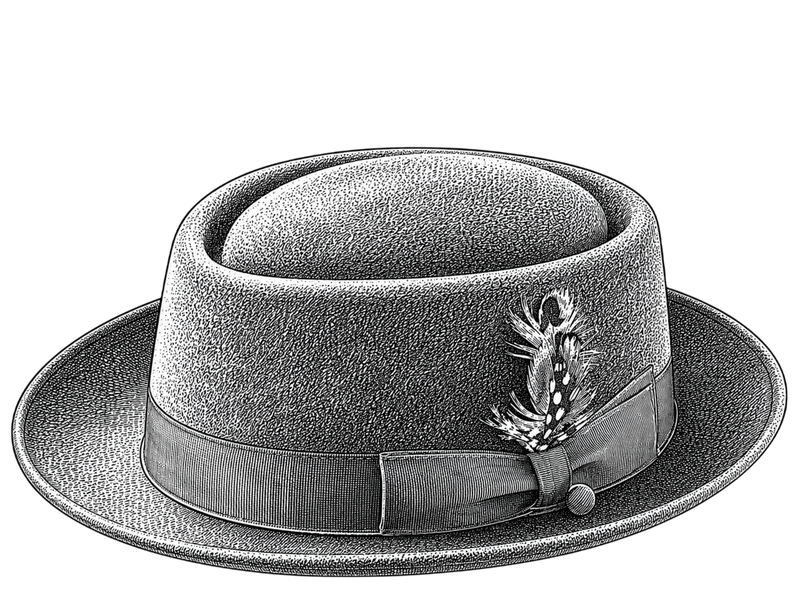
Felt cowboy hats are the traditional autumn and winter hat, and the more formal option year-round. Quality is measured in X grades -- 3X through 1000X, though the X system is not standardised across manufacturers and is often used as a marketing term rather than a precise quality indicator. In practical terms, higher quality felt is made with a higher percentage of beaver or other quality fur fibre rather than wool, producing a finer, more water-resistant, and more shapeable hat.
Beaver felt cowboy hats are the quality benchmark -- they are the most water-resistant (beaver fur is naturally hydrophobic), the most shapeable, and the most durable. Wool felt is less expensive, less water-resistant, and requires more care in wet conditions.
Straw Cowboy Hats
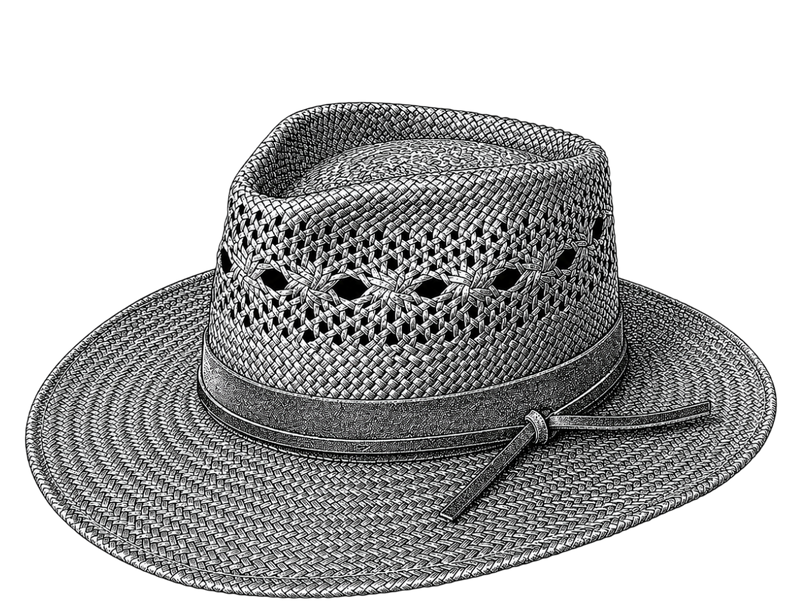
Straw cowboy hats are the summer and warm-weather option, providing better ventilation than felt. Quality is indicated by the fineness of the weave, the flexibility of the straw without cracking, and the quality of the interior finishing. The most common high-quality straw for cowboy-style hats is toquilla straw (the same material as Panama hats) or palm leaf straw. Paper straw is an entry-level material that cracks and loses shape significantly faster.
Crown Styles: What They Mean
The crown of a cowboy hat is shaped after purchase by the wearer or by a hat shop -- a new felt cowboy hat is often sold with a flat or minimally creased crown intended to be shaped. The major crown styles:
- Cattleman (most common): three creases -- one down the center front-to-back and one on each side. The classic Western working hat shape.
- Gus (or Tom Mix): a single deep center crease with sloped sides. Associated with ranch tradition and country music.
- Pinch front: the front of the crown is pinched into a two-sided V-shape, common in rodeo and competitive Western riding contexts.
- Open crown: no permanent creases, allowing the wearer to shape the crown to their preference.
Brim Width and Shape
Cowboy hat brims range from approximately 7 cm (a short brim, often called a Cattleman brim) to 12 cm or wider (a full western brim for maximum sun and rain coverage). Brim shape:
- Flat brim: the working and fashion option. Provides maximum coverage at the edge.
- Curled or rolled brim: the brim is permanently rolled upward on both sides, which reduces side coverage but makes hat-wearing in vehicles more practical.
- Upturned front brim: the front of the brim is permanently bent upward, common in Australian bush hat styles and some working Western hats.
How to Fit a Cowboy Hat
Cowboy hat sizing is the same as other hat sizing -- head circumference in centimetres, converted to US size (approximately circumference in cm divided by pi, times the sizing convention). However, cowboy hats often have an interior felt or foam insert at the sweatband that can be adjusted for fit.
A correctly fitted cowboy hat:
- Sits on the head without pressure -- snug enough not to blow off in mild wind, not so tight as to create headband pressure after 30 minutes of wear.
- Does not tip forward or backward when the head is level -- a hat that tips forward has a crown that is proportionally deep for the head shape; one that tips back is proportionally shallow.
- Sits approximately 2-3 finger-widths above the eyebrows.
How to Wear a Cowboy Hat
The cowboy hat is worn level or with a very slight forward angle (front edge slightly lower than back). Pushing a cowboy hat far back on the head is a rodeo-specific or comedic convention, not the standard wearing position. The hat should sit centered on the head with the hatband parallel to the horizon.
Context: cowboy hats are appropriate in Western, country, outdoor, and festival contexts with confidence in any climate. In urban contexts where cowboy culture is not present, a cowboy hat is worn as a fashion statement -- the same rules of wearing it correctly and with intention apply, but the wearer should be comfortable with the cultural specificity of the hat's signals.
Browse straw and structured hats with wide brims at Hatloom.
Frequently Asked Questions
What is the correct X rating for a quality cowboy hat?
The X rating system is not standardised across hat manufacturers and should not be used as a reliable quality indicator when comparing between brands. One manufacturer's 5X hat may be equivalent to another manufacturer's 10X hat. More reliable quality indicators are: the stated material (beaver felt, rabbit felt, wool felt), the country of manufacture, the brand's reputation for Western hats, and the physical characteristics of the hat -- stiffness, surface texture, water beading behaviour. For functional working hats, beaver felt is the quality standard regardless of X rating.
Can I reshape a cowboy hat at home?
Yes. Felt cowboy hats can be reshaped using steam from a kettle or steam iron held at approximately 20-30 cm. Hold the steam source near the felt (not touching), allow the steam to penetrate the felt for 10-15 seconds until it softens, then reshape by hand and allow to cool in the new position. Straw cowboy hats are more difficult to reshape without professional tools -- straw can crack if bent when dry and lacks felt's thermoplastic properties. For significant reshaping, a hat shop with blocking equipment is recommended.
How should I store a cowboy hat?
Upside-down (on the crown, not the brim) or on a hat stand. Storing a cowboy hat brim-down flattens the brim over time, especially in warm or humid conditions. In a hat box designed for wide-brim hats, store crown-down with tissue paper inside the crown to support the structure. Avoid long-term storage in direct sunlight (bleaches and dries the material) or in sealed, humid environments (can cause mould in natural fibre hats).
What does it mean when a cowboy hat is described as fur felt?
Fur felt refers to felt made from the underfur of animals -- most commonly beaver, mink, or rabbit. The underfur fibres are microscopic scales that interlock tightly when processed into felt, producing a denser, more water-resistant, and more durable material than wool felt. Beaver fur felt is the highest-quality natural material for cowboy hats. Felt described as fur felt without specifying the animal is usually rabbit -- good quality, but less water-resistant and slightly less durable than beaver.
Is a cowboy hat ever appropriate as business or smart casual wear outside the American West?
In most international urban contexts, a cowboy hat carries strong cultural signalling from American Western traditions that may read as costume or statement wear rather than straightforward hat wear. The exception is in music, fashion, creative, and festival contexts globally, where the cowboy hat has been absorbed as a fashion object with understood aesthetic intent. For business wear in urban environments, the cowboy hat is generally outside what reads as conventional professional presentation -- the fedora, flat cap, or homburg occupy the smart-casual and business registers without the same cultural specificity.