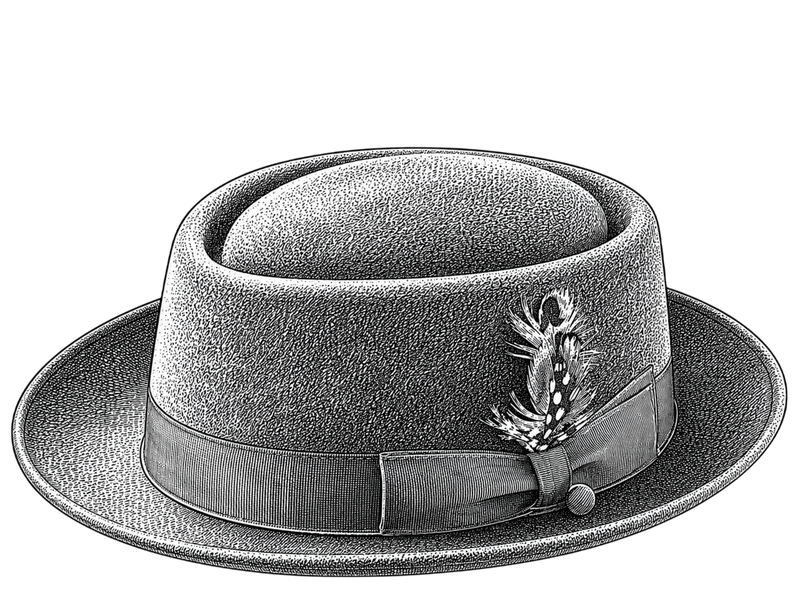
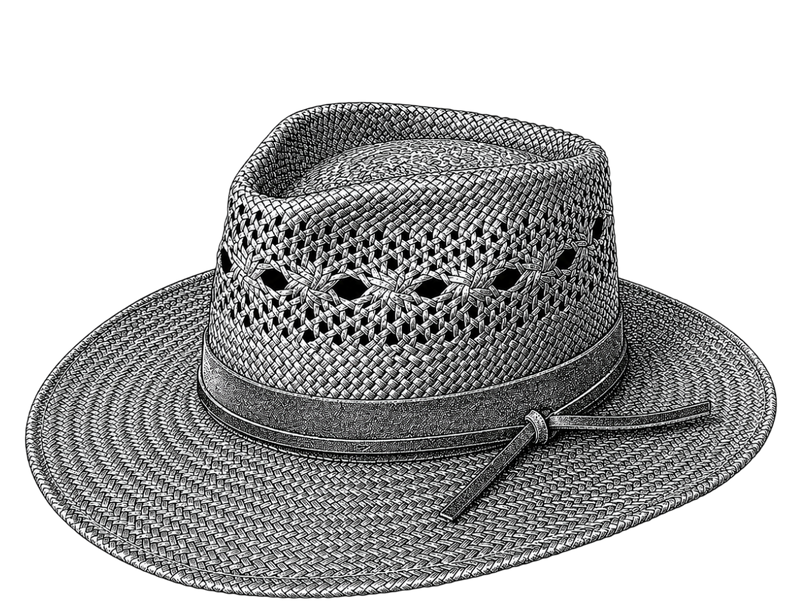
When a company name becomes the generic word for the product it makes, something has happened in quality and culture that goes beyond commercial success. In Italian, borsalino is used as a common noun for fedora hat the way hoover is used in British English for vacuum cleaner or scotch tape in American English for adhesive tape. The Borsalino company, founded in 1857 in Alessandria in northern Italy, achieved this linguistic absorption by producing hats of consistent quality for long enough that the brand name became the category name in its home country. Understanding Borsalino means understanding what made Italian felt hat production the global quality benchmark for most of the 20th century.
The Founding and the Production Method
Giuseppe Borsalino founded his hat factory in Alessandria in 1857 with an approach that was specific about materials and process rather than focused on cost efficiency: he used high-quality rabbit and hare fur felt, processed through a lengthy production sequence that took approximately six to seven weeks per hat from raw fur to finished product. This production time was not inefficiency -- it was a deliberate quality standard that allowed each hat to reach the correct density and texture through gradual processing rather than accelerated methods.
The production sequence for a Borsalino hat involved more than fifty individual operations, many performed by skilled artisans with decades of experience. The company maintained this production standard as its identifying characteristic even as hat manufacturing industrialised and cheaper production methods became available.

The Golden Era: Early to Mid-20th Century
Borsalino's peak reputation and peak output coincided with the golden era of hat wearing in Western culture: the period from approximately 1900 through 1960 when a quality felt hat was a standard component of masculine dress for most social classes in Europe and North America.
During this period, Borsalino produced several million hats per year. The factory in Alessandria employed thousands of workers and was the dominant employer in the city -- Alessandria became identified with hat making the way certain English cities were identified with particular industries. The Borsalino hat was exported globally and was the preferred hat of heads of state, film stars, and anyone in the world who associated quality felt hats with Italian craftsmanship.
The company's retail expansion included flagship stores in Paris, London, New York, and other major cities, making it one of the first Italian fashion companies to operate direct global retail at scale.
The Film Association
The 1970 French film Borsalino -- directed by Jacques Deray and starring Jean-Paul Belmondo and Alain Delon -- used the hat brand as its title and centred the fedora as a visual and cultural element of its 1930s Marseille gangster setting. The film's commercial success (it was one of the highest-grossing French films of its year) reinforced the hat brand's cinematic associations and gave Borsalino the kind of film exposure that money could not buy.
The film followed a long tradition of Borsalino hats appearing in cinema -- the company had supplied hats for numerous major Italian and international film productions through the mid-20th century, and the hat's distinctive quality and silhouette made it recognisable in period productions.
Decline and Revival
The general decline of hat wearing in the 1960s and 1970s affected Borsalino as it affected all hat companies. Production volumes fell dramatically, retail locations contracted, and the company went through multiple changes of ownership through the late 20th and early 21st century, including bankruptcy proceedings in 2018.
In 2019, the company was acquired by investment interests and has been repositioning as a luxury brand rather than a volume hat manufacturer. The shift reflects the broader market reality: there is no longer a mass market for high-quality felt hats, but there is a premium market for artisan-produced Italian fedoras among buyers who understand the brand's heritage and are willing to pay accordingly.
What a Borsalino Is
A Borsalino hat at the production standard the company is known for is:
- Made from fur felt (rabbit or hare) processed through the company's lengthy traditional sequence
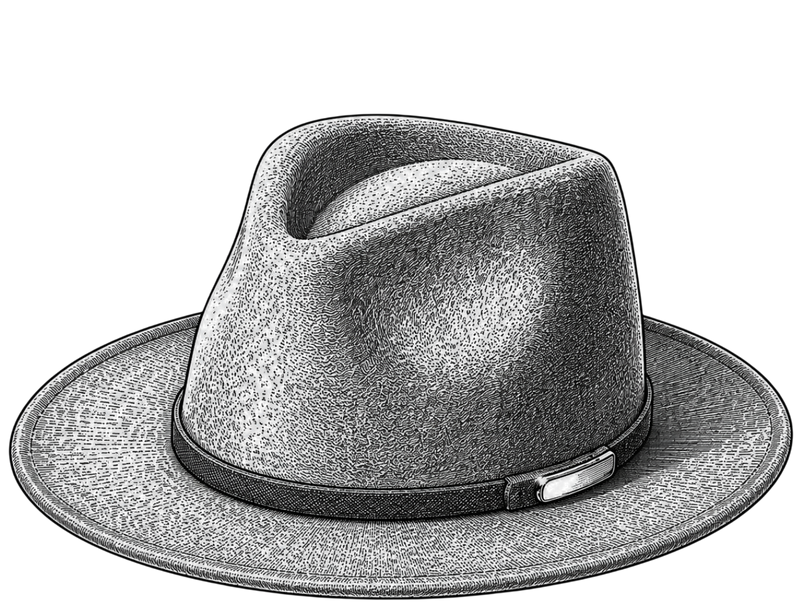
- Available in a range of fedora and trilby styles as well as Panama and other categories
- Finished by hand at multiple stages including brim-edge stitching and sweatband attachment
- Marked with the company's name on the interior sweatband and the exterior ribbon
The price of a Borsalino hat reflects the production cost of artisan Italian felt hat making at the current labour cost of northern Italy. This places it significantly above mid-range hat production and substantially above fast-fashion hat pricing.
Browse quality felt hats and European-crafted styles at Hatloom.

Frequently Asked Questions
What makes a Borsalino hat different from other felt hats?
The primary differences are material quality and production time. Borsalino uses fine fur felt processed over a period of approximately six to seven weeks with more than fifty individual operations. This extended processing creates a felt with a distinctive fine texture, density, and natural water resistance that is difficult to achieve in shorter, more industrialised production. Many of the production steps involve skilled manual work -- shaping, finishing, trimming -- that cannot be replicated by automated production without losing the hat's characteristic quality. A Borsalino hat holds its shape over years of wearing in a way that cheaper felt hats do not.
How can I tell if a Borsalino hat is authentic?
Authentic Borsalino hats carry the brand name on the interior sweatband and typically on a small label or stamp. The exterior ribbon usually bears the name as well. The felt quality of an authentic Borsalino -- particularly the fine texture and the natural sheen of the fur felt surface -- is difficult to replicate and distinguishable from wool felt alternatives by feel and visual inspection. Counterfeit Borsalinos exist (the brand value is high enough to make counterfeiting economically motivated), so purchasing from authorised retailers or the company directly is the reliable approach.
Is Borsalino only a men's brand?
No. While Borsalino's historical associations are largely with men's hat wearing (the fedora tradition is predominantly masculine in its 20th century context), the company has produced women's hat styles throughout its history and continues to do so. Women's fedoras, cloches, and wide-brim styles have appeared in Borsalino collections at various points. The contemporary brand positions itself as covering quality hats for all wearers rather than exclusively as a men's company.