Most beach hats are bought at the destination, in a shop near the sand, under conditions that are not ideal for careful purchasing decisions. The hat is purchased for immediate need, worn for a week, and discarded or not packed for the return journey. This is one of the most consistent patterns in casual hat buying -- and it produces a cycle of low-quality hat ownership that could be broken by one slightly better decision made before travel rather than at arrival.
What Beach Conditions Require From a Hat
The beach hat's functional requirements are more demanding than those of most casual hat contexts:
- UV protection: beach environments involve reflected UV radiation from the water surface in addition to direct solar radiation -- total UV exposure at a reflective beach can be significantly higher than at an equivalent inland location. A hat with a UPF (Ultraviolet Protection Factor) rating of at least 30 provides meaningful protection; UPF 50+ provides the maximum rated protection.
- Wind resistance: beach environments are typically windier than inland locations. A hat without a chin cord or a secure fit mechanism is a liability -- it will require constant manual securing or will be lost.
- Water tolerance: the hat will be splashed, will be sat on wet towels, may have sand ground into it. It needs to be cleanable and to survive moisture without structural failure.
- Heat management: a breathable material (straw, vented fabric) is preferable to a felt or dense fabric hat that traps heat against the head in high ambient temperatures.
- Packability: a hat that can be rolled or compressed for transit and returns to its shape is significantly more practical than a rigid hat that requires dedicated packaging space.

The Wide-Brim Straw Hat
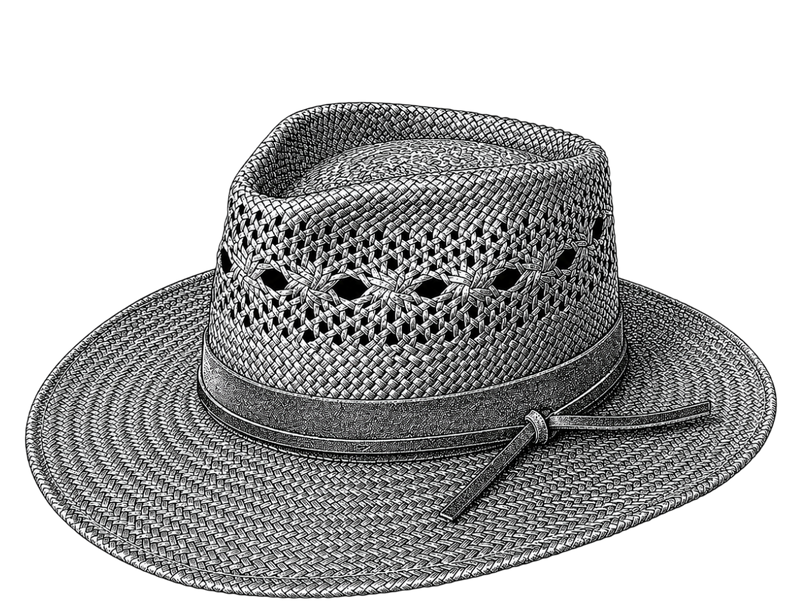
The wide-brim straw hat (brim 8-12 cm, or wider) is the beach hat that provides the best combination of sun protection, breathability, and appearance. Natural straw (toquilla, seagrass, raffia) allows air circulation around the crown while the brim provides shade for face, ears, and neck. The wide brim can reduce UV exposure on the face by up to 70% compared to no hat, depending on sun angle.
The limitation: straw is not waterproof, and a straw hat that is regularly submerged or heavily wetted will begin to soften and lose shape. For beach use where water contact is incidental (sitting on the beach rather than swimming in the hat), straw is the appropriate material. For water sports or active swimming, a different material is required.
Wind management for straw beach hats: a wide-brim straw hat has significant sail area and will be lifted or tumbled in beach wind. A chin cord is the practical solution -- it attaches to the interior of the brim and clips or ties under the chin. Many quality beach straw hats have a small hole or attachment point for a chin cord even if the cord is not provided; a length of thin elastic or cord can be added.
The Bucket Hat
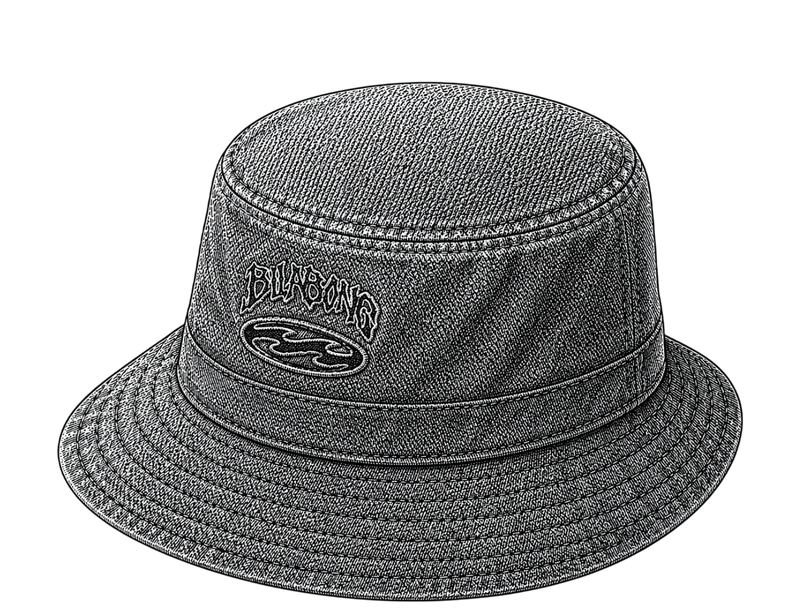
The bucket hat has become one of the dominant beach hat styles for practical reasons: it fits close to the head (wind resistance), has a full circumference brim (all-round sun coverage), is made from materials that tolerate water and sand (cotton, nylon, or quick-dry synthetic), and packs flat without damage.
For beach use, a bucket hat in nylon or quick-dry polyester is preferable to a cotton version because it dries faster after water contact. A cotton bucket hat that is regularly wetted and re-worn is slower to dry and can develop odour from trapped moisture.
Brim width in bucket hats varies: a narrow brim (3-4 cm) provides minimal sun coverage; a medium brim (5-6 cm) provides reasonable face and neck shade; a wide-brim bucket (7 cm+) provides coverage similar to a straw hat while maintaining the wind resistance of the bucket hat fit. For sun protection as the primary concern, choose the widest brim available in the bucket hat style.
Technical Sun Hats for Active Beach Use
For beach users who are actively moving -- water sports, beach volleyball, long walks along the shoreline -- technical sun hats designed for outdoor sport provide the best function:
- A wide-brim hat with a UPF rating printed on the label (usually UPF 30 or 50+)
- A chin cord or toggle closure for wind security
- Quick-dry material (nylon or polyester) that manages sweat and can be rinsed and dried quickly
- Ventilation through the crown (mesh panels or venting holes)
These hats are available from outdoor and hiking specialist brands and are superior to fashion sun hats in all functional criteria. They are generally less visually sophisticated than a quality straw hat.
What to Avoid at the Beach
- Paper straw hats: these are typically the inexpensive hat sold at beach resorts. Paper straw has poor water tolerance -- a hat that is sat on a wet towel, or that absorbs significant salt spray, will deform and become brittle quickly. They are single-season hats at best.
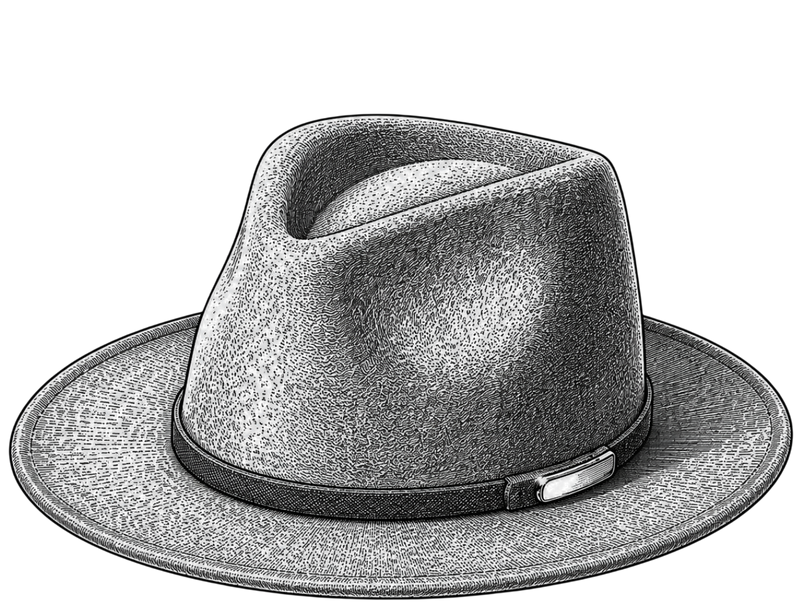
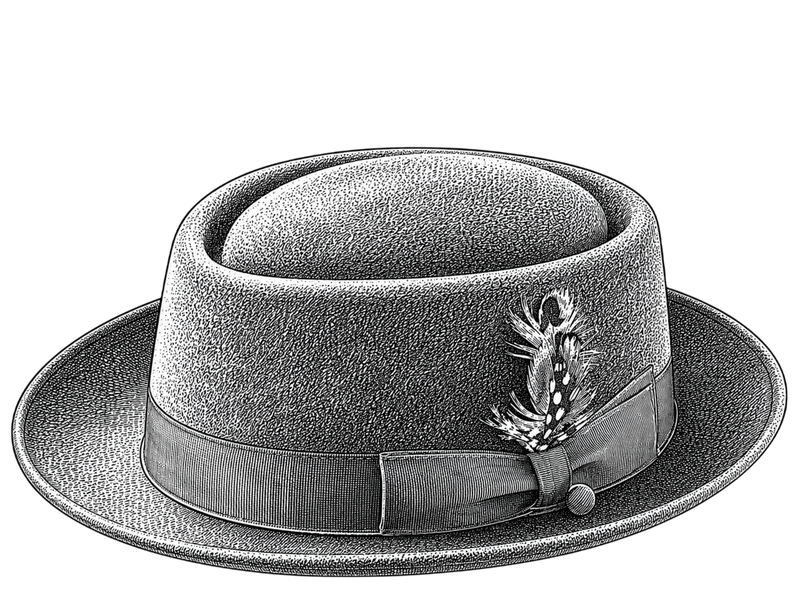
- Felt hats: felt hats are designed for cooler, drier conditions. At a beach in summer, a felt hat is uncomfortably warm, water-intolerant, and at risk of salt spray damage.
- Very wide structured brims without chin cords: a hat with a stiff 15 cm brim and no chin cord is a liability in beach wind. The brim creates uplift that the hat's fit cannot counter without manual assistance.
Browse packable straw and wide-brim beach hats at Hatloom.

Frequently Asked Questions
What is the best hat for snorkelling or swimming?
No conventional hat is designed for water submersion. For snorkelling, a wide-brim hat is worn before and after swimming, not during. For activities where the hat must stay on the head while in or near water (kayaking, sailing, beach volleyball), a tight-fitting bucket hat with a chin cord in quick-dry synthetic material is the most practical choice. A hat designed for water sports (some are specifically marketed for surfing and water sports use) may have silicone grips or fitted lycra ear coverings that standard beach hats do not.
What UPF rating does a straw hat provide?
It depends on the weave density. A tightly woven natural straw hat (such as a high-quality toquilla straw Panama) provides approximately UPF 30-50+ depending on weave fineness. A loosely woven paper straw hat may provide UPF 15-20. A fabric hat with a UPF label has been laboratory-tested; straw hats often do not carry a UPF label and the protection level is estimated rather than certified. For maximum UV protection certainty, a fabric hat with a printed UPF 50+ rating on the label has been tested and certified to that standard; for general beach use where the straw hat also provides shade coverage, a quality natural straw hat with a wide brim provides meaningful protection even without a specific certification.
Can I pack a straw beach hat in luggage?
Packable straw hats are specifically designed to be rolled or folded without damage and are sold as packable summer hats. Non-packable straw hats (rigid Panama or seagrass hats) require either a hat box for checked luggage or carry-on treatment (hat carried in hand or placed in the overhead bin, crown up). Forcing a rigid straw hat into compressed luggage will crack the straw and cannot be reversed. If packability is important for travel, choose a hat specifically described as packable or rollable.
How do I care for a beach straw hat after a salty day?
Salt residue from sea spray and sweat can accumulate on a straw hat and, over time, make the straw brittle at the salt deposit points. After a beach day, wipe the hat exterior gently with a clean damp cloth to remove surface salt and sand. Allow to air dry completely before storing. For the interior sweatband, wipe with a damp cloth and allow to dry open -- storing a damp sweatband in a closed position can cause mould. At the end of a beach trip, a more thorough wipe-down and complete air drying before packing protects the hat from salt damage during storage.