Curly hair and hats have a specific and well-documented conflict that straight-haired hat advice has no framework for -- hat hair on curly textures is not a minor inconvenience, it is a structural reversion. A curly-haired person who has spent significant time defining their curl pattern can have that pattern disrupted in minutes by a hat that compresses the curls. This does not mean hats are incompatible with curly hair; it means the variables are different and the solutions are specific.
How Hats Interact With Curly Hair Differently
Straight hair under a hat is compressed, then springs back (with some time and effort) when the hat is removed. Curly hair under a hat is not simply compressed -- the curls are flattened at the points of contact with the hat's interior, and those flat points may not resume their previous curl pattern when the hat is removed. The specific problem:
- Crown flattening: the top and back of curly hair in contact with the hat crown is pressed flat. When removed, these areas may have disrupted curl definition and require product application and drying time to restore -- not just a quick ruffle-and-go like straight hair.
- Compression at the hatband line: the interior band of the hat creates a horizontal compression line around the head. On curly hair, this line often does not disappear when the hat comes off -- instead, the curls at the band line are deflected into a bent position that can persist until the hair is re-wetted or re-styled.
- Frizz generation: friction between hat interior material and curly hair generates static and disrupts the cuticle layer, increasing frizz after removal. The same friction that is harmless on smooth straight hair actively separates curl definition on textured hair.

Which Hat Styles Work Best With Curly Hair
Beanie / Knit Hat (Loose-Fitting)
A loose-fitting knit hat -- with enough room inside for curls to sit without being pressed against the crown -- is the lowest-impact hat for curly hair. The key is 'loose-fitting': a beanie that stretches over the hair without pressing the curls flat against the scalp preserves curl definition inside the hat. The trade-off is that a loose beanie may not fit neatly on the head -- it may sit high or look unstructured. Choosing a beanie with a slightly larger circumference than head size and letting it drape rather than stretch prevents most compression problems.
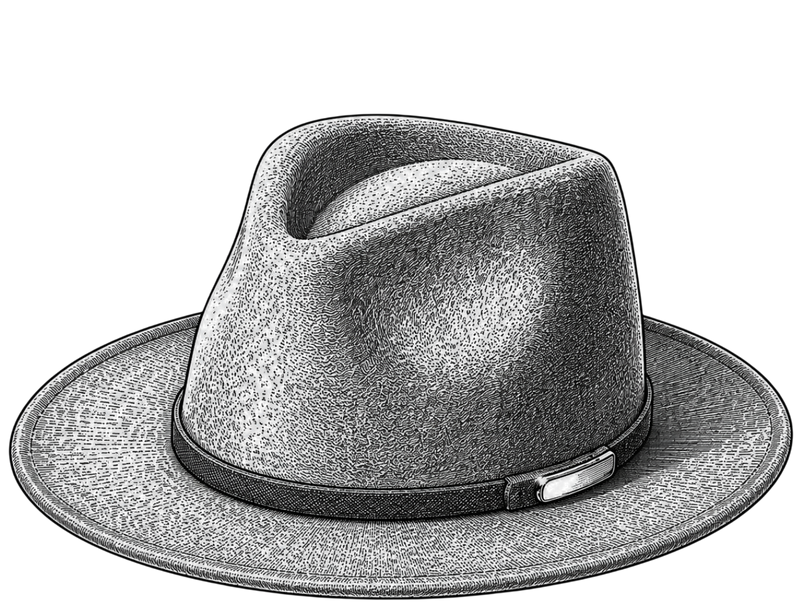
Wide-Brim Hat (Worn High)
A wide-brim hat with a large enough interior circumference that curly hair fills the crown without pressing against it. This works when the hat can be worn sitting on top of the hair at a higher position than on straight hair -- the brim rests on the outermost layer of curls rather than pressing all the curls against the scalp. This position is visually different from a hat worn low on straight hair, but it can look intentional and has the advantage of preserving curl volume beneath the hat.
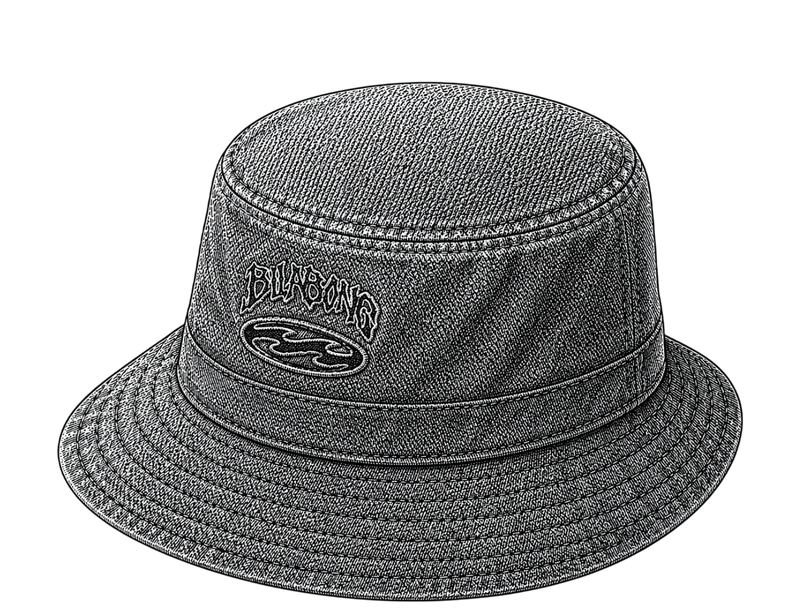
Bucket Hat
A bucket hat that is one size larger than the head circumference provides the same solution as the wide-brim option above -- the hat sits above the curl volume rather than pressing it down. The flexible, floppy brim of a bucket hat also adapts to the irregular outer surface of curly hair rather than creating a rigid compression edge.
Turban and Headwrap
Technically not a hat, but a head covering that many curly-haired people use specifically because it solves the hat hair problem. A satin-lined turban or headwrap does not press curls flat because it wraps around the volume of the hair rather than sitting on top of it. The satin lining reduces friction and cuticle disruption that causes frizz. For curly hair in cold weather, a satin-lined hat or turban is functionally superior to an unlined knit hat for preserving curl pattern.
Hat Hair Prevention Strategies for Curly Hair
Pineappling
Pineappling is a curly-hair technique where the hair is gathered loosely at the very top of the head (like a pineapple frond) before putting on a hat. The gathered curls fit inside a hat without being compressed laterally; when the hat comes off, the curls fall from the gathered position with their definition largely preserved. This works best with longer curly hair that can be gathered into a loose bun or ponytail at the crown. The hat size needs to accommodate the pineapple -- it must be large enough to sit over the gathered hair without pressing it down.
Protective Styling Before Hat Wearing
For days when hats will be worn for extended periods, styling curly hair in a protective or compact arrangement before putting on the hat reduces disruption. Two-strand twists, braid-outs, or bantu knots inside the hat preserve a style through a day of hat-wearing and create a different (often desirable) curl pattern when released.
Satin or Silk Interior Lining
A hat with a satin or silk interior lining -- or a satin bonnet worn under a hat -- dramatically reduces frizz from friction. The smooth surface of satin against curly hair produces significantly less friction than cotton, wool, or synthetic hat interior materials. This is the single highest-impact modification for reducing hat-induced frizz on curly hair. A thin satin bonnet worn under a winter hat is invisible to observers and maintains curl definition while providing the warmth of the outer hat.
Dampening Curls Before Replacing
When a hat comes off and curls need restoration: wet hands or a fine mist spray bottle used to lightly dampen the affected curls, then reshaping with fingers and allowing to air dry, typically restores a large proportion of the original curl pattern. This is a 5-10 minute restoration process rather than the instant recovery that straight hair offers.
Browse wide-brim hats and hat styles suitable for curly and natural hair at Hatloom.

Frequently Asked Questions
What is the best hat for natural African-American hair?
Natural 4a-4c curl patterns require the most accommodation from hat design because the hair volume is highest and the cuticle structure is most susceptible to frizz from friction. The most compatible hat types: a wide-brim hat worn at the highest possible position on the curl volume (resting on curls rather than pressing them down); a bucket hat in a size larger than the head circumference; and wraps or turbans with smooth linings. A satin-lined option in any hat category -- or a satin bonnet under a standard hat -- is the most reliable frizz-prevention measure. The beanie approach works best if chosen 1-2 sizes larger than normal and worn without pulling tightly over the hair.
Why do curls get frizzy under a hat?
Frizz in curly hair is caused by the disruption of the hair cuticle -- the overlapping scale-like outer layer of each hair shaft. When the cuticle layers separate, light refracts unevenly and the hair appears frizzy rather than defined. Hat interior materials (cotton, wool, synthetic knit) have surface textures that create friction against the hair cuticle, opening the scales. A satin or silk lining creates minimal friction because its smooth surface does not catch on the cuticle. Moisture loss inside a warm, enclosed hat also contributes -- curls that were defined with moisture-sealing products lose moisture to the hat environment and frizz as they dry under compression.
Can you wear a fedora with curly hair?
Yes, with sizing adjustment. A fedora with an interior circumference slightly larger than the head measurement allows curly hair to sit inside the hat without the crown pressing flat against the head. The fedora brim position (high on the head for curly-haired wearers, 2-4 cm above the eyebrows rather than the usual 2 cm) accommodates curl volume and can look intentional -- the hat sitting higher on curly hair has a different visual quality than the same hat on straight hair, but both can be correct. The hat's sweatband should be satin-lined or replaced with a satin interior strip to reduce frizz at the contact line.
Does hat wearing damage curly hair over time?
Regular hat wearing does not damage curly hair structurally. The cuticle disruption that causes frizz is temporary -- restoring moisture and curl definition reverses it. The conditions that could contribute to longer-term issues are: wearing very tight hats that create consistent tension on the hairline (similar to tight hairstyle tension), which over a long period of time can affect hair at the hairline; and wearing hats that hold heat and moisture at the scalp for extended periods in ways that create conditions for scalp irritation. Neither of these is inherent to hat wearing -- they are specific conditions created by specific hat types and wearing patterns.