A Panama hat is the single most frequently misplaced hat in casual wear. The error is almost always the same: the hat is pushed too far back on the head, transforming it from a structured precision hat into something that looks like sun avoidance gear. A Panama hat worn correctly signals a specific kind of deliberate elegance. Worn incorrectly, it signals beach tourist. The difference is 2 cm of hat placement.
What a Panama Hat Actually Is
The Panama hat is a toquilla straw hat woven in Ecuador, not Panama -- the name comes from 19th-century trade routes through Panama to North America and Europe. The hat is defined by its material: the straw woven from the fronds of the toquilla palm (Carludovica palmata), which produces a lightweight, flexible, and breathable weave that becomes more refined with finer grades.
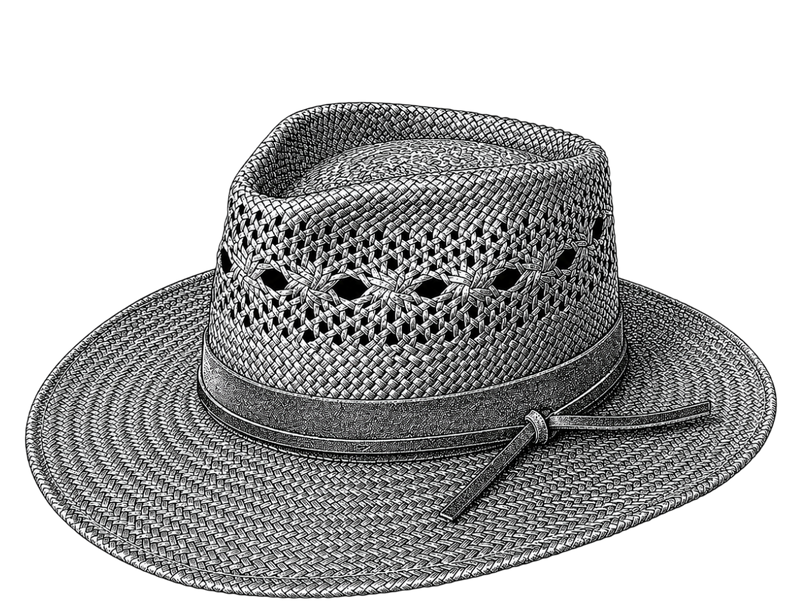
Panama hat quality is graded by the fineness of the weave, counted in wefts per inch. Entry-level Panamas have approximately 15-20 weaves per inch. Fine Montecristi Panamas (the pinnacle of the type) can have 40-80+ weaves per inch and are indistinguishable from cloth at first glance.
Correct Placement
The most important variable in wearing a Panama hat is where it sits on the head. The correct position:
- Front edge: approximately 3-4 finger-widths above the eyebrows (2-3 cm). Not on the eyebrows. Not pushed to the back of the head. The front of the brim should sit above the forehead, casting a small shadow that touches or nearly touches the top of the eyebrow line.
- Angle: The hat can be worn level, or with the right side dipped very slightly (1-2 cm) -- a subtle leftward tilt reads as intentional and adds the asymmetric elegance the hat is known for. Any more than a 2 cm tilt becomes theatrical. Centering the hat perfectly level is also correct and reads as more formal.
- Crown: The hat should be firmly on the head, not teetering on top of it. If the hat feels like it could fall off, it is either too large or too far back on the head.
How to Pinch the Crown
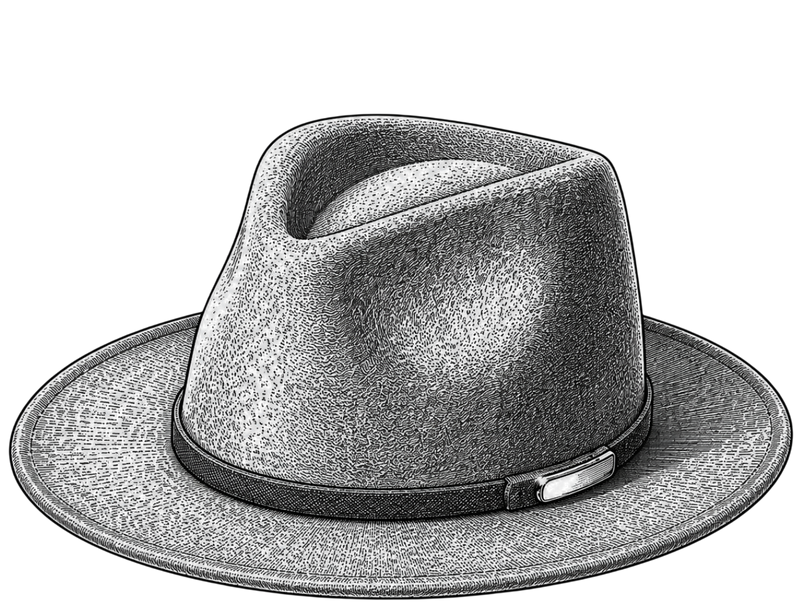
The Optimo pinch (a single, deep front-to-back crease in the center of the crown) is the traditional Panama style. The Cuenca pinch (a tear-drop shaped front dent with two lateral creases) is slightly more casual. The Fedora pinch (two lateral creases with a front center dent) is the most familiar to Western dress hat wearers.
Many high-quality Panamas are sold with a specific crown shape that should be maintained rather than reshaped. If the hat came with an Optimo crown, wearing it as an Optimo preserves the hat's integrity. Reshaping a fine straw hat repeatedly causes the weave to weaken at the crease points over time.
What to Wear With a Panama Hat
Formal Summer
A Panama hat with a linen or lightweight wool suit is one of the rare hat-and-suit combinations that looks entirely natural rather than theatrical. The hat should match the suit in formality register: a fine-weave Panama with a tan or ivory linen suit is a unified summer formal look. The hatband should coordinate -- a dark grosgrain or silk band is classic; a natural straw colour band is more casual.
Smart Casual
Chino trousers, a linen or cotton shirt, and a Panama hat is the most common combination and the one with the most flexibility. The hat can be a medium-grade Panama in natural straw, ivory, or a light grey. The outfit's elements should be in the same general colour temperature: warm neutrals (tan, ivory, cream, light khaki) for a warm-palette look, or cooler neutrals (light grey, white, navy) for a cooler one. Mixing warm and cool elements without intention creates a disjointed result.
Casual
A Panama hat with lightweight casual wear (shorts, casual cotton shirts) is legitimate but requires the hat to be treated as an accessory with the same care as in smarter contexts -- the hat's placement and condition are more visible in simpler outfits because there is less clothing to draw the eye. A creased or misshapen Panama hat is more noticeable against a simple casual outfit than it would be against a more visually complex one.
Care Specific to Panama Hats
Panama hats have specific care requirements that differ from felt hats:
- Water: Light rain will not damage a quality Panama, but heavy soaking can cause the straw to swell and then contract unevenly as it dries, distorting the weave. Avoid extended rain exposure.
- Storage: Panama hats should be stored in a hat box or on a hat stand, never brim-down (which flattens the brim over time) and never in direct sunlight (which bleaches the natural straw unevenly and can make it brittle).
- Creasing: A crease that has set into the straw from being stored folded can often be removed with careful steam from a kettle or steam iron held at distance -- the steam makes the straw slightly pliable, and the hat can be gently reshaped and allowed to dry in the correct position. This should be done sparingly.
- Sweatband: The interior sweatband of a Panama is often leather or grosgrain and should be conditioned periodically if leather. Sweat can stain the inner band and, in significant quantities, can migrate to the straw of the brim -- a hat liner insert can prevent this in hot-weather use.
Find premium-quality Panama and summer straw hats in the Hatloom collection.
Frequently Asked Questions
Is a Panama hat suitable for everyday casual wear?
Yes, and the everyday casual context is where most Panamas are worn. The hat's practical properties -- lightweight, packable to varying degrees, breathable, sun-protective -- make it genuinely functional for warm-weather daily use. The key is maintaining the hat in good condition: a well-shaped, clean Panama hat reads as deliberate and elegant even with very casual clothing. The same hat crumpled, salt-stained, or misshapen reads as an afterthought.
How do I know if my Panama hat quality is good?
Hold the hat up to a light source. In a quality Panama, you should be able to see a consistent, tight weave pattern without large gaps between weave crossings. A fine Panama should feel smooth to the touch, not scratchy or rigid. The brim should have flexibility without cracking or sound -- the straw should flex silently, not creak. The interior finish (sweatband quality, stitching at the band) reflects the overall quality of the hat more reliably than the exterior weave alone because manufacturers who invest in quality sweatbands and interior finishing are more likely to have invested in quality straw.
Can women wear Panama hats?
Panama hats are worn by women and men in equal proportion in coastal and resort contexts. For women, the standard placement guidelines apply -- brim 2-3 cm above the eyebrows, slight tilt optional. The hat pairs well with casual dresses, linen co-ords, and swimwear cover-ups. Wide-brim Panama variations (6 cm+ brims) are particularly popular for women's summer and beach wear because they provide extended face and neck shade coverage. The styling logic is the same as for men: proportion of brim to face, hat placement on the head, and condition of the hat.
What is the difference between a genuine Panama and a straw hat that looks similar?
A genuine toquilla straw Panama is woven from the naturally white fibre of the toquilla palm, which produces the hat's characteristic cream-to-ivory colour and flexibility. Imitation Panamas are often woven from paper straw, synthetic straw, or other plant fibres (seagrass, raffia) that are less flexible, less durable in heat, and do not develop the same surface quality with wear. The practical differences: genuine toquilla straw is more packable (rolls without cracking), more breathable, and more durable over multiple seasons. The price difference is significant -- a genuine Ecuador-woven Panama costs more than a paper straw imitation at any comparable quality level.
What hatband style is correct for a Panama?
The classic Panama hatband is a solid grosgrain ribbon in black, dark navy, or brown, with a simple bow or flat overlap at the side or back. This is the most versatile option and suits formal through smart-casual contexts. A striped grosgrain band (regimental stripe pattern) is slightly more casual and sportier. A natural straw band (the brim material continuing as a wrapped band) is the most informal. Decorated or patterned fabric bands are personal choices that work in casual contexts but move the hat away from its classic register.