The flat cap on a woman is either one of the sharpest things in a wardrobe or one of the most awkward — and the difference comes down to understanding why the style works, not just whether it is in fashion.
Done correctly, a flat cap introduces a specific kind of authority to an outfit. Done incorrectly, it reads as a costume. Here is the distinction.
Why the Flat Cap Works on Women
The flat cap's core visual property is contrast: it is a hard, structured silhouette worn close to the head. When a woman wears it, the contrast between the masculine-coded geometry of the cap and the rest of the figure creates deliberate visual tension that reads as confident rather than confused — if the outfit is built around it.
Three things the flat cap does for a woman wardrobe:
- Frames the face sharply — the brim creates a defined horizontal above the face that draws attention to eyes and bone structure
- Adds edge to soft outfits — a flat cap over a floral dress or a feminine silhouette creates the kind of intentional contrast that reads as personal style
- Signals intentionality — wearing a flat cap is a deliberate choice that communicates a certain confidence in dressing
Fit: The First and Most Important Variable
A flat cap that does not fit correctly does not work. The fit rules are specific:
- The cap should sit approximately 2 cm above the ears — not lower, not higher
- It should not move when you tilt your head or walk briskly
- The brim should sit roughly parallel to the eyebrows or very slightly angled
- The rear of the cap should sit close to the head, not lifted away from it
Women generally have a smaller average head circumference than men. Most flat caps are sized for male head circumferences (58–61 cm). A cap that is too large will slide, tilt, and shift throughout the day. Measure head circumference and buy to size — an adjustable strap at the rear is a practical feature for borderline sizes.
Choosing the Right Style: Three Variables
Crown Fullness
Flat caps range from very flat, close-profile styles (the traditional newspaper-boy silhouette) to fuller, more rounded bodies (the baker boy or newsboy style). For most women, a medium-fullness crown works best — flat enough to read as intentional, full enough not to disappear against the head.
Very flat, low-profile caps can look overwhelmed by hair volume — they sit on top of but do not relate to the hair beneath them. A moderately full crown maintains its visual presence regardless of hair style.
Fabric
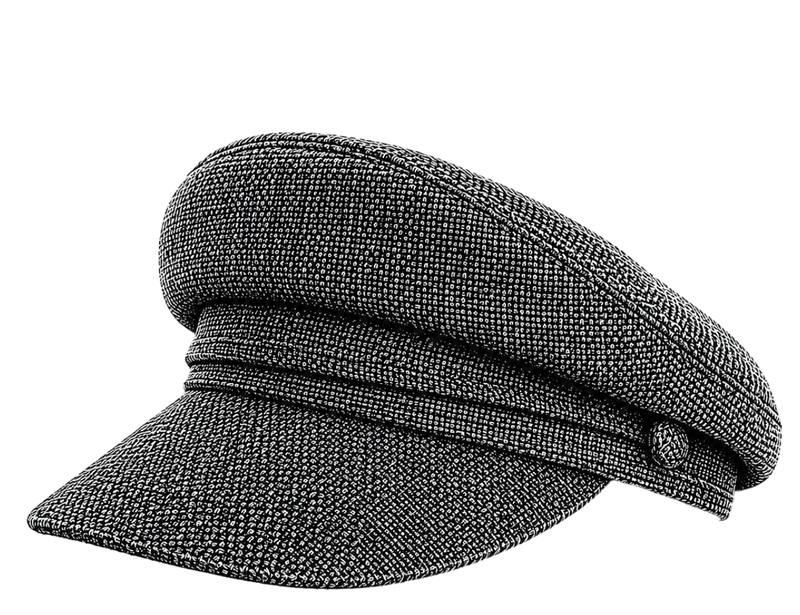
- Tweed or herringbone: The most heritage-coded choice. Autumn and winter. Reads as considered, slightly British, and pairs well with wool coats, tailored pieces, and boots.
- Wool or melton: Warmer, more uniform texture. Works across seasons in mild climates. More versatile colorways than tweed.
- Linen or cotton: Spring and summer. Lighter construction, more casual register. Natural tones and pastels work well.
- Leather or faux leather: The most forward fashion choice. Reads as sharp and directional. Pairs with structured or minimalist outfits rather than soft or feminine silhouettes.
Color
Neutral tones — camel, tan, grey, dark brown, black, navy — are the most versatile and the strongest choices for a first flat cap. They work with the widest range of outfit colors and do not compete with pattern or print in clothing.
Bold colors and prints (rust, forest green, houndstooth, check) are legitimate choices when the rest of the outfit is restrained — a checked flat cap over a plain coat and trousers is a strong combination. A checked cap over a patterned dress creates visual noise.
Outfit Combinations That Work
Androgynous tailoring: Wide-leg tailored trousers, an oversized blazer or slouchy shirt, loafers or Oxford shoes. A dark wool or tweed flat cap. This is the flat cap strongest natural context — it amplifies and completes the gender-fluid tailoring aesthetic.
Contrast with feminine silhouette: A midi or tea-length dress in a soft fabric, ankle boots or Mary Jane shoes. A tweed or herringbone flat cap. The masculine-feminine contrast is deliberate and reads as personal rather than accidental. Keep accessories minimal — the cap is the contrast element.
Smart-casual urban: Fitted turtleneck or structured top, straight-leg jeans or slim trousers, leather boots. A leather or wool flat cap. A clean, considered everyday combination that reads as effortful without appearing to try.
Casual with edge: A graphic tee or simple knit, straight-leg jeans, trainers or chunky boots. A cotton or linen flat cap in a neutral or check. Relaxed but specific — the cap elevates a simple outfit to something intentional.
Wearing Position: Small Adjustments, Large Effect
- Level and forward: The standard position. Clean, defined, reads as deliberate. Brim at or just above eyebrow level.
- Tilted slightly to one side: A 10–15 degree lateral tilt introduces asymmetry that breaks the geometric symmetry of the cap and creates a more relaxed, fashion-forward look.
- Pulled slightly back: Exposes more forehead, creates a softer effect. Works better with shorter hair or hair worn back — pulled-back positioning with lots of hair in front can look like the cap is slipping.
- Worn very forward (brim low): Creates a more shaded, slightly brooding look. Works best with face shapes that have strong cheekbones or defined jaw geometry.
Hair Considerations
The flat cap interacts with hair more than most other hat styles because of its low, close-fitting construction:
- Short hair or pixie cut: The strongest natural pairing for a flat cap. The cap sits cleanly with no volume conflict and the face is fully visible below.
- Bob or jaw-length hair: Works well — hair frames the face below the cap brim. The cap and hair at similar scale creates a balanced silhouette.
- Long hair down: The main challenge. A flat cap can look lost sitting on top of a large volume of loose hair. Tuck hair behind ears, gather it in a low bun, or wear it in a low ponytail for cleaner integration.
- Bun or updo: A very high bun conflicts with cap placement. A low bun at the nape allows the cap to sit correctly. French braids and sleek low styles work cleanly.
What Not to Do
- Do not wear a cap that is too large. A sliding, shifting cap looks unconvinced. It should fit firmly enough to remain positioned without constant adjustment.
- Do not over-accessorize. A flat cap is a strong accessory. When wearing one, reduce others — statement earrings or a bold necklace compete. Simple, minimal jewelry supports.
- Do not pair with a very casual or bohemian outfit without deliberate intention. A tweed flat cap over an organic linen maxi dress in natural tones creates a confusing style signal. The contrast needs to be deliberate, not accidental.
- Do not wear a cap in a color that neither matches nor intentionally contrasts with the outfit. A random mid-tone cap on an outfit of different mid-tones creates a muddled appearance. Either coordinate or contrast — both work; middle ground does not.
Explore tweed, wool, linen, and leather flat cap styles in the Hatloom flat cap collection.
Frequently Asked Questions
Can women wear men flat caps?
Yes — flat caps are sized and shaped, not gendered in construction. The practical issue is that most flat caps are sized for male head circumferences (58–61 cm), which may be too large for smaller female head circumferences. Measure and buy to fit. Many brands now offer unisex or women-specific sizing in the same styles.
What face shape suits a flat cap on women?
Oval and heart-shaped faces tend to wear flat caps most naturally. Square faces benefit from the slight softening effect of a fuller-crown flat cap. Round faces benefit from a cap with a slightly longer brim that creates a stronger horizontal emphasis. Oblong faces should avoid very shallow, short-brimmed caps that add further vertical emphasis.
What hairstyle works best with a flat cap?
Short hair and pixie cuts are the most natural pairing — no volume conflict, clean silhouette. For longer hair, low buns, low ponytails, and sleek gathered styles work better than loose hair, which can conflict with the close-fitting construction. Hair tucked behind ears works at shorter long-hair lengths.
How do I make a flat cap look feminine?
Pair it with a deliberately feminine silhouette — a midi dress, a softly tailored skirt, feminine shoes. The contrast between the structured cap and the softer clothing is what creates interest. Adding feminine accessories (small earrings, a delicate chain) supports the balance without competing with the cap itself.
What is the difference between a flat cap and a newsboy cap for women?
A flat cap has a lower, closer-fitting crown with a smaller brim. A newsboy (baker boy) cap has a fuller, rounded, puffier crown with more volume and a slightly longer brim. The newsboy reads as more relaxed and more voluminous — it adds more presence above the face. Both work for women; the flat cap is sharper and more minimal, the newsboy is softer and more statement-making.