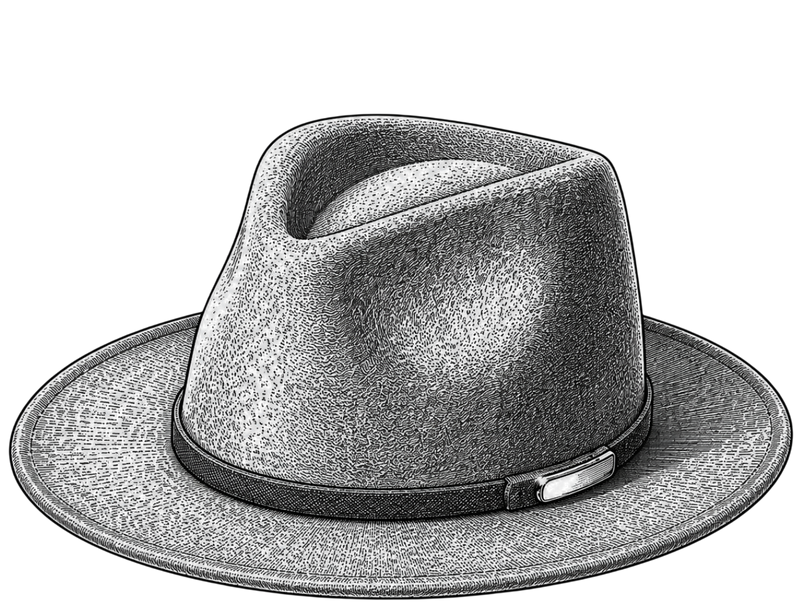
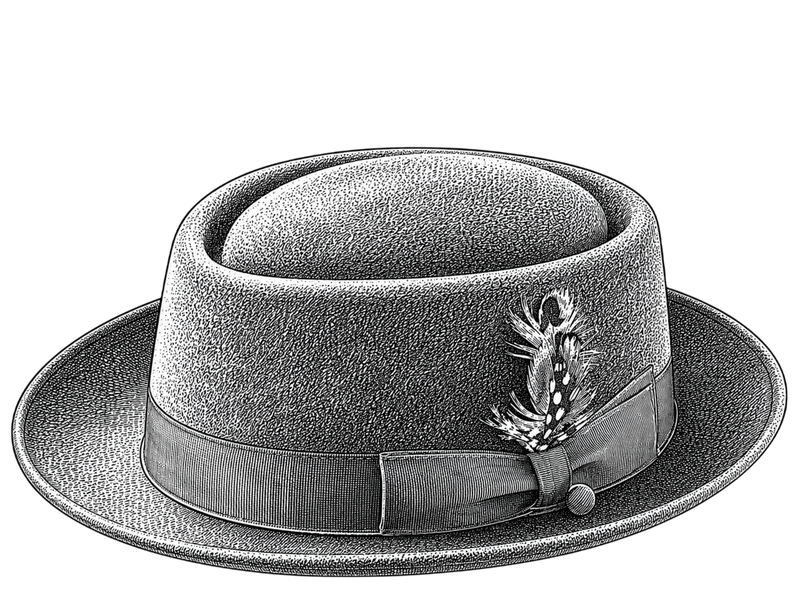
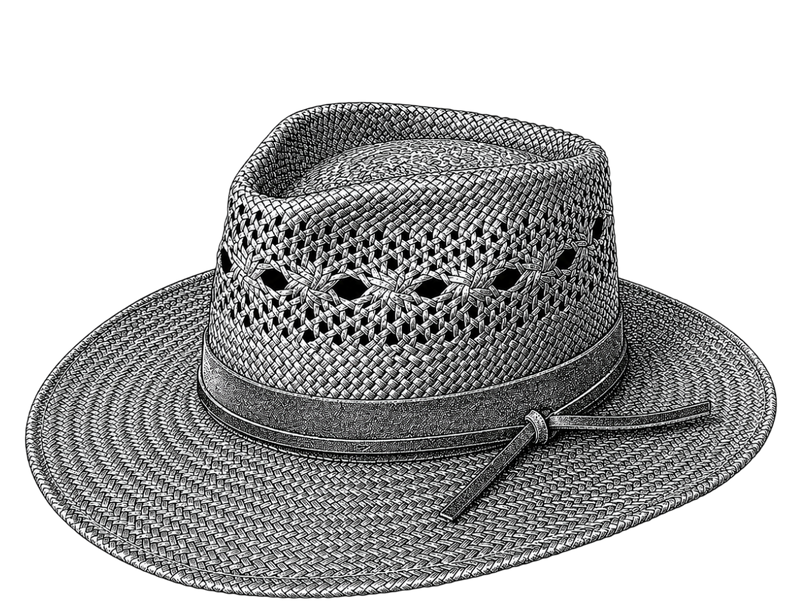
The fedora and suit combination should be straightforward -- both items have centuries of co-wearing history, they were designed to be worn together, and every film from the 1940s shows the pairing executed correctly. Despite this, the fedora-and-suit combination is consistently worn incorrectly in contemporary settings, most commonly by choosing a hat proportion that does not match the suit silhouette or a hat formality that does not match the suit quality. The errors are specific and avoidable.
Why the Combination Can Go Wrong
The fedora-suit combination is sensitive to proportion and quality matching in ways that other accessories (pocket squares, ties) are not. A pocket square that is slightly wrong reads as slightly wrong. A fedora that is slightly wrong in proportion or quality reads as significantly wrong because it affects the entire visual impression of the face, head, and upper silhouette simultaneously.
The two most common failures:
- Proportion mismatch: A very wide-brim fedora (10+ cm) with a slim-cut modern suit creates a proportion conflict where the hat reads as a different era than the suit. A very narrow-brim trilby with a classic-cut suit creates the reverse conflict. The hat proportions should echo the suit proportions.
- Quality mismatch: An inexpensive, low-grade felt hat worn with a quality suit reads as a deliberate statement that the hat is not being taken seriously -- the wearer has invested in the suit but not in the hat that sits above it. The hat quality should be at the same level as the suit quality.
Matching Fedora Proportions to Suit Silhouette
Modern Slim-Cut Suit
Slim-cut suits with narrow lapels (7 cm or less) and a close body line read as contemporary and clean. The fedora that matches this silhouette:
- Brim: 5-7 cm, medium-width. Not a wide-brim -- the wide brim reads as a different proportion era than the slim suit.
- Crown: 9-10 cm, with a clean center crease. The crown height should be enough to create a vertical line without the crown becoming the dominant visual element.
- Snap brim: classic position (front turned down, back up) or all-around set position. An overly dramatic snap creates more visual complexity than a slim suit can support.
Classic-Cut Suit
Classic-cut suits with lapels of 8-9 cm, a natural shoulder, and a balanced chest-to-waist ratio are the most natural suit context for the classic fedora. Both items were at their peak cultural moment simultaneously (1930s-1960s) and their proportions are calibrated to each other.
The full range of classic fedora proportions works here: brim from 6-9 cm, crown from 9-12 cm. This is the combination with the widest hat choice range. Color contrast is most legible in this combination -- a camel hat with a charcoal suit, or a dark brown hat with a navy suit, reads as intended from across the room.
Relaxed or Oversized Suit
The 2019-2024 trend toward wider lapels, relaxed fits, and slightly oversized suits moves the silhouette back toward the proportions of the 1940s-1950s. This combination supports wider-brim fedoras (8-10 cm) more naturally than the slim-cut era did. An oversized suit with a wide-brim quality fedora reads as deliberate proportion matching rather than as an era mismatch.
Color Coordination
The suit-and-fedora combination has three color relationship approaches that work:
Tone-on-tone: A gray hat with a charcoal suit. A dark brown hat with a chocolate brown suit. A navy hat with a deep navy suit. The hat stays within the suit's color family, slightly lighter or darker. This is the approach that reads as most unified and requires the least active coordination.
Complementary neutral: A camel hat with a gray or navy suit. The warm camel against the cool neutral suit creates a deliberate contrast that is one of the classic combinations in menswear. The hat color does not match the suit but is harmonious with it -- both are considered neutrals, but warm-to-cool contrast adds visual interest without creating conflict.
Suit-to-hat echo: A hat in a color that echoes one of the colors in a patterned suit (a brown check suit, a brown hat; a navy herringbone with a navy ribbon on a camel hat). This is a more advanced coordination approach and requires the suit pattern to be specific enough to provide a clear echo color.
Fabric and Material Matching
The season and material weight of the suit should be matched to the material weight and appropriate season of the hat:
- Summer suit (lightweight wool, linen) + Panama hat or light felt: correct material register
- Autumn/winter suit (heavy flannel, tweed) + quality wool felt fedora: correct material register
- Summer suit + heavy wool felt fedora: material mismatch -- the hat reads as the wrong season
- Winter suit + fine straw Panama: season mismatch in the opposite direction
The Ribbon
The hat ribbon is a coordination detail that most wearers overlook. The ribbon color can be used to establish a connection between the hat and the tie, the pocket square, or the suit lining. A camel hat with a dark navy grosgrain ribbon worn with a navy suit is a small but noticeable coordination detail. A hat with a contrasting ribbon (burgundy ribbon on a dark gray hat) is its own internal color accent that should work within the overall suit and accessories palette.
When to Remove the Hat
The traditional convention: a hat is an outdoor hat. Wear it during transit, remove it when arriving at the venue (office, restaurant, private home). At outdoor events where a suit is appropriate (garden parties, outdoor weddings, outdoor ceremonies), the hat stays on. At indoor formal occasions, the hat is removed. This convention is not universally observed, but it is the convention that produced the fedora-suit combination's most coherent historical form.
Find quality felt fedoras to pair with your suit wardrobe in the Hatloom fedora collection.
Frequently Asked Questions
What color fedora goes with a navy suit?
Three options that work well: (1) Camel or mid-brown -- the classic warm-to-cool contrast in navy-and-camel menswear tradition. (2) Charcoal or dark gray -- tonal harmony, both cool neutrals. (3) Dark navy -- matching tonal depth, creating a mono-color statement. A burgundy fedora with a navy suit is a bolder fourth option in the same warm-against-cool dynamic as camel, but with more color intensity.
Can I wear a wide-brim fedora with a business suit?
A brim of 7-8 cm (the upper end of classic proportions) works with a classic-cut business suit. A brim wider than 9 cm begins to read as more fashion-forward or decade-referential than a standard business suit calls for. If the suit is a classic business suit in conventional proportions, the hat should also be in classic proportions. Wide-brim hats (10+ cm) work best paired with suits that have a more relaxed or designed silhouette that can support the proportion.
Should my hat match my shoes?
Not necessarily, but they should be in the same color temperature. A camel hat and brown leather shoes are both warm-toned and occupy the same part of the palette -- they coexist without conflict even though they are different colors. A camel hat and black leather shoes occupy different temperature zones (warm/cool) that create a minor palette tension. Exact color matching is not required or expected; temperature consistency is the practical guideline.
What style of fedora works best for a formal business meeting?
A classic-proportion felt fedora (6-8 cm brim, 9-11 cm crown, center crease) in a dark neutral (charcoal, dark navy, dark brown) paired with a similarly conventional suit is the lowest-friction formal business hat choice. The hat reads as deliberately chosen personal style rather than as fashion statement, which is the correct reading for a formal business context. Avoid fashion-forward proportions, unconventional colors, or dramatic styling at formal business occasions where the hat should contribute to the overall professional appearance without drawing independent attention.
Do I need to wear a hat with a suit?
No. Hat wearing with a suit is a personal style choice, not a convention that requires following. In most professional and formal contexts, not wearing a hat is the default and the hat requires no justification if worn. A hat worn because the wearer has developed the style habit and has the right hat for the occasion is a coherent addition; a hat worn to complete a suit because it seems like it should be there without a genuine hat-wearing practice behind it will typically read as awkward. Wear a hat if you wear hats. Do not wear one as a finishing accessory if you do not.