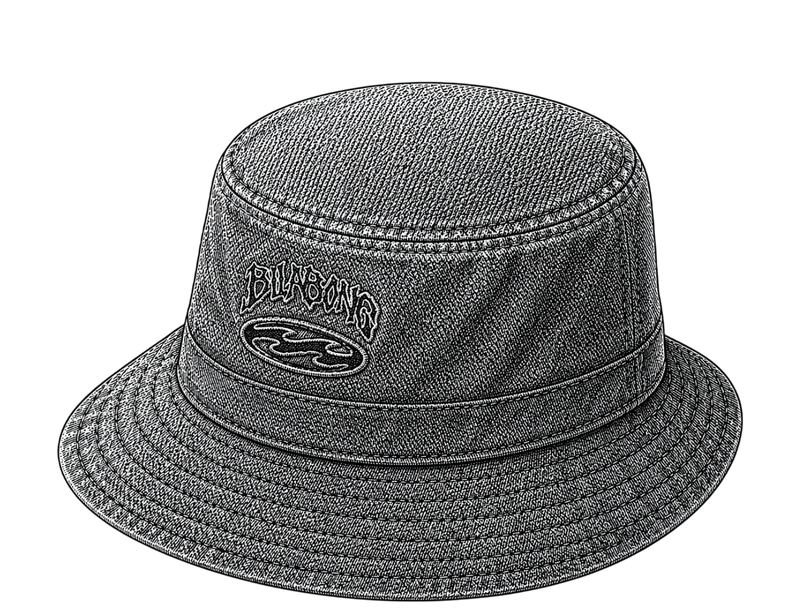
The bucket hat has a status problem that is entirely self-inflicted: it peaked as ironic streetwear in the 1990s and then spent 25 years being treated as either a joke or a nostalgia reference. The actual object — a soft, downward-sloping brim, unstructured crown, 360-degree coverage — is a functionally excellent warm-weather hat that works in more contexts than its reputation suggests, provided the styling is deliberate rather than accidental.
Why the Bucket Hat Keeps Returning
The bucket hat has been revived in every decade since the 1980s because it solves a real problem that other hats do not: full 360-degree brim coverage (unlike baseball caps), packability (unlike straw hats), washability (unlike felt), and casual appropriateness (unlike Panama hats) in a single simple object. Its utilitarian design has no unnecessary elements and no era-specific styling that would date it — the bucket hat of 1960 and the bucket hat of today are structurally identical.
The revivals have been driven by different subcultures — fishermen in the 1960s, hip-hop in the 1980s, Britpop in the 1990s, high fashion in 2017–2020 — because the hat's basic utility appeals across contexts when those contexts are not fighting each other. The styling problem is managing which of these associations a given bucket hat invokes in a given outfit.
The Four Male Styling Cases for a Bucket Hat
Case 1: Outdoor and Utility Wear
The bucket hat was designed for outdoor use — fishing, military patrol, hiking, sun protection in field contexts — and it remains most coherent in this register. A bucket hat in olive, khaki, or natural canvas worn with technical or utility clothing (cargo pants, hiking trousers, technical t-shirt) is an object in its correct context. There is no styling tension to manage. The hat belongs there.
Material for this case: cotton canvas, cotton ripstop, or treated nylon for water resistance. These materials perform the weather-management function that is the bucket hat original purpose.
Case 2: Streetwear and Casual Urban Dress
The streetwear bucket hat is the most culturally loaded case — it carries 1990s and 2010s fashion associations most directly. Executed well, it reads as intentional; executed without consideration, it reads as the accidental invocation of a specific era.
What separates intentional from accidental in this context:
- Proportions: An oversized bucket hat worn with relaxed silhouette clothing is coherent — the proportions are consistent. A standard bucket hat with slim-cut clothing creates proportion tension that makes the hat read as an afterthought.
- Color discipline: A statement-color bucket hat (tie-dye, bold print, bright solid) works only when it is the deliberate accent of an otherwise restrained outfit. Competing pattern or color elsewhere in the outfit reduces the bucket hat from statement to chaos.
- Material elevation: A terry cloth, corduroy, or wool bucket hat reads differently from a cotton canvas one — the material signal shifts the register upward from pure streetwear toward fashion-forward casual.
Case 3: Beach and Resort
The beach bucket hat is the closest to original utility context and therefore the least stylistically fraught. A clean, simple cotton or linen bucket hat at the beach or pool reads as sensible sun protection rather than as a fashion statement. The styling consideration here is simpler: choose a hat that matches the casualness of beach clothing without looking like it is trying too hard in either direction.
Natural colors (cream, tan, light khaki) work best for resort contexts. Overly fashion-forward bucket hats in bold prints or luxury materials at the beach read as effortful rather than relaxed.
Case 4: Smart Casual Integration
This is the most difficult case and the one most often executed poorly. A bucket hat with smart casual clothing — chinos, a linen shirt, leather loafers — only works when the hat material and color are aligned with the clothing quality register. A cotton canvas bucket hat with smart casual clothing has a material register problem: the hat fabric reads as workwear against the tailored casualness of the outfit. The solution is material elevation: a wool or cashmere bucket hat, a linen bucket hat in a neutral color, or a fine-woven cotton twill. These materials carry the hat's formality upward to meet the clothing rather than pulling the outfit downward.
Bucket Hat Fit and Wearing Position
The bucket hat has no adjustable elements — it fits by size and cannot be altered to compensate for an incorrect fit. Key fit points:
Size: The hat should sit on the head without needing to be pushed down or adjusted repeatedly. A hat that slides down over the ears is too large; one that perches without contacting the sweatband is too small. Unlike structured hats, a bucket hat that is slightly too large moves with head movement in a way that reads as careless rather than casual.
Wearing position: The bucket hat is typically worn level, with the front brim sitting 1–2 finger-widths above the eyebrows. Worn further forward (brim to the brow bone) it reads as sun protection; worn slightly further back it reads as relaxed casual. Worn very far back it risks looking like the hat is too large.
For round or full faces: Wear the bucket hat slightly pushed back rather than level — this exposes more of the forehead and face, reducing the shape-matching effect between a round hat and a round face.
Colors and Materials That Work
Most versatile colors: Olive, khaki, navy, stone, natural/cream, slate gray. These are the hat colors that work across all four styling cases without contextual problems.
Avoid (for versatility): Camouflage patterns (hard to integrate outside the utility case), very bright single-color solids (work for one outfit and nothing else), and fashion prints that date to a specific moment.
Best materials for longevity: Heavy cotton canvas (durable, washable, develops good patina), cotton twill (slightly smarter, good for cases 3 and 4), and terry cloth (specific resort/beach aesthetic, less versatile across contexts).
Find bucket hats in cotton canvas and casual styles in the Hatloom bucket hat collection.
Frequently Asked Questions
What age is a bucket hat appropriate for men?
No fixed answer — the bucket hat reads differently across age groups depending on the styling case. For men under 30, streetwear and casual urban cases are culturally coherent. For men over 30, the outdoor/utility and beach cases are the most naturally appropriate, and smart casual integration works well when the material is elevated. The hat itself has no age ceiling; the associations it carries vary by context rather than by age alone.
Can a bucket hat be worn with a suit or formal clothes?
Not in any current cultural context. The bucket hat formality ceiling is smart casual — and even there it requires deliberate material elevation to work. A bucket hat with tailored formal clothing (suit, dress shirt, tie) creates styling incoherence that reads as an error rather than a choice. The hat is a casual object and functions within the casual register.
Are oversized bucket hats a real style or a trend?
The oversized bucket hat is a deliberate proportional choice that has been part of streetwear since the early 1990s and has been revived regularly. It is a functioning style choice when the proportions are consistent — worn with relaxed, oversized or wide-silhouette clothing. Worn with slim-cut clothing, an oversized bucket hat creates proportion tension that reads as accidental rather than deliberate. It is a real style with a specific wardrobe requirement.
What is the difference between a bucket hat and a safari hat?
The brim angle is the primary distinction. A bucket hat brim slopes downward all the way around. A safari hat has a wider, more horizontally set brim — sometimes with a slight upturn at the back — and typically a stiffer construction. Safari hats are more structured and provide greater shade coverage. Bucket hats are softer and more packable. The aesthetic associations are also different: safari hats read as outdoorsy or expedition-adjacent; bucket hats read as urban casual or beach.
How do I wash a bucket hat?
Most cotton bucket hats can be machine-washed on a gentle cycle in cold water. Check the care label first — cotton canvas and cotton twill bucket hats tolerate machine washing well; terry cloth and some dye-treated fabrics may require hand washing to prevent color bleeding. Air dry only, never put a bucket hat in a dryer — heat can cause cotton to shrink and some hat brims to lose their shape. If the brim has a wire or stiffening insert, check whether it is removable before machine washing.