Most hat damage happens during storage, not during wear. The brim that curves wrong, the crown that develops a permanent dent, the felt that attracts moths, the straw that cracks — these are storage failures, not wear failures. Correct storage is what separates a hat that lasts a year from one that lasts twenty.
The Core Principle: Maintain the Shape Under No Pressure
A hat wants to hold its shaped form. Any storage position that applies sustained external pressure to any part of the hat — brim, crown, or side panels — will eventually deform that area. The shape change is gradual and invisible until it is permanent. By the time you notice the brim has curled differently than it should, months of slow pressure have already set the distortion.
Correct storage removes all external pressure from the hat.
The Methods That Work, by Hat Type
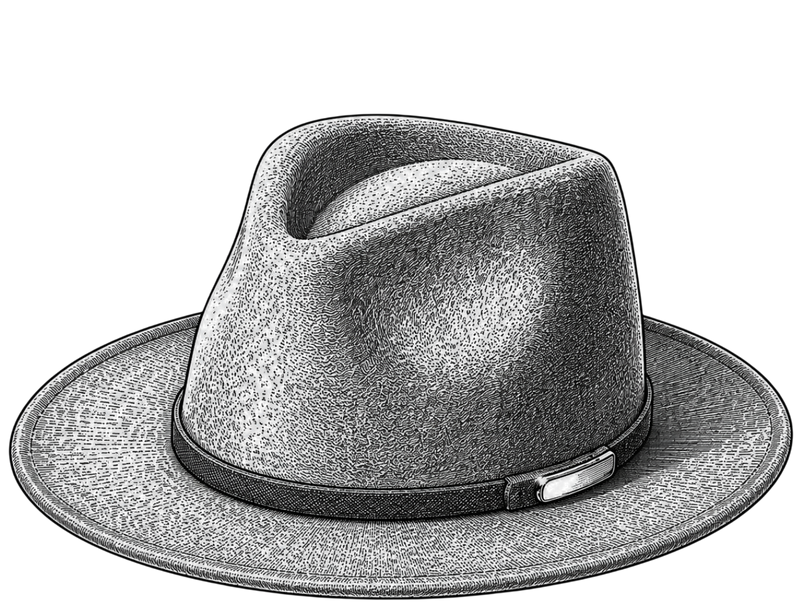
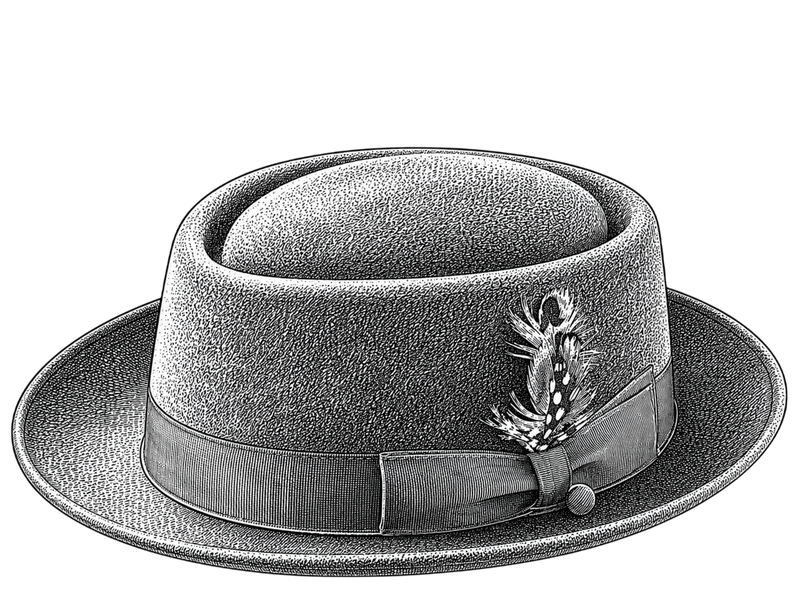
Structured Felt Hats (Fedoras, Homburgs, Western Hats)
Hat stand (best): A purpose-made hat stand holds the crown and brim in their correct shapes with no contact pressure on the brim edges. The hat sits naturally, at rest, with gravity the only force acting on it. A hat stand is the correct long-term storage solution for any structured hat you wear regularly.
Stands range from simple wooden pegs to adjustable stands with different crown diameters. The stand diameter should match the hat interior circumference — too narrow and the crown will distort outward; too wide and it stretches the crown interior.
Crown-down on a clean surface (acceptable): Resting a structured felt hat crown-down on a clean, flat surface keeps the brim free of pressure. The crown touches the surface on its apex — the strongest structural point on most fedoras. This is acceptable for short-term storage (overnight, a few days). Long-term crown-down storage can create a subtle flat spot on the apex.
Hat box (best for long-term or travel): A round hat box provides a rigid perimeter that prevents external pressure from any direction. The hat sits in the box crown-up or crown-down (depending on the box design) with no contact between the hat and any flat surface. Hat boxes are the correct solution for hats not in regular rotation — stored for seasons, transported in luggage.
What not to do:
- Brim-down storage. Resting a hat brim-down distorts the brim edges over time. The brim is the most structurally vulnerable part — it has no rigid support at the edges and takes the shape it dries or rests in.
- Stacking hats. Any hat placed on top of another applies pressure to the crown or brim of the hat below. The weight is small, but sustained over weeks or months it creates distortion.
- Hanging on a narrow hook. A hook that contacts only a small crown area creates a pinch point that develops into a permanent dent. Use wide pegs or hat-specific wall hooks with a curved or padded contact surface.
- On a closet shelf surrounded by other items. Items pressing against the hat sides from the left or right create slow crown distortion. Hat storage needs space — the hat should not be in contact with anything on its sides.
Flat Caps and Unstructured Hats
Flat caps and soft unstructured hats are more forgiving of storage conditions than structured hats. Their softer construction tolerates more variation without permanent distortion.
- Laid flat on a shelf is acceptable for flat caps and will not cause the brim distortion issues that structured hat brim-down storage creates.
- Stacking flat caps causes minimal damage if the stack is not too high — the soft construction distributes pressure more evenly than a rigid felt crown.
- On a hook causes a fold at the hook contact point on soft caps. Not permanent for daily-use casual caps, but visible over time. A wider peg is better.
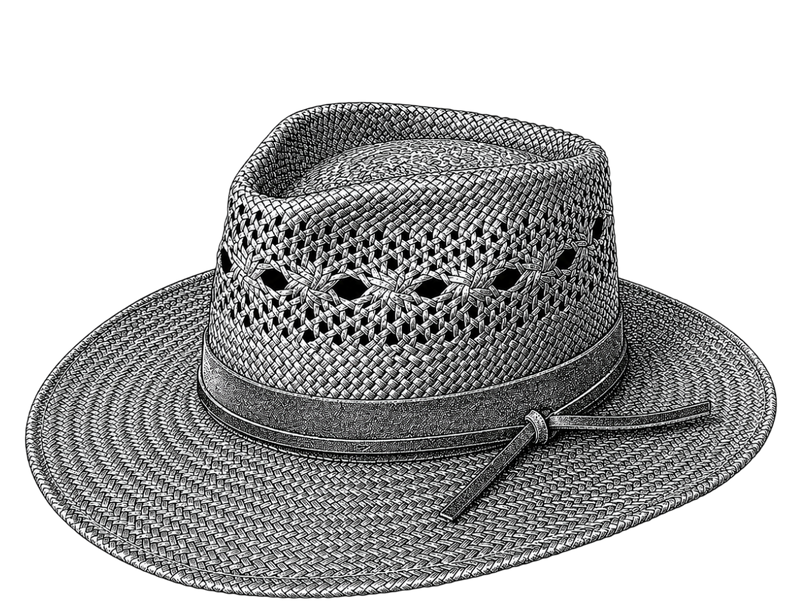
Straw Hats
Natural straw hats have two specific storage vulnerabilities:
Sustained compression: Unlike felt, which can often be steamed back to shape, a cracked straw brim does not recover. Any storage that applies point pressure to the straw weave — a stack, a narrow hook, an edge touching another surface — risks cracking if the hat is left in that position for extended periods.
Humidity extremes: Very dry storage environments cause straw to become brittle and crack easily. Very humid environments can cause straw to soften and distort. Straw hats store best at moderate humidity — a living space at normal indoor humidity is correct. Avoid attic storage (heat + humidity variation) and basement storage (excess humidity). Never store in sealed plastic bags, which trap moisture.
Best practice for straw: Hat stand at room temperature in a living space or wardrobe, with no direct contact with other items. During off-season, a round hat box with tissue paper inside the crown provides stable support and moisture control.
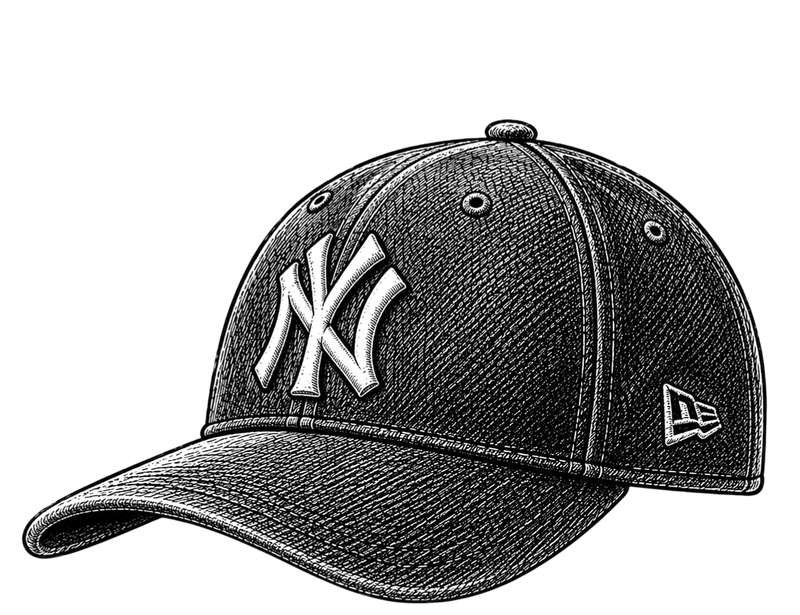
Baseball Caps and Structured Caps
The structured front panel and the curved brim of a baseball cap distort under sustained pressure. Specific storage issues:
- Hanging by the adjustable strap places the brim under sustained downward tension — the brim curves more sharply than intended over time. Avoid.
- Stacking brim-forward crushes the brim curve. Stacking brim-inward (one cap inside another, facing opposite directions) is less damaging.
- Cap racks or cap organizers are the correct solution for multiple baseball caps. They hold the crown shape and keep brims free of contact pressure.
Off-Season Storage
Hats not in rotation for a season need slightly more care than everyday storage:
- Clean before storing. Sweat, oils, and environmental debris left on a hat during storage set permanently over time. Clean the sweatband and brush the outer surface before putting the hat away.
- Stuff the crown with acid-free tissue paper for felt and straw hats going into a box. This maintains the crown shape from the inside without adding pressure from outside.
- Moth protection for wool felt. Natural wool felt is susceptible to moth damage. Cedar blocks or lavender sachets near (not touching) wool hats provide deterrence. Check stored wool hats periodically during long storage periods.
- Avoid plastic bags. Plastic prevents the hat material from breathing, can trap moisture and promote mold, and can cause off-gassing that affects certain hat materials. Use cloth dust bags or open hat boxes.
The Easiest Solution: Make the Hat Accessible
The storage problem is often caused by inconvenience — when a hat is difficult to store correctly, it gets placed wherever is easiest. The practical solution is making correct storage the easiest option:
- A hat stand by the door (or on a shelf at eye level) encourages correct placement rather than tossing the hat on a chair or sofa
- A dedicated hat shelf with enough width between hats for air circulation removes the crowding problem
- A hat hook at the right height (at door level) eliminates the floor-and-chair problem for everyday casual hats
A hat that is easy to store correctly gets stored correctly. A hat that requires effort to store correctly gets tossed on a surface and slowly distorted.
Find quality storage-ready hats — designed to maintain their shape and reward long-term ownership — in the Hatloom collection.
Frequently Asked Questions
Should hats be stored crown-up or crown-down?
For structured felt hats: crown-up on a hat stand is ideal (no surface contact with the crown). Crown-down on a clean flat surface is acceptable short-term. Never store brim-down — the brim is the most vulnerable structural area. For straw hats: crown-up on a hat stand. For flat caps and unstructured hats: either position is acceptable.
How do I store multiple hats in a small space?
A wall-mounted hat rack with multiple wide pegs is the most space-efficient correct storage for everyday hats. For long-term storage, individual hat boxes stacked vertically (the box is rigid, the hat is protected) save more space than trying to stack unboxed hats. Avoid hat-on-hat contact in any storage configuration.
Can I store a felt hat in a plastic bag?
No. Plastic bags trap moisture and prevent breathing, which promotes mold and odor in natural wool felt. They can also cause off-gassing that affects hat materials over time. Use cloth dust bags or open hat boxes for felt hat storage.
Do moths eat hats?
Natural wool felt is susceptible to moth larvae damage — the larvae eat natural protein fibers (wool, cashmere, angora, etc.). Cedar blocks or lavender sachets near stored wool hats provide deterrence without damaging the hat. Periodically airing wool hats in sunlight and inspecting for early damage during storage is good practice for off-season storage.
How long can a hat stay in a hat box?
Indefinitely, if stored correctly. A hat in a round hat box at room temperature with tissue paper support inside the crown can remain in stable condition for years. The box protects it from dust, light, and incidental pressure. This is how vintage hats are preserved — the hat box is a protective environment, not a problem.