Online hat shopping has a specific challenge that buying other clothing online does not: a hat that is 1 cm too small or too large is unwearable without modification, while a shirt that is slightly off can still be worn. Most people who report a negative online hat experience did not measure their head before ordering. This guide addresses the specific skills that make online hat buying reliable rather than a lottery.
Step 1: Measure Your Head Correctly
Everything in online hat buying depends on a correct head measurement. The measurement process:
- Use a soft measuring tape (or a strip of paper if you do not have one -- measure the paper strip against a ruler afterward).
- Wrap the tape around the head approximately 2.5 cm above the ears and across the widest part of the forehead -- this is the position where most hat sweatbands sit.
- The tape should be snug but not tight -- you should be able to fit one finger under the tape comfortably.
- Record the measurement in centimetres. This is your hat circumference.
Convert to hat size using the relevant sizing convention: European sizes are in centimetres of head circumference; US sizes use a fraction/decimal system; UK sizes use a similar system to US. Any quality hat retailer will provide a sizing chart showing all three conventions.
Round up rather than down at size boundaries. A hat that is marginally too large can be adjusted with interior sizing tape; a hat that is too small cannot be made larger.

Step 2: Read Material Descriptions Carefully
Material descriptions in hat listings range from precise and helpful to vague and misleading. What to look for:
Felt Hats
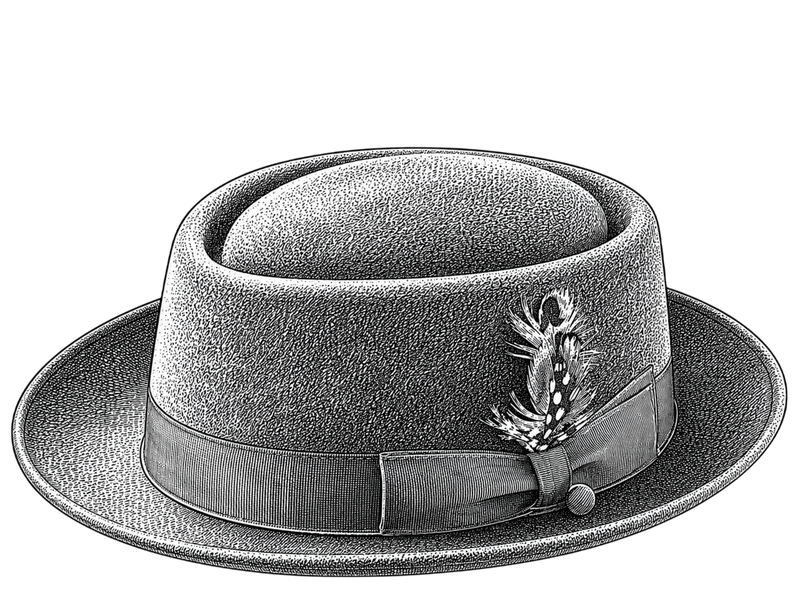
- What good descriptions say: wool felt, rabbit felt, beaver felt blend, fur felt. These are specific material claims that tell you what you are buying.
- What vague descriptions say: felt, high quality felt, premium felt with no material specification. These may indicate a polyester felt or simply a manufacturer that does not specify. Contact the seller if this matters to you.
Straw Hats
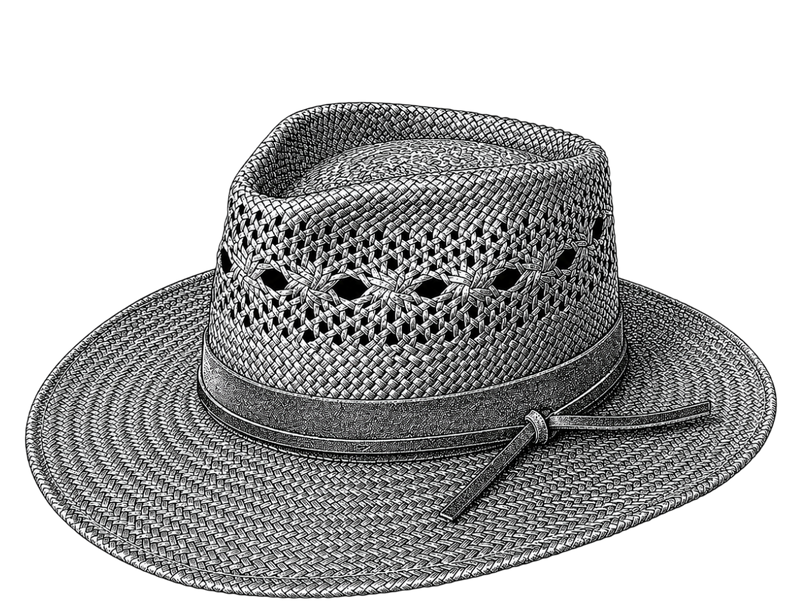
- What good descriptions say: toquilla straw, Ecuador straw, seagrass, paper straw, raffia straw. Specific material names allow you to compare.
- Key distinction: paper straw is significantly different from natural straw. Paper straw is less flexible, less breathable, and less durable. Natural straw (toquilla, seagrass, raffia) is a plant fibre with better flexibility and longevity.
Interior Details
Interior quality is a reliable indicator of overall hat quality. Look for product descriptions or photos that show or mention:
- The sweatband material: leather (highest quality), cotton grosgrain, or satin
- Whether the hat is lined
- The finish of the interior stitching
Step 3: Evaluate Product Photos
Hat photos have specific things to check that other product photos do not:
- The brim shape: look for the brim from the front and side. A brim that droops at the edge in the product photo will droop on arrival. A brim with clean, consistent shape in the photos will maintain that shape.
- The crown shape: look for consistent, symmetrical crown shaping. An inconsistent or dented crown visible in product photos will not improve in person.
- The sweatband from inside: any hat seller confident in their quality should provide at least one interior shot.
- The model placement: the hat should be modelled at the correct placement position. If the model is wearing the hat pushed far back, this is a warning sign.
Step 4: Assess the Returns and Exchange Policy
For a first purchase from a new hat seller, the returns and exchange policy matters as much as the product description. A hat purchased online that does not fit cannot be worn -- a clear exchange policy for size is a functional requirement for responsible hat selling. A seller with no exchange or returns policy on unworn hats is asking the buyer to accept all sizing risk.
Checking Reviews for Hat-Specific Feedback
Hat reviews contain useful specific information if you look for it:
- Fit accuracy: does the hat run true to the measured size, or does it run small or large?
- Shape retention: do reviewers mention the hat holding its shape after several wears?
- Photo accuracy: does the received hat match the product photos? Colour and crown shape are the most common accuracy complaints.
Browse hats with detailed material descriptions and full sizing information at Hatloom.

Frequently Asked Questions
What if my head measurement is between sizes?
Order the larger size. A hat that is slightly too large can be made to fit correctly using sizing tape (self-adhesive foam strips placed inside the sweatband to reduce the interior circumference). A hat that is slightly too small cannot be expanded without professional stretching. When in doubt, go larger.
How accurate are hat size conversion charts?
Conversion charts are accurate for the hat in which size is measured -- but different hat makers' sizes do not all correspond to the same head circumference. A European 59 from one maker may be cut slightly differently than a European 59 from another. Sizing charts give you a starting point; if a seller has reviews that mention consistent sizing (runs true, runs small, runs large), that information is more useful than the chart alone for that specific product.
What photos should I expect from a quality hat seller?
A complete product image set for a quality hat should include: front view, side view (showing the profile of crown and brim), back view, interior view (sweatband and lining), and close-up of the material and hatband detail. A seller providing all these views is giving you the information needed to make a confident purchase.
Are hats different to size between women and men?
Most hat sizing is based on head circumference and applies regardless of gender -- head circumference is head circumference. Some hat styles have been designed with proportions conventionally associated with men or women (crown height, brim width, overall silhouette), but the underlying sizing system is the same. Measure your head and use the circumference measurement.
What is the most common online hat buying mistake?
Not measuring. Most negative online hat experiences start with ordering a hat size based on memory, assumption, or generic labels without measuring. A brief measurement with a soft tape measure eliminates the most common source of online hat buying failure. The second most common mistake is not reading material descriptions carefully enough -- buying a hat described only as straw or felt without verifying the specific material type, and receiving a paper straw or synthetic felt that does not have the properties of a natural fibre version.