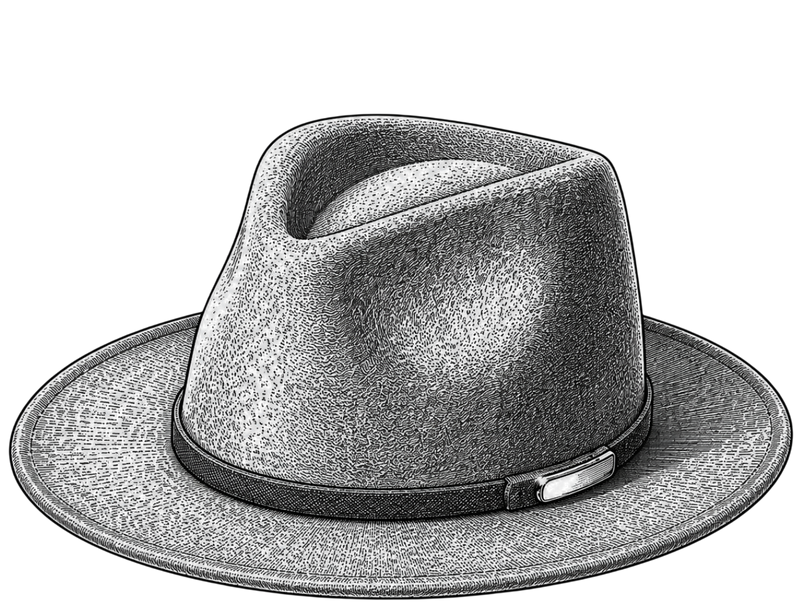
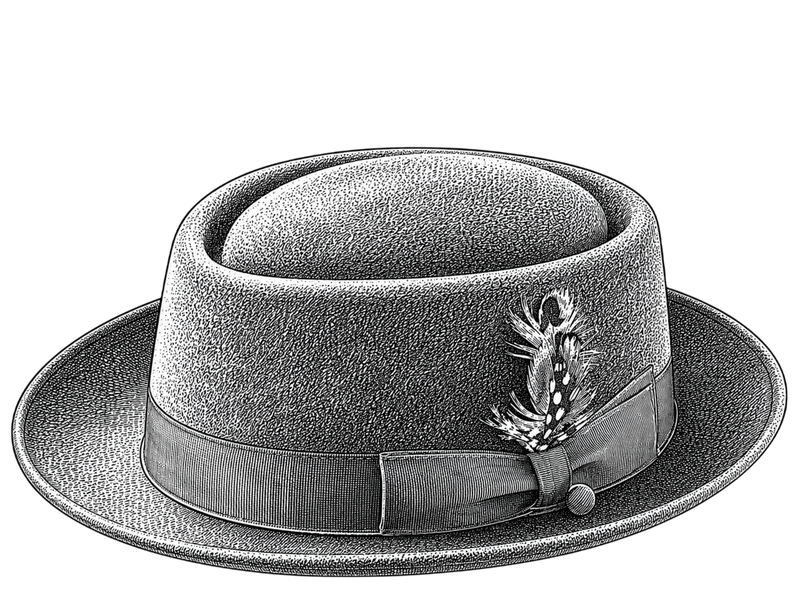
The most common way people ruin felt hats is by cleaning them incorrectly. Water soaking, machine washing, ironing, and scrubbing with household detergents — all of these appear logical and all of them damage felt in ways that range from cosmetic to structural. Felt is not a fabric. It is a compressed fiber matrix, and it requires handling that reflects that fact.
What Felt Is and Why It Cleans Differently
Wool felt is created by agitating wool fibers with heat and moisture until the individual fibers interlock irreversibly. This gives felt its density, warmth, and structural properties — but it also makes it vulnerable to the same forces that created it. More agitation, more heat, more prolonged moisture all continue the felting process in ways that shrink, distort, and compress the material beyond its intended form.
The correct cleaning principle: minimum moisture, minimum agitation, minimum heat. Everything that makes felt resilient in wear makes it sensitive to cleaning.
Cleaning Method by Stain Type
Surface Dust and General Maintenance
The most frequent cleaning need for felt hats is the simplest: removing surface dust, airborne particles, and light soiling from the hat body.
Method: A soft-bristled brush — specifically a hat brush or a clean, soft natural-bristle clothing brush — applied in one direction following the nap of the felt. Most felt hats have a directional nap (the surface fibers all lean in one direction). Brushing against the nap disturbs the surface texture; brushing with it smooths and cleans.
How to find the nap direction: Run your finger lightly across the surface of the hat. In one direction it feels smooth; against the nap it feels rough. Always brush in the smooth direction.
Frequency: A quick brush after each wearing prevents surface dust from accumulating and embedding in the fiber. A thorough brush every 1–2 weeks for a regularly worn hat.
Sweat Stains on the Outer Crown
Sweat migrating from the sweatband to the outer felt is the most damaging gradual stain. The salt and oils in sweat can permanently discolor felt and degrade the fibers over time.
Method:
- Allow the hat to dry completely — do not treat damp felt.
- Brush off any dried residue with a soft brush.
- Dampen a clean white cloth (not colored — dye transfer onto light felt is permanent) with cool water and a tiny amount of gentle wool wash or baby shampoo.
- Dab — do not rub — the affected area. Dabbing lifts the stain; rubbing spreads it and disturbs the felt surface texture.
- Follow with a clean damp cloth to remove any soap residue.
- Allow to air dry completely at room temperature on a hat stand or round form. Do not apply heat.
For older, set-in sweat stains: A solution of equal parts white vinegar and water applied by dabbing can lift stains that water alone does not remove. Vinegar is safe on most felt at this dilution — test on an inconspicuous area first on light-colored hats.
Greasy Stains (Food, Hand Oils)
Greasy stains on felt are removed using absorbent material rather than moisture, where possible:
- If fresh: immediately press (do not rub) a clean absorbent cloth or paper towel against the stain to lift as much grease as possible before it sets.
- Apply a small amount of cornstarch or talcum powder to the stain, leave for 30–60 minutes. The powder absorbs the remaining grease.
- Brush off the powder gently with a soft brush, following the nap direction.
- If a mark remains: dab with a barely-damp cloth and wool wash. Do not soak. Allow to dry flat on a form.
Mud and Dirt
The single most important rule for mud on felt: wait until it is completely dry before removing it.
Damp mud rubbed on felt embeds the particles deeper into the fiber. Dry mud can be gently flaked and brushed off without penetrating further. After the mud has dried completely:
- Gently flex the hat area to crack and loosen the dried mud — it will break off in pieces.
- Brush off the loosened material with a stiff brush (stiffer than the maintenance brush) against the nap first to raise the particles, then with the nap to smooth the surface.
- Dab any residual mark with a damp cloth and allow to dry completely.
Rain Water Marks
Rainwater on a felt hat, if allowed to dry unevenly, can create tide marks — lighter or darker rings at the waterline. These are one of the more challenging felt stains to fully remove.
Method: Dampen the entire affected panel (not just the mark) evenly with a fine mist of clean water. This re-wets the stain area and the surrounding material simultaneously, preventing a new tide mark from forming at the treatment edge. Reshape as needed and allow to dry uniformly on a form.
Prevention: When a felt hat gets rained on, do not leave it to dry naturally in a tilted or resting position. Reshape immediately and place on a hat stand or form to dry evenly. Tide marks form when drying is uneven — controlled drying prevents them.
Ink or Permanent Marker
Ink on felt is very difficult to remove without damaging the fiber. Rubbing alcohol (isopropyl) dissolves many ink types — apply with a cotton bud (not a cloth) to minimize spread, dab the stain center outward, and work in very small sections. Accept that complete removal is not always possible. For valuable or sentimental hats, professional cleaning by a milliner is preferable to home attempts with solvents.
What to Absolutely Avoid
- Machine washing: The agitation and heat shrinks and re-felts the material. A felt hat put in a washing machine is permanently damaged in most cases.
- Submerging in water: Full water saturation causes uneven shrinkage and felting. The hat will emerge smaller and distorted.
- Scrubbing: Any rubbing motion disturbs the surface nap and can create bald patches or surface damage that does not recover.
- Ironing or direct heat: Direct heat application flattens the surface nap permanently, destroys the three-dimensional texture of quality felt, and can melt or fuse fibers.
- Household stain removers: Products designed for woven fabrics often contain enzymes, bleaches, or surfactants that degrade wool protein fibers. Stick to gentle wool-specific products or plain cool water.
- Colored cloths for application: Dye transfer from a colored cloth onto damp felt can create permanent staining, particularly on light-colored hats.
The Sweatband: Clean Separately
The sweatband accumulates the most contamination of any hat component. Clean it independently from the outer felt:
- For leather sweatbands: wipe with a barely-damp cloth and follow with a small amount of leather conditioner once fully dry
- For grosgrain ribbon bands: dab with diluted gentle detergent and rinse with a clean damp cloth
- For cotton or fabric bands: can handle slightly more moisture — clean with gentle detergent and allow to dry completely before wearing
Clean sweatbands extend the lifespan of the outer felt by preventing sweat migration. Regular sweatband maintenance is more effective than treating outer-crown sweat stains after they occur.
Find quality wool and rabbit felt hats built to last in the Hatloom collection.
Frequently Asked Questions
Can I wash a felt hat?
Not in the conventional sense. Felt should not be machine washed, submerged, or scrubbed. Surface cleaning with a soft brush and targeted spot-cleaning with a barely-damp cloth and gentle wool wash is the correct approach. The goal is minimum moisture, minimum agitation — the opposite of standard laundry.
How do I remove a sweat stain from felt?
Allow the hat to dry completely first. Dab (not rub) with a clean white cloth dampened with a solution of cool water and a small amount of gentle wool wash. For older stains, a 50/50 solution of white vinegar and water applied by dabbing can lift residue that water alone cannot. Follow with a clean damp cloth and dry completely on a form.
My felt hat got completely wet in the rain. What do I do?
Reshape it immediately while wet — the felt is pliable when damp and will set in whatever shape it dries in. Place on a hat stand or form and allow to dry completely at room temperature. Do not apply heat. Do not leave it drying on a flat surface in a resting position — this creates uneven drying and tide marks. If any distortion remains after drying, light steam and gentle reshaping by hand will correct it.
How do I get rid of the sweat smell in a felt hat?
Sprinkle baking soda inside the crown, leave for several hours or overnight, then tap out and brush. For leather sweatbands: a small amount of rubbing alcohol applied sparingly on a cotton bud neutralizes odor-causing bacteria without damaging the leather. Air the hat in indirect sunlight (not direct sun — UV can fade felt over time) for several hours after treatment.
What brush should I use on a felt hat?
A purpose-made hat brush with soft natural bristles — horsehair or boar bristle — provides the correct combination of gentle cleaning action and nap-following movement. A clean, soft natural-bristle clothing brush works as a substitute. Avoid synthetic bristle brushes, which can generate static that attracts rather than removes dust, and stiff scrubbing brushes that damage the surface texture.