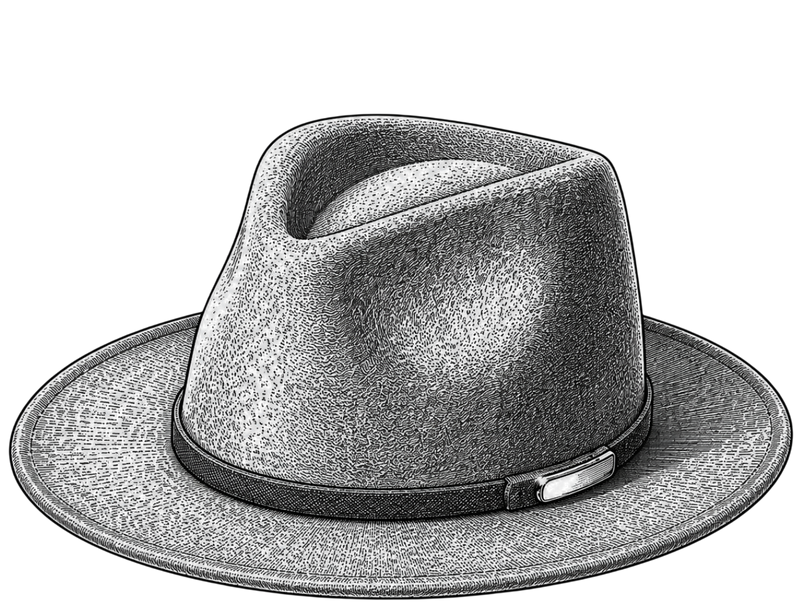
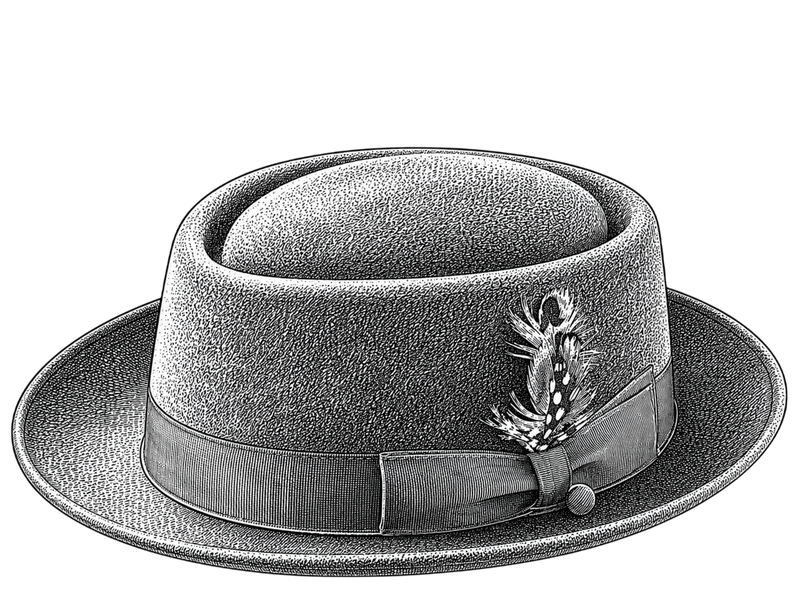
Felt hat cleaning is one of those topics where the wrong approach destroys the hat. Felt is a non-woven material made from compressed fibres -- wool or fur -- and it does not behave like woven fabric. Methods that work for cleaning cotton, polyester, or even woven wool can shrink, stretch, distort, or collapse the felt structure entirely. The right approach is conservative and works with the felt's properties; the wrong approach treats felt like any other hat fabric and frequently ruins what may be a genuinely valuable item.
What Felt Is and Why It Matters
Felt is made by applying heat, moisture, and pressure to fibres, causing them to interlock and compress into a stable, dense material without any weaving. The same process that creates felt -- moisture and agitation -- is also what destroys it. A felt hat that gets wet and is then dried in an uncontrolled way will shrink in some dimensions, expand in others, and lose the blocked shape the manufacturer pressed into it. A felt hat that is rubbed aggressively while wet will mat the fibres in a way that is very difficult to reverse.
Understanding this means the primary rule for felt hat cleaning is: avoid significant moisture, and when moisture is unavoidable, control the drying process carefully.

Routine Maintenance: The Hat Brush
The most important felt hat care tool is a hat brush -- a soft-bristled brush specifically designed for felt (often made with natural boar or horsehair bristles). Regular brushing removes dust, lint, and surface debris before they settle into the felt fibres and become harder to address.
Brushing technique for felt hats:
- Brush counterclockwise on the crown, following the nap of the felt (the direction in which the fibres lie)
- Brush from front to back on the brim
- Use light, consistent pressure -- aggressive brushing lifts and damages the nap
- Brush after every few wears to prevent buildup, rather than only when visibly dirty
A lint roller can substitute for a hat brush for removing surface lint and fibres, but it does not address dust or sweat residue in the felt the way a good brush does.
Spot Cleaning: Light Stains and Marks
Light surface marks and small stains on felt can be addressed with a soft clean cloth and cold water used sparingly. The technique:
- Dampen a white cloth with cold water -- do not soak it, the cloth should be slightly damp, not wet
- Dab at the stain gently rather than rubbing. Rubbing felt spreads the stain and can mat the fibres
- Work from the outside edge of the stain inward to avoid spreading it
- Allow the area to dry naturally at room temperature before assessing -- felt sometimes looks worse when wet and improves significantly as it dries
For oily stains, a small amount of cornstarch applied to the stain and allowed to sit for several hours can absorb some of the oil before brushing away gently. This works better on light-coloured felts and should be tested on an inconspicuous area first.
White chalk or talcum powder can be applied to light-coloured felt in the same way to absorb oil-based marks.
Sweat Stains and Interior Band Cleaning
The interior sweatband is typically the most soiled part of a felt hat because it absorbs perspiration directly. A discoloured or salt-stained sweatband can usually be addressed without wetting the felt itself:
- Use a cotton swab dampened with cold water to clean the inner surface of the sweatband
- For persistent staining, a very small amount of white vinegar diluted in water (1 part vinegar to 3 parts water) applied to the sweatband only (not the felt) can address sweat salt deposits. Allow to dry fully before wearing
- The sweatband of better-quality hats can often be replaced by a hat repair professional if it is beyond cleaning -- the band is typically sewn in and can be removed and replaced without affecting the felt
What Never to Do
- Never machine wash a felt hat. The combination of water, heat, and mechanical agitation will collapse the structure. The hat will emerge as a shapeless mass of compressed fibre.
- Never put a felt hat in the dryer. Heat causes felt to shrink and warp. Even low heat settings will alter the hat's dimensions and shape.
- Never use steam aggressively. Light steam from a kettle or hand steamer is used carefully in hat reshaping (see below), but direct steam applied to a damp hat for extended periods will alter the felt's dimensions.
- Never rub aggressively when wet. Wet felt fibres are at their most vulnerable to matting and distortion. Any cleaning on damp felt should use dabbing rather than rubbing.
- Never leave a wet felt hat on a flat surface. It will lose its shape as the damp felt settles. It must be dried on a hat stand or form.
Reshaping a Misformed Felt Hat
If a felt hat has lost its shape through storage or accidental compression, it can often be reshaped at home using steam:
- Hold the hat over steam from a kettle or hand steamer, moving it in slow circles to allow the steam to penetrate evenly. The felt will soften slightly under the steam.
- While the felt is warm and slightly pliable, use your hands to gently manipulate the crown and brim back to the correct shape. Work from inside the crown outward.
- Place the reshaped hat on a hat stand or form and allow it to cool and dry completely in the correct shape. Do not move it until fully dry.
This process works well for minor shape loss. For hats with significant structural damage, professional hat cleaning and blocking by a hat restorer gives better results -- they have the actual hat blocks (the solid forms that define the hat's original shape) and can press the hat back to its original geometry.
Browse felt hats in wool felt and fur felt constructions at Hatloom.

Frequently Asked Questions
How do I remove white salt rings from a felt hat brim?
White rings on felt hat brims are typically salt deposits from sweat that has wicked through the felt to the surface and dried. They can be addressed with a cotton cloth very lightly dampened with cold water, using a gentle circular motion. In some cases, the damp cloth method removes them completely; in others, it requires a second pass after drying. For persistent salt rings, a cloth lightly dampened with white vinegar diluted in water (equal parts) can dissolve the salt deposits. Always let the area dry completely and assess before repeating -- the rings often look worse while damp and improve substantially once dry.
Can I use a dry cleaning spray on felt?
Some dry cleaning or upholstery cleaning sprays are safe for use on felt, but this varies significantly by product and the specific type of felt. Before using any spray product on a felt hat, test it on an inside edge of the brim where it will not be visible. Allow it to dry completely and examine for any colour change, spotting, or texture change before applying to the visible surfaces. When in doubt, the most conservative approach -- soft brush plus targeted damp dabbing -- is safer than an untested chemical product on an irreplaceable hat.
How often should I clean a felt hat?
Regular brushing should happen after every few wears or whenever you notice dust accumulation. Spot cleaning should happen as needed when stains or marks appear, addressed as promptly as possible (fresh stains are easier to address than set ones). Deep cleaning or professional cleaning is needed rarely for most hat wearers -- perhaps once per season for regularly worn hats, or as needed when the hat looks significantly duller or dirtier than when new. The goal is maintenance rather than periodic intensive cleaning.