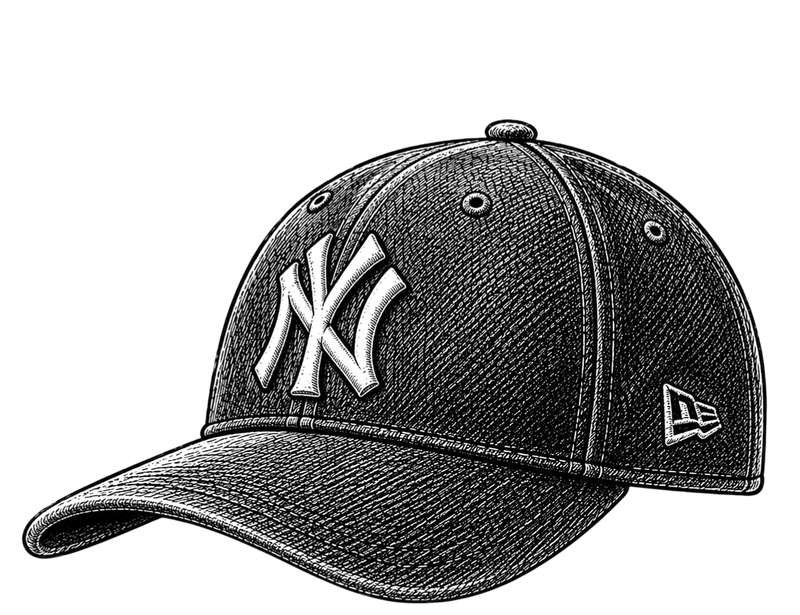
Baseball caps are the most washed hat and the most frequently ruined by washing. The structure problem is simple: most baseball caps have a formed brim that holds its shape through a combination of the brim material, stitching, and sizing — none of which tolerate machine washing heat, agitation, and the tumbling of a dryer. The caps that come out misshapen, with yellowed sweatbands and collapsed brims, were cleaned with the correct intention and the wrong method.
Before You Wash: Assess the Cap
The cleaning method depends on one critical factor that determines whether machine washing is even an option: the brim material.
Cardboard brim: Found in most vintage caps and some older current-production models — identifiable by a slight give or crinkle when the brim is squeezed. Cardboard brims dissolve or permanently warp when exposed to water. Any cap with a cardboard brim must be hand-cleaned, and the brim must never be submerged or soaked.
Plastic brim: The standard in most baseball caps made after the mid-1990s. Plastic brims are water-resistant and can handle hand washing or gentle machine washing. Squeeze the brim firmly — a plastic brim springs back; a cardboard brim may crease or feel soft.
Structured vs. unstructured crown: A structured cap has a stiffened front panel that holds its shape without the wearer head inside it. An unstructured cap collapses when not worn. Structured caps require more careful cleaning — the front panel stiffening is easily deformed by heat and agitation. Unstructured caps are more forgiving.
Hand Washing: The Safest Method for Most Caps
Hand washing is the recommended method for all caps that you care about maintaining in good condition. It takes 10 minutes and avoids all the structural risks of machine washing.
What you need: A clean basin or sink, cool to lukewarm water, a small amount of mild detergent or dish soap, a soft toothbrush or soft cloth for scrubbing.
Process:
- Fill the basin with cool water and add a small amount of mild soap — about a teaspoon. Do not use bleach, color-safe bleach, or OxiClean without testing a hidden area first; these can affect cap dye.
- Submerge the cap and let it soak for 10–15 minutes. This loosens sweat and dirt without requiring aggressive scrubbing.
- Use the toothbrush to gently scrub problem areas — the sweatband (the interior band that contacts the forehead directly) and any surface staining. Work in small circular motions, not hard linear scrubbing, which can damage the fabric weave.
- Rinse thoroughly under cool running water. Squeeze gently — do not twist or wring. Make sure all soap is removed; residual soap can leave a white haze on dark fabric when it dries.
- Reshape the crown by hand while the cap is still wet. Place it on a flat surface or over a rounded object (a bowl, a clean coffee can, a cap-shaping frame) that approximates head shape and let it air dry naturally at room temperature.
Machine Washing: When It Works and When It Doesn't
Machine washing a baseball cap is viable under specific conditions:
- The cap has a plastic (not cardboard) brim
- The cap is unstructured, or the structure is maintained through heavy fabric rather than a stiffened insert
- The cap fabric is cotton, polyester, or a blend — not wool, not delicate materials
If all three conditions are met:
- Place the cap in a mesh laundry bag or cap-washing cage (a plastic frame designed to protect cap structure in the machine)
- Wash on the gentlest cycle available, with cold water only
- Remove immediately when the cycle ends — do not let the cap sit in the machine
- Air dry over a rounded form — never put a baseball cap in a dryer under any circumstances. The heat degrades the brim material, the crown fabric, and the sweatband, and the tumbling permanently deforms the structure.
The Sweatband: The Part Most People Get Wrong
The sweatband — the interior band that contacts the forehead — is where most of the visible wear and discoloration accumulates. Sweat deposits leave a yellowish buildup that worsens with each wearing if not cleaned regularly. This staining is primarily from salt, oils, and product residue, not from dirt.
For light sweatband buildup: the hand-washing method above, with particular attention given to the sweatband during scrubbing, is sufficient.
For heavy yellow staining: apply a paste of baking soda and water to the stained area, let it sit for 30 minutes, then scrub gently with a toothbrush. Alternatively, a product like Biz stain treatment or a small amount of hydrogen peroxide on white sweatbands only can be effective. Rinse very thoroughly after treatment.
Prevention is more effective than treatment: washing the cap every 4–6 wearings prevents the sweat deposits from building to the level where staining becomes resistant to simple cleaning.
Drying: The Most Important Step
Most baseball cap cleaning failures happen during drying, not during washing. The three non-negotiable drying rules:
Never use a dryer. Heat deforms plastic brims, sets any remaining stains into the fabric permanently, shrinks cotton crowns, and degrades the elastic or closure mechanism at the back of the cap. A dryer cycle destroys a cap's structure in 45 minutes in ways that cannot be reversed.
Reshape before drying. A wet cap conforms to whatever shape it rests against as it dries. If it dries flat, the crown will be flat. If it dries crumpled in a bag, the crown will have crumple marks. Shape it over a rounded form while wet and it will dry in the correct shape.
Dry at room temperature, away from direct sun and heat. Direct sunlight causes dye fading, particularly on dark caps. Direct heat (near a radiator, heat vent, or hairdryer) causes the same problems as machine drying.
Between-Wash Maintenance
A cap that is well-maintained between washes requires fewer deep cleans and lasts significantly longer:
- After each wear: Let the cap air out before storing. Sweat dries without leaving as much residue if the cap is not sealed in a bag or drawer immediately after wear.
- Weekly: Brush the cap crown with a soft garment brush to remove surface dust and lint. This prevents surface buildup that becomes harder to clean over time.
- Spot clean stains immediately: Fresh stains respond to a damp cloth and mild soap in minutes. The same stains set into fabric after 24–48 hours and require much more effort to remove.
Find baseball caps in classic cotton and premium materials in the Hatloom cap collection.
Frequently Asked Questions
Can I put my baseball cap in the dishwasher?
This is a widely shared cleaning hack that damages more caps than it saves. Dishwashers use very hot water and high-pressure water jets — both of which deform structured crowns, soften plastic brims, and expose the cap to cleaning agents (dishwasher detergent) that are significantly more aggressive than clothing detergent. The top rack, low-heat setting variation reduces but does not eliminate these risks. Hand washing takes the same 10 minutes and produces no structural risk. The dishwasher method is not recommended for any cap you care about.
How do I remove a sweat stain ring from the brim?
The stain ring on the brim is a salt and oil deposit, not a dye transfer. For light rings: a mixture of equal parts white vinegar and water applied with a cloth, allowed to sit 10 minutes, then blotted with a clean damp cloth. For heavier rings: a paste of baking soda and water, applied and scrubbed gently with a soft brush after 20 minutes. For persistent rings on cotton brims: a small amount of upholstery or foam cleaner applied specifically to the stained area — the foam lifts the deposit without saturating the brim material. Always test in a hidden area first. Do not rub aggressively — the friction can damage the fabric finish even if the stain is lifting.
My cap shrank in the wash. Can I restore it?
Partially. Cotton caps shrink when exposed to heat, and the shrinkage is often uneven — the crown may shrink more than the brim or the sweatband. To stretch a shrunken cap: dampen the cap thoroughly with warm water, then wear it until it dries. Your head will stretch the cap back toward its original size as it dries under tension. This works for minor shrinkage. Significant shrinkage (more than a full size) cannot be reliably restored.
How often should I wash a baseball cap?
Every 4–6 wearings for a cap worn regularly. Washing less frequently allows sweat deposits to build and set into the fabric, making stains harder to remove and the sweatband increasingly uncomfortable to wear. The interval depends on how much the wearer perspires and on climate — in hot summer conditions, more frequent washing may be necessary. Spot cleaning between full washes extends the interval for surface-only dirt.
How do I clean a white baseball cap?
White caps show every stain immediately and require more frequent cleaning as a result. The same hand-washing method applies. For yellowing (which is common on white caps due to sweat deposits and age): a paste of baking soda and a small amount of hydrogen peroxide applied to the yellowed areas, left for 30 minutes, scrubbed gently, then rinsed very thoroughly. Hydrogen peroxide is a mild bleaching agent that lifts organic yellowing without the harshness of chlorine bleach. Do not use chlorine bleach on white caps with color logos, stitching, or structured brims — the bleach damages these elements while whitening the fabric.