Every hat guide covers round faces by recommending 'angular hats and tall crowns.' This is correct but incomplete in the same way that saying 'exercise regularly' is correct but unhelpful -- it names the direction without giving you anything practical to do with it. The useful question is not 'what property does the hat need?' (height, angles) but 'which specific hat styles provide these properties in the real range of hats that can actually be bought and worn in normal life?'
The Specific Proportional Challenge
A round face is approximately equal in width and height measurements, with soft curves at the forehead, jaw, and cheekbones rather than angular features. The visual challenge for hat selection is that many hat shapes parallel the face's circular outline rather than contrasting with it. A circular hat brim above a circular face doubles the circular visual element; a rounded crown above a round face continues the curve rather than providing angular contrast.
What round faces benefit from in a hat:
- Vertical elongation from crown height -- taller crowns make the total hat-and-face silhouette more vertical in proportion, visually reducing the width-to-height ratio
- Angular elements -- crown creases, defined peaks, flat tops -- that introduce linear contrast to the soft curves of the face
- Brim width approximately at or slightly narrower than the face's widest point -- avoiding brims that extend significantly beyond the cheekbones, which would add lateral visual width
- Asymmetry, if the hat allows it -- a tilted brim or off-centre placement breaks the circular outline effectively
The Specific Hats That Work and Why
Fedora: The Most Recommended Style
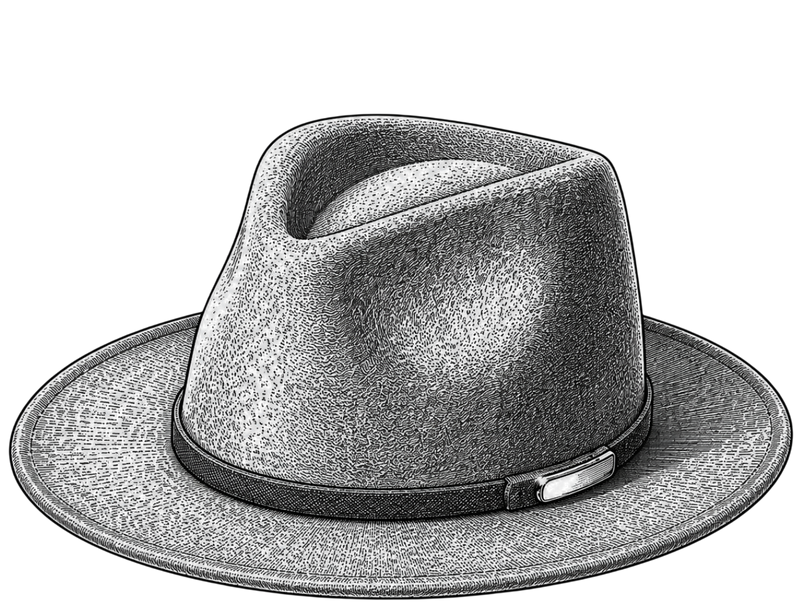
The fedora is consistently the top recommendation for round faces because of its combination of useful properties:
- The pinch front (the angular V-crease at the front of the crown) introduces a sharp angular element directly above the round face
- A medium to tall crown (8-11 cm) provides vertical elongation above the face
- Medium brim width (5-7 cm) can be selected to approximately match or be slightly narrower than the face's widest point, avoiding lateral width addition
Practical selection notes for round faces with fedoras: avoid very wide brims (over 8 cm) which begin to extend beyond the face width; look for hats with clearly defined crown creases rather than soft, round crowns; medium to tall crowns serve the face better than very low crowns.

Homburg: More Formal but Proportionally Excellent
The homburg's single centre crease crown and slightly upturned firm brim create a very structured, angular silhouette that contrasts strongly with a round face's soft curves. The centre crease runs front-to-back, adding a strong linear element above the face. The firm upturned brim adds angular structure at the brim edges. For formal contexts, a homburg on a round face is an excellent proportional choice.
Cowboy Hat: Unexpected but Effective
The cowboy hat's high crown, defined crown creases, and wide brim create an impressive elongation effect on round faces. The multiple creases in a cattleman crown add angular elements; the tall crown adds substantial vertical height. The wider brim of a cowboy hat extends further than recommended for most other styles, but in outdoor and western contexts the proportion reads as appropriate to the style rather than as a facial width problem.
Flat Cap: For Casual Contexts
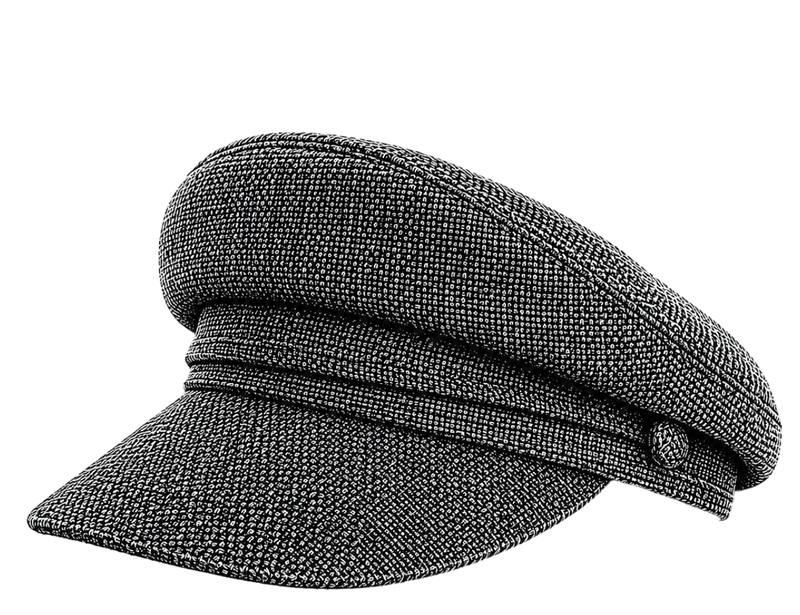
The flat cap adds a forward-angled angular element at the forehead (the defined peak) and a horizontal extension at the back of the head. From the front, the flat cap's structured peak adds some angular contrast to the round face. Choose flat caps with a reasonably defined, slightly stiff peak rather than a very floppy, soft-peaked version, which loses the angular quality.
Cloche: The Counter-Intuitive Option
The cloche -- a deep, close-fitting bell-shaped hat with minimal brim -- seems like the wrong choice for a round face because it fits closely to the head without adding significant height. But the cloche extends the hat's visual presence downward around the face (due to its deep crown sitting low), creating an elongating effect from the sides rather than from above. A well-fitted cloche on a round face is worth trying -- many round-faced people find it more flattering in practice than the theory would suggest.
The Bucket Hat Problem
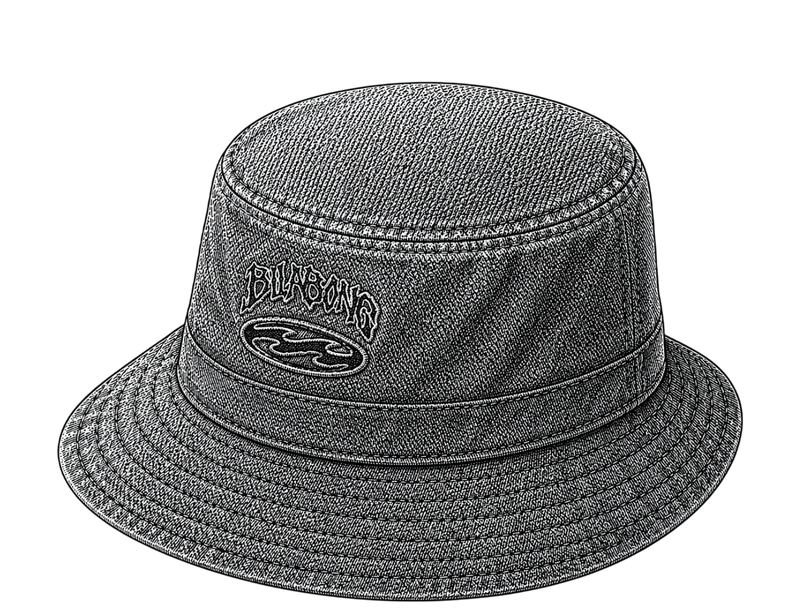
The bucket hat's circular brim creates the most difficult visual situation for round faces: a perfect circle of brim above a round face creates a circular-on-circular visual that emphasises the face's width and softness. If you want to wear a bucket hat with a round face:
- Choose a bucket hat with a slightly wider brim (5+ cm) rather than a very narrow brim, which concentrates the circular effect
- Wear it tilted to one side rather than perfectly level, which introduces asymmetry
- Choose an asymmetric or non-uniform material (striped, patterned) that breaks the uniform circular appearance
Browse fedoras, flat caps, and cowboy hat styles suited to round faces at Hatloom.
Frequently Asked Questions
Do baseball caps look good on round faces?
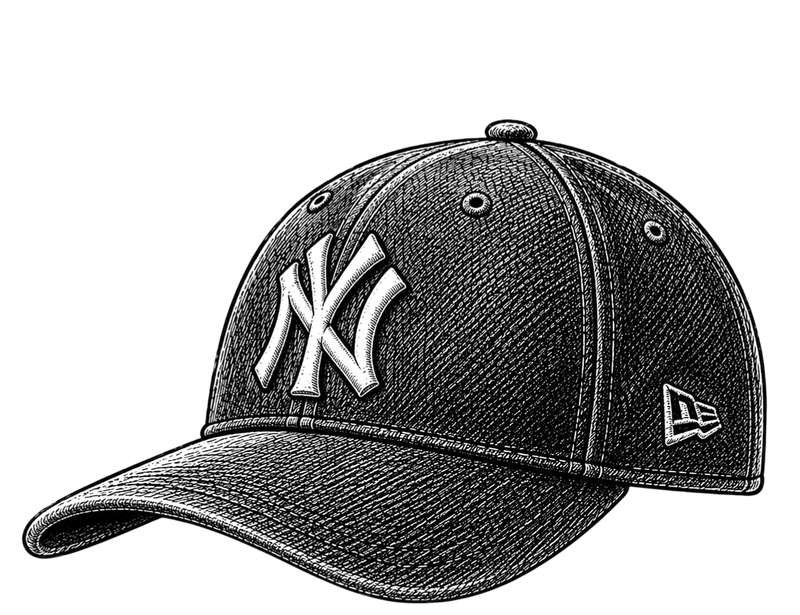
Baseball caps on round faces are not ideal in a strict proportional sense, but they are worn by millions of people with round faces without any visible problem. The baseball cap's short, angular peak provides some angular contrast at the forehead; the relatively snug fit of a well-fitted cap does not add significant width. The limitation is that a baseball cap does not add height in the way a fedora or tall-crown hat does, so it does not address the vertical elongation aspect of the round face proportional advice. For casual contexts where a baseball cap is the appropriate style, wear it in a well-fitted size (not oversized, which adds width and height in an unflattering proportion) and choose the correct circumference to avoid the hat sitting above the hairline.
What brim width is best for a round face?
The target range for round faces is a brim that extends to approximately the width of the face's widest point (usually the cheekbones) without significantly exceeding it. In practical terms, this is typically a brim of 5-7 cm for most adults with round faces. Very narrow brims (under 4 cm) provide little visual effect; very wide brims (over 8 cm) begin to add lateral visual width. The 5-7 cm range is the sweet spot where the brim provides visual interest and some sun protection without widening the perceived face. For very wide or very narrow faces in the round face category, adjust accordingly -- the principle is brim at or slightly less than cheekbone width, not a specific centimetre range that applies to all.
What should I avoid wearing on a round face?
The primary things to avoid are: very wide brims worn perfectly level (which frame the round face in a horizontal circle that emphasises its width); very low crowns (under 6 cm) that add nothing in the vertical dimension; and rounded, unpinched crowns that mirror the face's soft curves without providing contrast. Very tall, perfectly round crowns (as on some formal top hats) can actually work by adding extreme height contrast, but shorter versions of the same unpinched crown shape are not helpful.