Straw hats are treated as seasonal disposables by most people who own them, which explains why most straw hats look significantly worse after one summer than a quality straw hat should. The assumption is that straw is fragile and temporary, which is true of cheap paper straw hats but not of genuine natural straw hats in toquilla, seagrass, or raffia, which can last many years with appropriate care. The maintenance requirements are different from felt hat care and are not intuitive -- natural straw can be damaged by both excessive moisture and excessive dryness, which makes the care approach more nuanced than either felt or synthetic alternatives.
Understanding Straw Hat Materials
The care requirements differ significantly by material:
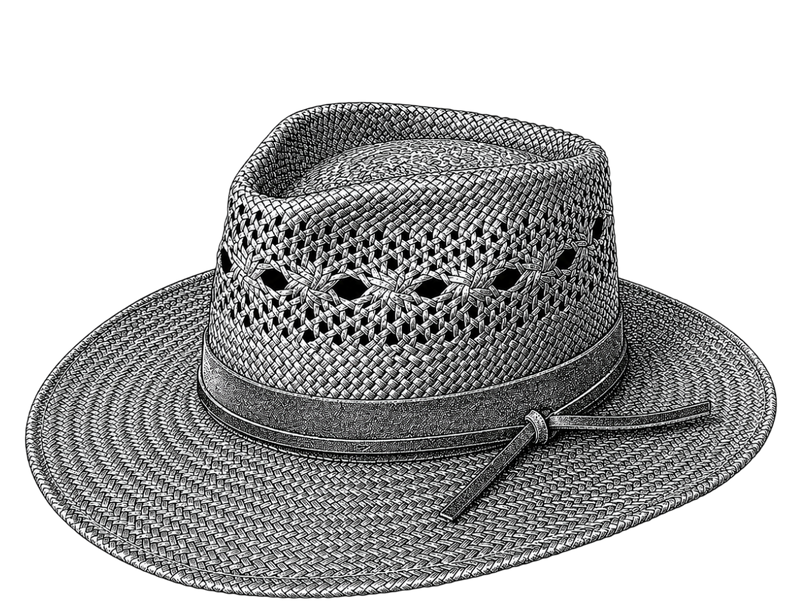
- Toquilla straw (Panama hats): the most refined natural straw material, flexible when maintained at appropriate moisture levels, susceptible to cracking when over-dried, and vulnerable to mould when stored wet or in humid conditions
- Seagrass and natural woven fibres: slightly more robust than toquilla but still organic and subject to similar care requirements
- Raffia: a palm fibre that is somewhat more flexible than toquilla but still organic and care-sensitive
- Paper straw: made from twisted paper strips; the most fragile of all straw hat materials. Not water-resistant and permanently damaged by soaking. Cheap paper straw hats are essentially non-repairable and not worth intensive care efforts

Routine Cleaning
Light Surface Dust and Dirt
A soft brush (a clean, dry paintbrush or a soft-bristled clothes brush) is the first line of cleaning for a straw hat. Brush gently in the direction of the weave to remove dust and light surface debris. Do not use a stiff brush or aggressive scrubbing motions, which can loosen individual straw fibres and damage the weave structure.
Light Staining and Surface Marks
For light staining on the exterior of a natural straw hat, a cloth very lightly dampened with cool water (not wet, barely damp) dabbed gently at the stained area will address most light marks. Work gently and avoid rubbing -- natural straw fibres are individual elements in a woven structure, and aggressive rubbing can separate fibres and create permanent texture irregularities.
For more persistent staining, a light application of a mixture of cool water and mild soap (a small amount of washing-up liquid or baby shampoo) applied with a soft cloth, then wiped off with a clean damp cloth, then allowed to dry naturally, addresses most organic staining. Keep the application targeted -- do not soak the entire hat.
Sweatband Cleaning
The sweatband of a straw hat absorbs perspiration and is typically the most soiled component after a season of wearing. For leather sweatbands: a cotton swab dampened with slightly diluted white vinegar cleans salt and sweat deposits from the leather without saturating it. For grosgrain or fabric sweatbands: a damp cloth with a small amount of mild soap, dabbed rather than rubbed, followed by a clean damp cloth to remove soap residue.
What Never to Do
- Never machine wash a straw hat. The combination of water and mechanical agitation will dissolve the sizing (starch or stiffener in the weave), collapse the structure, and permanently deform the hat
- Never soak in water. Even a brief soaking can cause significant deformation. Straw hats are cleaned with moisture, not water
- Never put in a dryer or expose to direct heat. Heat dries and brittles natural straw fibres, and the agitation of a dryer will damage the weave
- Never store in a sealed plastic bag or in conditions of high humidity. Natural straw is organic and can develop mould in humid, poorly ventilated storage
- Never store in very dry conditions without occasional light moistening. Over-dried straw becomes brittle and prone to cracking
Storage
At the end of the straw hat season:
- Clean the hat completely -- interior and exterior -- and allow it to dry thoroughly before storing
- Store in a hat box with ventilation holes or in a cloth bag (not plastic), in a cool, dry location with moderate humidity (not bone dry, not damp)
- Store crown-up on a hat stand or with the crown stuffed with acid-free tissue paper to maintain the crown's shape
- If storing multiple hats, do not stack them in a way that crushes the lower hats
Reshaping
If a natural straw hat has lost its shape through compression or storage, it can often be reshaped:
- Hold the hat over steam from a kettle or hand steamer, allowing the steam to penetrate the straw evenly. The straw will become slightly more pliable
- While warm and slightly supple, gently manipulate the crown and brim back to the intended shape
- Place on a hat stand or form and allow to cool and dry completely in the correct position
This process works for minor shape loss. For significant deformation of quality straw hats, professional hat restoration is preferable.
Browse straw hats, Panama hats, and natural fibre sun hat styles at Hatloom.
Frequently Asked Questions
How do I remove yellowing from a straw hat?
Light yellowing from UV exposure or age on a natural-coloured straw hat can be partially addressed with a paste of bicarbonate of soda and water applied gently to the affected area, allowed to dry, and brushed away. The mild alkalinity of the bicarbonate can lift some organic yellowing from the straw surface. For more significant yellowing, professional hat cleaning using controlled bleaching techniques achieves better results without the risk of home bleaching damaging the straw fibres. Yellowing from UV exposure is difficult to completely reverse -- prevention (storing out of direct sunlight) is more effective than treatment.
How often should I clean a straw hat?
For a straw hat worn regularly in summer, brushing out light dust after every few wears is good maintenance practice. A thorough clean (including sweatband) every few weeks during active summer use prevents the accumulation of salt and perspiration deposits that become much harder to address if allowed to set. An end-of-season thorough clean before storage is essential -- storing a hat with accumulated sweat and organic matter invites mould growth over the winter months. The goal is maintenance during use rather than periodic intensive cleaning.
Can I wear a straw hat in light rain?
It depends on the straw material. A quality toquilla straw Panama hat has natural water resistance that allows it to handle light rain without immediate damage -- light rain beads and runs off without saturating the weave. A brief wetting should be allowed to dry naturally (at room temperature, on a form, not near a heat source) rather than being accelerated with heat. Paper straw hats do not have this water resistance and are damaged by any significant rain contact -- the paper fibres dissolve with moisture. For outdoor use in variable weather conditions, a natural straw hat is appropriate in light rain; a paper straw hat is not.