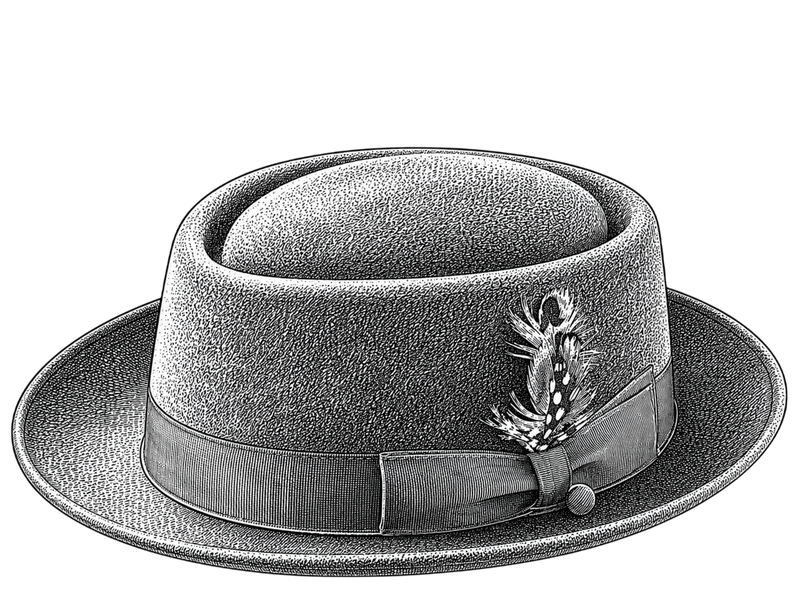
For most of recorded history, the hat you wore was not a personal choice -- it was a social assignment. Sumptuary laws across Europe, Asia, and the Americas regulated who could wear what on their heads, using hat type and material as a visible marker of social hierarchy. The contemporary hat as a freely chosen personal accessory is a very recent development. Understanding how hats signalled status for most of their history illuminates both what hat culture was and what wearing a hat means now when those regulations no longer exist.
Sumptuary Laws and Hat Regulation
Sumptuary laws were legal regulations governing consumption and display -- what clothing, accessories, and goods people of different social ranks could own and wear. Hat regulations appear consistently across cultures and historical periods:
- Medieval Europe: Jewish communities in many European cities were required to wear distinctive hats (the Jewish hat, or Judenhut, a tall conical yellow hat) as a forced identity marker. This is one of the most direct uses of hat regulation as a system of social control and stigma.
- Elizabethan England (1571): the Statute of Caps required most non-noble males to wear wool caps on Sundays and holidays -- a protectionist economic measure supporting the domestic wool cap industry. Nobility and those of sufficient wealth were exempted.
- Ming and Qing Dynasty China: elaborate hat regulations specified exact hat styles, colours, and decorative elements for each official rank, with violations carrying significant legal penalties. The Mandarin's official hat with its button ornament (the top button indicating rank) was a precise visual hierarchy display system.
- Ottoman Empire: turban styles, colours, and heights were regulated by rank, religion, and profession throughout most of the empire's history. Specific turban colours were reserved for specific groups; wearing the wrong turban in the wrong context was a legal matter.
The Hat as Earned Status Symbol
Beyond regulation, hats have served as earned status symbols in specific cultural contexts:
Doctoral hat in Scandinavia: in Sweden and Finland, the doctoral degree is marked by a formal ceremony including the presentation of a doctoral hat (a black top hat for some faculties, a laurel wreath for others). The doctoral hat is earned by the degree, not purchased -- it is presented at the doctoral promotion ceremony and signifies academic achievement in a visible, wearable form.
Military rank insignia: officers' hats in most military traditions have historically carried visible rank insignia -- not through hat type alone but through the badge, brim ornament, and chin cord quality. The civilian hat-wearing culture absorbed some of this signalling logic: the quality of a man's hat was associated with his social position and economic status through much of the 19th and early 20th centuries.

Material as Social Signal
The social significance of hat material is inseparable from the economics of production. Beaver felt was more expensive than wool felt; silk was more expensive than cotton; fine straw was more expensive than coarse straw. A beaver felt hat was unambiguously more expensive than a wool felt hat of the same style, and this material difference communicated economic status directly and immediately to any observer who knew anything about hat materials.
The ability to read hat materials as social signals was general knowledge for most of hat culture's history, because hat wearing was universal and hat quality was one of the first visible indicators of economic status in any social encounter. This reading ability has largely disappeared from contemporary culture, where hat wearing is a minority practice and most people cannot identify hat materials by sight.
The Hat's Equalising Moments
Against the history of hat regulation and hierarchy, there have been notable moments where hat wearing was deliberately used for social equalisation:
The Quaker rejection of hat doffing (the practice of removing a hat as a sign of deference to social superiors) was one of the first widely noted acts of 17th-century social equalisation. Quakers refused to remove their hats for magistrates or nobility, asserting that no human being deserved more deference than another. This specific, repeated act of hat retention in front of authority was an aggressive social statement, and Quakers were imprisoned in some cases for it.
The French Revolutionary hat -- the red Phrygian cap worn by sans-culottes as a symbol of equality -- was the opposite of a status distinction: it declared the wearer's rejection of aristocratic hierarchy and identification with the revolutionary citizen. The cap intentionally had no associations with elite dress.
Contemporary Hat Signalling
Without sumptuary laws or strong class coding, contemporary hat wearing signals something different from historical hierarchy:
- Connoisseurship: a person wearing a correctly positioned, high-quality hat communicates knowledge and attention to dress details. The signal is not economic class but cultural engagement with dress.
- Sub-cultural affiliation: certain hat styles retain strong sub-cultural associations (the fitted cap in hip-hop culture; the trucker hat in specific American sub-cultures; the bucket hat in streetwear) that communicate community belonging rather than hierarchy.
- Anti-fashion statement: wearing a hat when most people in an environment are not wearing one is itself a visible choice that communicates something -- confidence, style consciousness, or deliberate difference from the default.
Explore hat styles and their cultural histories at Hatloom.

Frequently Asked Questions
Why did people tip their hats historically?
Hat tipping (briefly touching or raising the brim of a hat in acknowledgement or greeting) derived from the earlier practice of full hat removal as a sign of deference or respect. In military contexts, removing a helmet or covering exposed the head -- a vulnerability signal that communicated non-aggressive intent. In civilian contexts, the hat removal before social superiors communicated deference. As hats became larger and more elaborate (making full removal impractical in casual street encounters), tipping became the abbreviated version of the same gesture. The full removal of the hat continued in more formal contexts (before a king, in a church, before a woman in formal 19th-century etiquette) while tipping was adequate for street acknowledgements.
What was the significance of hat colour in historical societies?
Hat colour carried social coding in many historical contexts. Red and purple were reserved for royalty in various medieval European systems -- dye costs meant these colours were beyond ordinary reach, and sumptuary laws formalised the restriction. White turbans in some Muslim traditions indicated completion of the Hajj or Islamic scholarship. Black hats were associated with clergy in many European traditions. Yellow hats were assigned to Jewish communities in medieval Europe as a stigma marker. The specific coding varied by culture and period, but the use of colour as a social signal was widespread. Contemporary hat colour conventions are much simpler: no colours are formally restricted, and associations are sub-cultural at most rather than legally enforced.
Do hats still signal social status today?
In attenuated form, yes. Hat quality (visible material quality, fit precision, condition) communicates attention to personal presentation, which correlates with but does not equal economic status. Certain hat styles retain class associations in specific national contexts -- the flat cap in Britain retains some working-class association; the top hat retains formal ceremony associations; the Ascot and race day hat tradition retains upper-class social occasion association. These are softer and more contestable associations than historical legal regulations, but they are legible to those within the relevant cultural context.