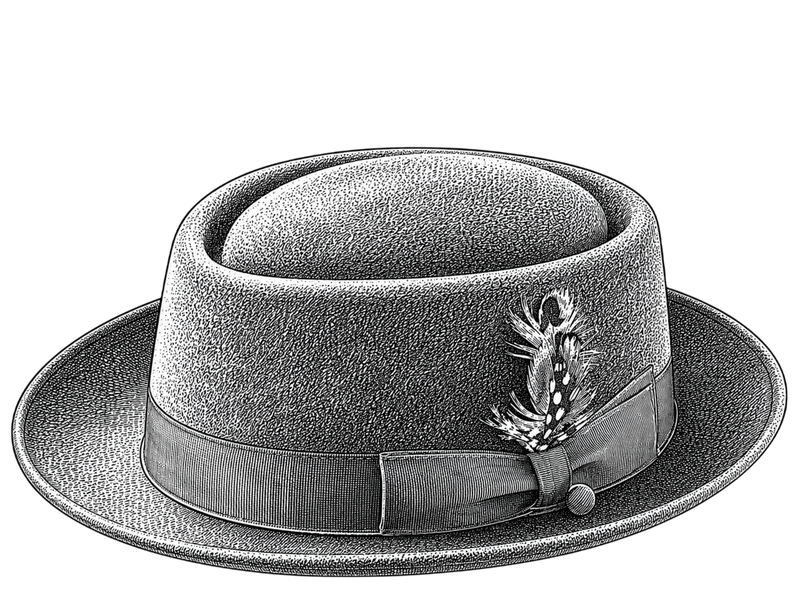
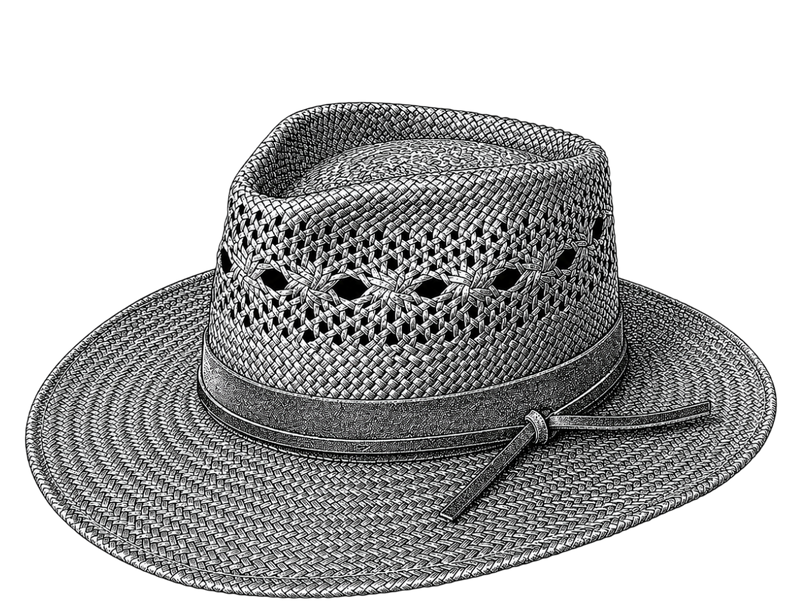
Most people who wear hats regularly cannot explain how the hat was made. This is unusual compared to other clothing categories where construction methods are more visible -- you can see seams, hems, and stitching in most garments. A good felt hat shows almost no evidence of the process that created it: the felt appears to have been grown in hat form rather than manufactured. Understanding the production process changes how you evaluate hat quality and explains why the same hat style can cost ten euros or ten thousand euros.
How Felt Is Made
Felt is not a woven material. It is created through a process called felting, in which fibres are matted together through the application of heat, moisture, and mechanical pressure. The fibres interlock and compress into a stable, dense sheet without any weaving or knitting process.
Two types of felt are used in quality hat making:
Wool Felt
Wool felt is made from the processed fleece of sheep. Wool fibres have natural scales on their surface that cause them to interlock when agitated in warm water. A mat of wool fibres, treated with heat and mechanical pressure, produces a felt sheet whose density and strength depend on the quality of the wool and the processing time and pressure applied. Wool felt is the most common material in mid-range felt hat production.
Fur Felt
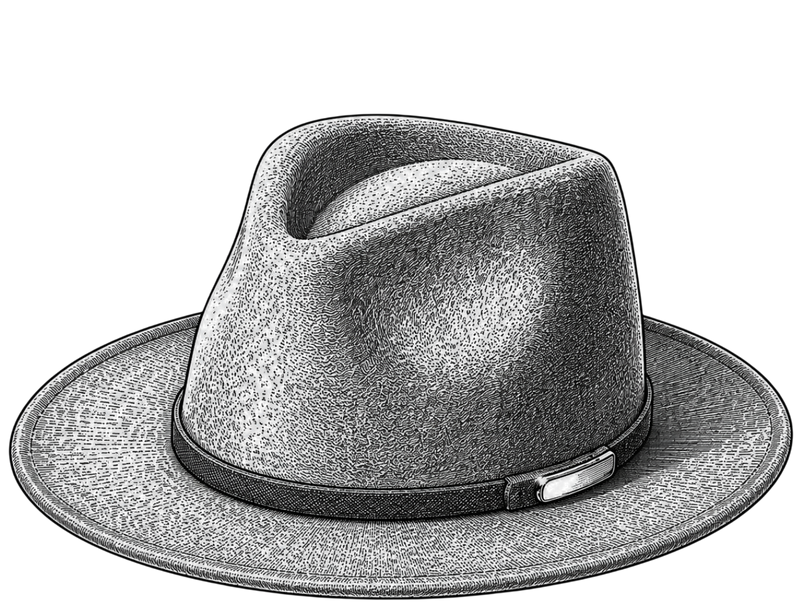
Fur felt is made from the underfur of animals -- rabbit, hare, and beaver are the traditional sources. Beaver felt was the premium hat material from the 16th through 19th centuries; rabbit and hare fur felt largely replaced it as beaver populations declined and hat production scaled up. Fur felt is finer, smoother, and more water-resistant than wool felt because the animal underfur fibres are finer and have different surface properties. A quality fur felt hat has a smooth, almost lustrous surface and a density that causes light rain to bead and run off rather than soak in.
Hat Blocking: Shaping Felt Into a Hat
Hat blocking is the process of shaping a flat or loose felt cone into the specific form of a finished hat. It is one of the most skilled operations in hat making and defines the hat's final shape.
The process:
- The base form: a flat felt cone or a loosely shaped felt blank (called a hood or carrot) is produced from the felting process. At this stage it looks nothing like a finished hat.
- Wetting and steaming: the felt hood is wetted and steamed until it becomes pliable. Wet felt is workable; dry felt is rigid. The blocking process depends on maintaining the felt in a workable state.
- Blocking on the form: the wetted felt is pulled over a hat block -- a solid wooden or metal form that defines the hat's crown shape. The felt is stretched and smoothed over the block and held in place while it dries, taking the block's shape permanently.
- Brim shaping: the brim area is pulled out from the crown block and shaped -- either over a flat brim form, rolled into a curl, or shaped into the specific brim profile of the hat style.
- Drying and finishing: the hat dries on the block in its shaped form. Once dry, it holds its shape. The hat is then trimmed, the brim edge is finished (bound with grosgrain ribbon or machine-stitched), the sweatband is sewn in, and any hat ribbon or decoration is added.
A handmade felt hat involves dozens of individual blocking and finishing steps, each requiring skilled judgement. Machine-made felt hats use the same basic process but with automated blocking presses that can shape hats faster with less individual skill per hat.

Straw Hat Weaving
Straw hats begin from a completely different starting point -- natural fibres that are woven by hand or machine rather than felted. The most prestigious straw hat tradition is the Ecuadorian toquilla straw weaving that produces genuine Panama hats.
The Panama Hat Process
The toquilla palm's young leaves are harvested, boiled, dried, and split into fine strands. The weaving is done entirely by hand, with the weaver sitting with the hat block between their knees, weaving each strand in sequence from the crown outward toward the brim. A fine-grade Montecristi Panama hat (the highest quality) can take months to complete -- the finest grades require so many fine strands per inch that the work is almost meditative in its slowness.
After weaving, the hat is cleaned, bleached, shaped on a block, and finished with a sweatband and ribbon. The famous rollability of a quality Panama comes from the fineness of the weave -- a tightly but finely woven hat has enough flexibility to roll without cracking, while a coarsely woven cheaper version is more brittle.
Machine-Woven Straw Hats
Most straw hats at mid-range and lower price points are machine-woven from paper straw (twisted paper strips rather than natural palm fibre), seagrass, or synthetic materials. The weaving process creates a similar visual result but with different properties: machine-paper straw hats are not rollable without damage, are not water-resistant, and do not have the natural ventilation of a genuine toquilla straw weave.

Quality Signals in Hat Construction
What to examine in a finished hat to assess construction quality:
- Felt texture: fur felt is smoother and finer than wool felt; both should have an even surface without bare patches or inconsistent texture
- Brim edge finish: a quality hat has a clean, even brim edge -- either a well-bound grosgrain edge or a precisely stitched raw edge. An uneven or fraying brim edge indicates lower-grade production
- Sweatband finish: the sweatband should be sewn evenly at a consistent height around the interior band, with no gaps or puckering where it meets the hat's interior
- Interior finishing: the area above the sweatband should be smooth and clean, without exposed raw felt or adhesive residue
- Shape symmetry: the crown should be symmetrical, the brim level and even, and the overall hat consistent from front to back and side to side
Browse quality felt hats and handcrafted straw styles at Hatloom.
Frequently Asked Questions
What is a hat block?
A hat block is the solid wooden or metal form over which felt is shaped during hat making. Hat blocks are made in the specific shape of the hat being produced -- a fedora block has the crowned, pinched fedora profile; a bowler block has the rounded bowler shape. A single hat style may require several different blocks for different stages of production (the crown block, the brim block, and finishing forms). Traditional hat makers' collections of wooden blocks are considered artisanal tools in their own right, and antique hat blocks are collected as objects.
Why do quality felt hats cost so much more than cheap ones?
The material and labour content differ substantially. A cheap felt hat is typically made from blended wool felt processed quickly with minimal hand finishing. A quality hat is made from fine fur felt (more expensive raw material) processed over a longer time with greater skill, blocked on precisely made forms, and finished by hand at multiple stages. The difference in hours of skilled labour between a mass-produced hat and a hand-finished quality hat can be an order of magnitude. The material and the labour both justify a significant price differential.
Can a damaged felt hat be reblocked?
Yes. A hat that has lost its shape through compression, moisture, or storage can be reblocked by a professional hat restorer. The process involves steaming the hat to make the felt pliable again, then pressing it onto the correct block and allowing it to dry in shape. Hat restorers maintain collections of blocks in various sizes and styles to rework hats back to their original geometry. The success of reblocking depends on the degree of deformation -- minor shape loss can be fully corrected; significant structural damage (torn felt, extreme deformation) may not be fully recoverable.