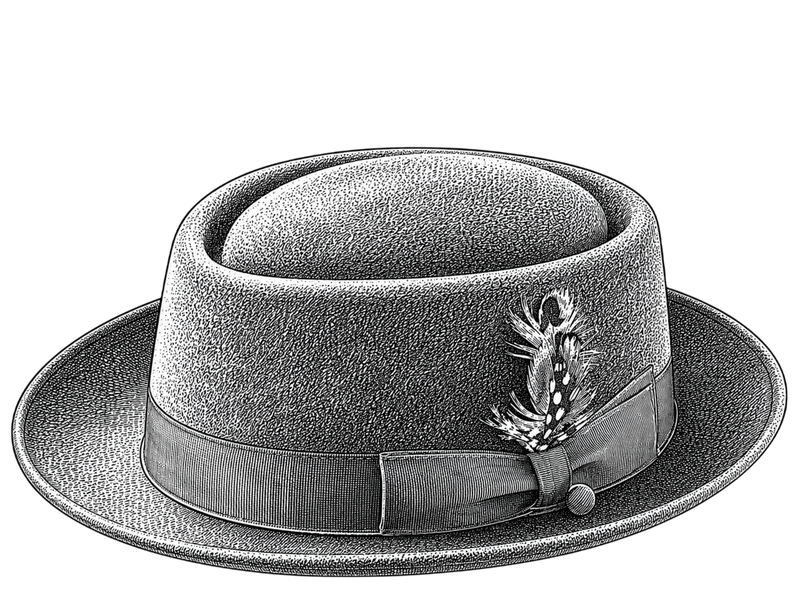
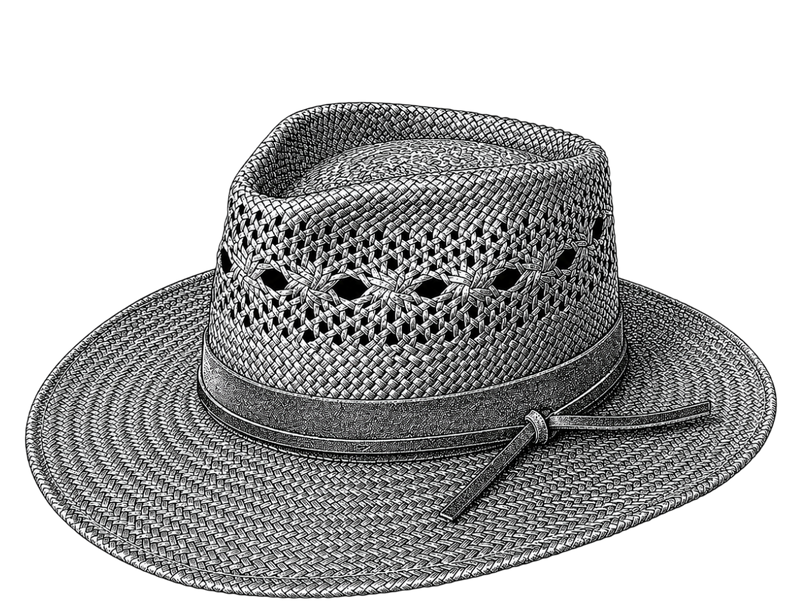
First impression research in social psychology is dominated by face and body language studies, but clothing -- including hats -- generates immediate attributions that operate before a conversation begins. Hats, because they are the most visually prominent element of an outfit and the element closest to the face, receive disproportionate attention in initial perception. What limited research exists on hat-specific first impressions, combined with the broader research on clothing and status attribution, offers useful insight into what different hat choices actually communicate to observers who do not know you.
The General Mechanism: Status and Competence Attribution
Research in psychology consistently shows that clothing choices trigger rapid status and competence attributions. Studies by Nelissen and Meijers (2011) showed that luxury brand logos on clothing increased perceptions of status and wealth even when other clothing elements were identical. The implications for hats: a hat that is clearly expensive and well-made creates different status attributions than the same hat style in a cheaper version, even when observers cannot name the brand or quantify the quality difference. The perception of quality triggers a status attribution that operates below conscious awareness.
For hats specifically, the relevant variables in status attribution are:
- Quality of construction (visible in the hat's shape retention, finish, and texture)
- Style appropriateness to the context (a hat that suits the situation signals social awareness)
- Whether the hat fits correctly (a well-fitted hat signals knowledge and investment; an ill-fitting hat signals the reverse)
What Different Hat Styles Communicate
The Structured Felt Fedora
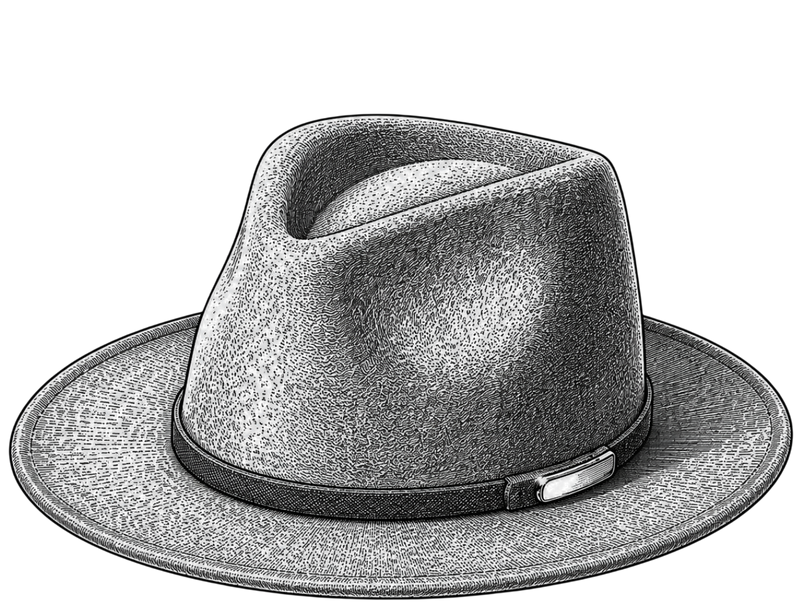
Research on formal dress and competence perception consistently shows that more formal clothing increases perceived competence and status. A well-fitted quality felt fedora in a formal or smart-casual context is, by this logic, likely to generate more positive competence attributions than no hat or a casual hat in the same context. The hat also signals deliberateness -- someone who chose to wear a quality fedora is making a considered style decision that observers read as indicating broader deliberateness.
The complication is cultural context: the online association of fedoras with a specific negative social stereotype (the 'nice guy' or 'fedora-tipping' meme) has created a cohort of primarily younger, internet-fluent observers who have a prepared negative attribution for the fedora independent of quality or context. This attribution is not universal (older observers, non-internet-culture observers, and most international observers do not have it) but is present enough to be worth knowing about when the audience skews young and Western.

The Baseball Cap
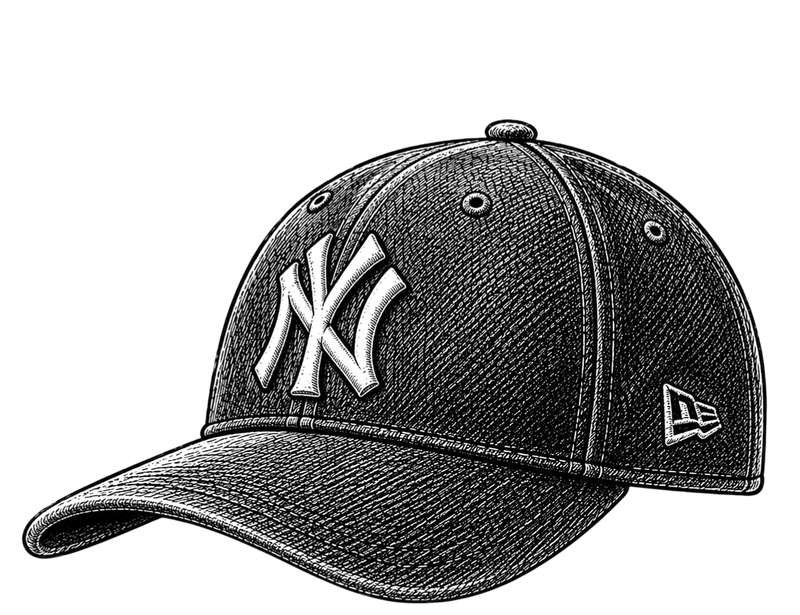
The baseball cap is the most context-dependent hat for first impression purposes. In casual contexts (sports, outdoor activities, informal social settings), a baseball cap is a non-event -- it neither elevates nor reduces the first impression because it is the expected choice. In more formal contexts (professional settings, formal events), a baseball cap signals casualness that can read as either relaxed confidence or as context-unawareness depending on the setting and the rest of the outfit.
Brand and quality of the cap matter for first impression: a recognisable premium brand or designer-collaboration cap in a clearly quality construction reads differently from a promotional cap or a cheap cap. The observation that quality in any hat improves first impression applies here too.

The Wide-Brim Hat
Wide-brim hats on women generate strong positive attributions in contexts where they are expected (outdoor events, summer, beach) and can generate 'statement' attributions (deliberate, confident, possibly theatrical) in contexts where they are less expected. Research on bold clothing choices shows that observers attribute greater confidence to people who wear distinctive clothing -- the wide-brim hat's visual impact generates a confidence attribution independent of whether the wearer actually feels confident.
The Knit Beanie
The beanie generates casual, youth-associated, and creative attributions in most contexts. Research on casual dress shows it reduces formal competence perception relative to formal dress, but increases approachability and warmth perception. The beanie specifically has a strong association with creative and artistic industries through its presence in creative professional context imagery, which may create a creative-professional attribution for observers who have been exposed to this context.
What the Research Cannot Tell You
First impression research measures group-level average attributions, not individual responses. Any specific observer may have different associations based on their background, culture, and personal history with hat-wearing people in their life. What the research provides is a probabilistic guide to common attributions rather than a predictive tool for individual responses.
The most reliable implication of first impression research for hat wearing is the quality and fit principle: regardless of style, a hat that is clearly well-made and correctly fitted generates better first impressions than a cheap or ill-fitting hat in the same style, because quality and fit signal competence and deliberateness.
Browse quality hats in all styles at Hatloom.
Frequently Asked Questions
Do hats make you more or less attractive to others?
Research on physical attractiveness and clothing shows that clothing choices that increase perceived status and competence also tend to increase attractiveness ratings. A well-chosen, well-fitted hat that suits the context and the wearer is more likely to increase attractiveness perception than to reduce it, because the deliberateness and quality of the choice contribute to the positive overall impression. However, a hat that is out of context, poorly fitted, or creates cognitive dissonance with the rest of the outfit can have the reverse effect. The hat is an amplifier: a considered choice amplifies a positive first impression; a poor choice amplifies a negative one.
Does wearing a hat in a job interview help or hurt?
The research on clothing formality and job interview outcomes shows that appropriateness to the interview context matters more than any specific clothing element. A hat worn in a conservative professional interview context where hats are not expected may create a 'distinctiveness' effect -- you are remembered, but the association depends on whether the distinctiveness read as confident self-expression or as social norm unawareness. For most interview contexts where the outcome matters, the safest approach (remove the hat for the interview) removes the variable entirely. The hat does not help in most interview contexts; it may hurt in some; it is neutral in a few creative industry contexts.
What does wearing a hat say about your personality?
Personality attributions from clothing are speculative territory in psychology -- the research shows that people make these attributions confidently but that they are not reliably accurate about the actual person. People who wear distinctive or deliberate clothing choices are attributed with confidence, creativity, and individuality independent of whether those attributes are actually present. Hat wearers as a group are more likely to be attributed these qualities than non-hat wearers, because choosing to wear a hat in a context where most people do not is a distinguishing choice. The specific hat modulates the specific attribution: a quality fedora generates creative-and-confident; a baseball cap generates casual-and-approachable; a wide-brim hat generates confident-and-expressive. Whether any of these matches the actual personality is not reliably predicted by the hat.