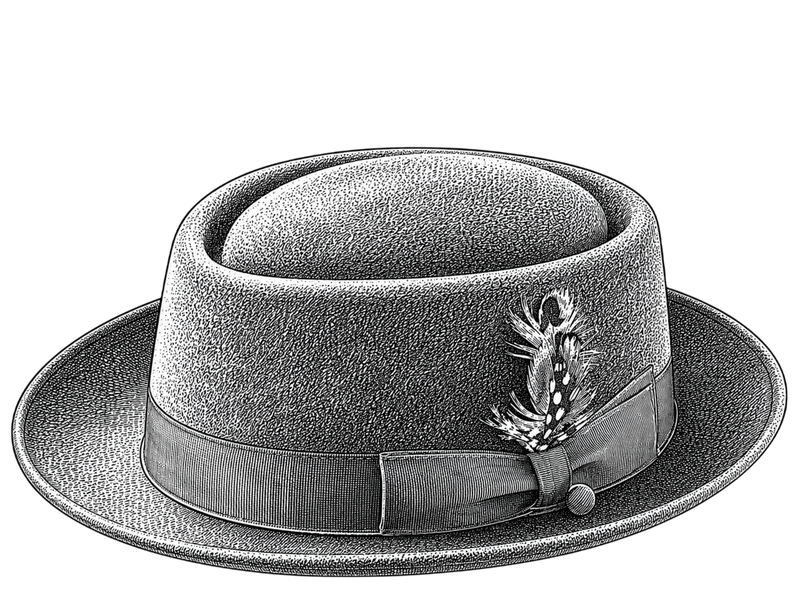
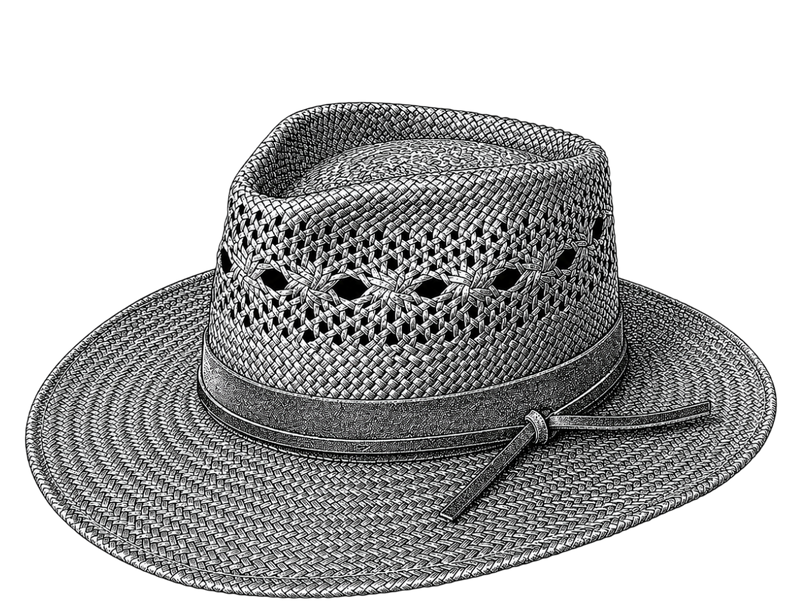
Costume designers use hats for a specific purpose that goes beyond period accuracy or character aesthetics: a hat is the most immediately visible part of a costume at a distance, and in an ensemble cast it is one of the fastest visual identifiers of character. When Indiana Jones appears in the frame, the fedora is visible before the face. When a Western gunslinger turns away from the camera, the hat communicates everything the viewer needs to read the character. Hats in film and television are not decoration -- they are shorthand, and the choices made by costume designers reveal how much visual vocabulary has built up around specific hat styles.

The Fedora: The Intellectual Hero
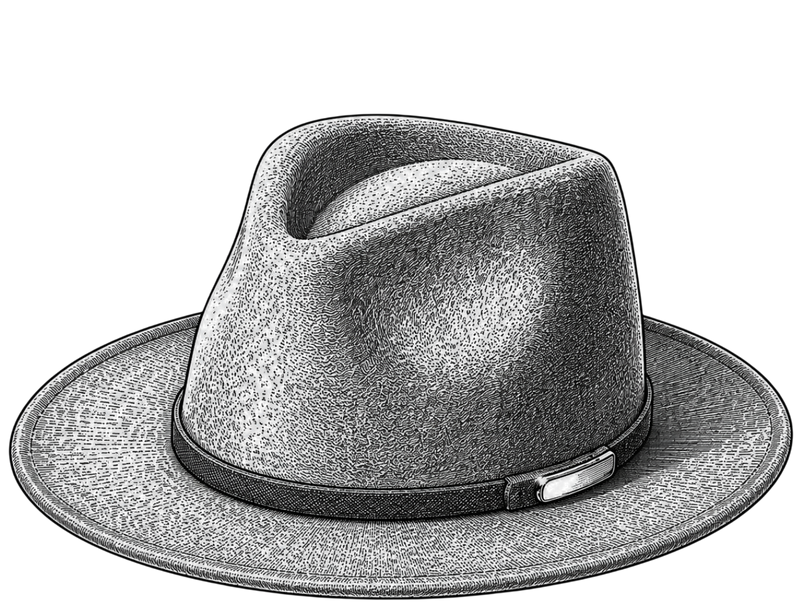
The fedora's film history runs from the classic Hollywood private detective to the most famous adventure hero in cinema. Sam Spade, Philip Marlowe, Indiana Jones -- the fedora signals a character who operates outside conventional institutional authority, uses intelligence rather than brute force, and has a complicated moral code. The hat is never worn by pure villains or pure authority figures in the classic Hollywood framing; it belongs to the morally complex protagonist.
Indiana Jones is the most referenced single hat character in film history. Harrison Ford's costume for Raiders of the Lost Ark (1981) -- specifically the fedora -- was so immediately iconic that it reversed the fedora's declining cultural relevance in the early 1980s and associated the style with adventure and competence rather than nostalgia. The specific hat used was a Herbert Johnson Poets model; replicas and variants have been sold continuously since the film's release.

The Cowboy Hat: Authority and Outlaws
The Western genre uses hat colour as moral shorthand so consistently that it became a cultural cliche: white hat for the hero, black hat for the villain. This colour coding was established in early Western films and was used deliberately as an immediate visual shorthand for audiences. The convention was so prevalent that 'white hat' and 'black hat' entered the English language as general terms for protagonists and antagonists independent of any hat.
The Stetson cowboy hat in Westerns serves both authentic period function and symbolic weight. John Wayne's hat -- a slightly idiosyncratic version of the Stetson with a specific crown crease -- was as much a character signature as his walk or voice. More recently, the HBO series Yellowstone has made the cowboy hat the visual centerpiece of its contemporary Western aesthetic, with different characters wearing distinct hat styles as character identifiers.
The Top Hat: Class and Power
The top hat in film functions as an immediate social class marker. In period dramas set in the 19th and early 20th century, the top hat signals wealth, establishment power, and often moral ambiguity or outright villainy. The industrialist, the banker, and the oppressive landowner wear top hats in period dramas with such consistency that the hat has become shorthand for a specific type of wealth-based power that the protagonist often finds themselves in conflict with.
In contrast, Fred Astaire in his many musical films wore the top hat as part of the elegance and lightness of the musical genre -- the same hat shape but entirely different character coding because of the context. The hat itself carries neutral symbolic content; the genre and the character type determine the meaning.
The Deerstalker: Sherlock Holmes
The deerstalker hat is so thoroughly associated with Sherlock Holmes that many people assume it is the character's canonical hat. In Arthur Conan Doyle's original stories, Holmes is not described wearing a deerstalker -- the hat was introduced by illustrator Sidney Paget in The Strand Magazine illustrations and was adopted by subsequent theatrical and film productions. The hat's actual function (a hunting cap for rural use) has been almost entirely displaced by its fictional association.
Every new adaptation of Sherlock Holmes navigates the deerstalker question: use it and risk seeming derivative of all previous adaptations; avoid it and risk audience confusion. The BBC series Sherlock (2010-2017) included the deerstalker but framed it as something the modern Holmes found embarrassing -- an acknowledgement of the hat's accumulated cultural weight.
The Beret in Film
The beret in film has a consistent character association with the intellectual, the artist, or the bohemian, usually in European settings. A character who arrives in Paris and dons a beret is entering a cultural cliche so established it has become ironic. The beret signals a specific type of affected European cosmopolitanism that film uses either sincerely (period pieces, art world films) or satirically (American comedies about France).
In military contexts, the beret signals elite status (the Special Forces character in an action film wears a beret to mark their unit) rather than any bohemian association -- the same hat object carries entirely different meaning based on context.

The Baseball Cap as Character Coding
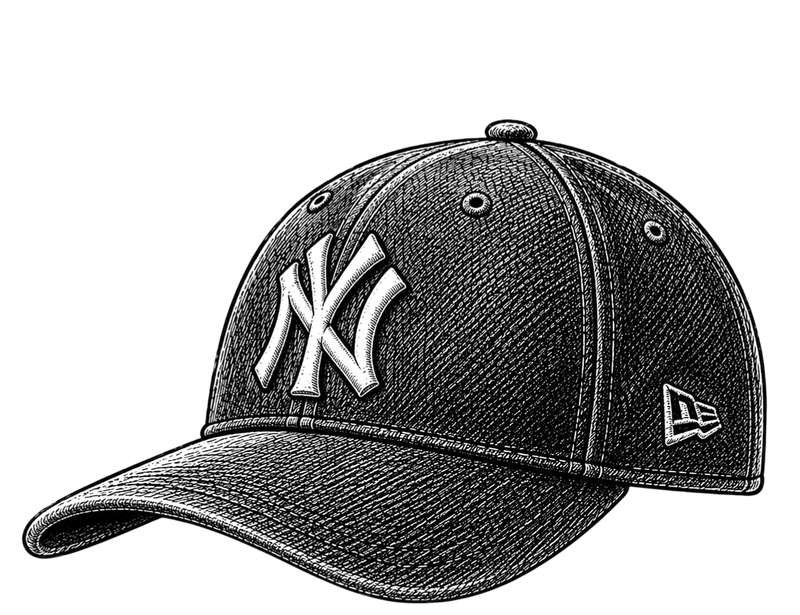
In contemporary film and television, the baseball cap carries its own set of character associations that have developed through its ubiquity in American culture:
- Worn backward: casual, younger, often the slacker or the everyman
- Worn forward, flat-brimmed: urban contemporary, streetwear context
- Worn forward, curved brimmed: generic casual, the default appearance for 'regular American person'
- Team logo cap: sports fan, regional identity, often nostalgic or middle American
- Campaign/political logo cap: political statement, most famously the red cap of the 2016 US election cycle, which became its own visual shorthand
Browse fedoras, flat caps, and iconic hat styles at Hatloom.
Frequently Asked Questions
What hat did Indiana Jones actually wear?
The hat used in the Indiana Jones films was a Herbert Johnson Adventurer (or Poets) fedora in brown, sourced from the London hat maker. The specific model was selected by costume designer Deborah Nadoolman Landis as the appropriate period hat for the 1930s setting. Over the course of the four films, the prop hats were produced to a slightly varying specification, but all used the same basic form: a brown fur felt fedora with a medium-wide brim, a moderate crown crease, and a dark brown grosgrain band. Harrison Ford is said to have helped select the specific style after trying on multiple options, as the hat needed to read clearly in silhouette even in distant action sequences.
Why do Western villains wear black hats?
The black hat/white hat convention in Westerns developed in early Hollywood film (approximately 1910-1930) as a practical solution to the visual identification problem in black-and-white film: audiences needed to quickly identify hero and villain in fast-moving action sequences. High-contrast colour coding served this function simply. The convention became so established that it was used self-consciously even after colour film became standard. The 'black hat' and 'white hat' terms have now migrated into general English usage -- cybersecurity uses them to distinguish malicious hackers from ethical ones -- long outlasting their specific Western film origin.
Do real people in historical periods wear the hats associated with them in film?
Sometimes accurately, sometimes not. Period films use hats to signal era as much as to accurately represent historical headwear practice. Some associations are accurate: Victorian top hats, early 20th century fedoras, and 1920s cloches in period films reflect real period hat wearing. Others are more invention or creative license: the specific Stetson styles worn in Hollywood Westerns represent a somewhat idealised and standardised version of authentic frontier headwear, which was more varied and less visually consistent than films suggest. The deerstalker's association with Sherlock Holmes is a clear case of fictional invention overwriting historical accuracy -- a London-based detective in the Victorian era would typically have worn a bowler or a top hat, not a hunting cap.