Wedding hat wearing is one of the few remaining contexts in contemporary Western dress where hats are expected for certain guests rather than optional -- primarily in British and Irish traditions, where women's hats at formal weddings carry a quasi-mandatory quality at certain dress code levels. Even outside that tradition, weddings present a specific hat-selection challenge because the hat must work in a defined formal context, coordinate with the outfit, and function practically across an often long day that involves both outdoor and indoor elements. Getting the wedding hat right requires understanding the dress code, the context, and the proportions involved.
Wedding Hat Dress Code Interpretation
Black Tie
Black tie weddings are evening formal affairs where women typically wear formal evening dress. Hat wearing at black tie weddings is uncommon because the context is evening (hats are traditionally daytime accessories) and because the formal floor-length dress leaves little room for headwear without the whole ensemble becoming overly elaborate. A small, extremely formal fascinator or headpiece is the appropriate choice at a black tie wedding if headwear is desired.
Morning Dress (Lounge Suit)
Morning dress weddings -- the typical British formal wedding dress code -- are the primary context for women's hat wearing in the traditional sense. In a morning dress context, a formal hat with a minimum brim of approximately 10 cm (the standard often cited for formal occasions) or a substantial fascinator is both appropriate and expected. The hat should be properly formal: quality materials, a considered design, and a relationship to the rest of the outfit in colour and formality level.
Smart Casual or Cocktail Attire
Smart casual and cocktail dress codes leave more latitude. A smaller formal hat, a fascinator, or a quality casual hat in a refined material can all work. A wide-brim sun hat is appropriate at outdoor summer weddings with casual dress codes; it would be too informal for a church ceremony with morning dress.
Practical Considerations
Size and Crowd
The wedding ceremony and reception involve extended periods of sitting in close proximity to other guests -- church pews, reception chairs, dining tables. A very wide brim (over 40 cm in diameter) can block the view of guests behind you in a ceremony, which is genuinely inconsiderate regardless of how striking the hat is. If your hat is so wide that people behind you cannot see the ceremony over it, this is a real practical problem rather than a minor aesthetic concern.
The guideline: for church ceremonies and formal seated occasions, keep the brim at a width that does not significantly extend beyond your shoulder width when viewed from behind.

Colour and the Bride
The traditional guideline of not wearing white or ivory (colours that may be confused with the bride's dress) remains relevant. Beyond white and ivory, the consideration is whether the hat colour is so dominant that it competes with the wedding party's visual presence. Very bright, highly saturated hat colours (neon, brilliant red, sharp yellow) can draw more attention than they should in a wedding context. Refined colours -- including bold but sophisticated choices like deep burgundy, forest green, or royal navy -- are entirely appropriate.
Indoor vs Outdoor Ceremony
Many hats are designed for outdoor light conditions where wide brims make sense functionally. In an indoor ceremony, a wide-brim hat that was appropriate outside may feel oversized without the sun to justify it. If your wedding involves both outdoor and indoor elements, choose a hat that works for both contexts, or bring a smaller alternative for the indoor portion.
For Men
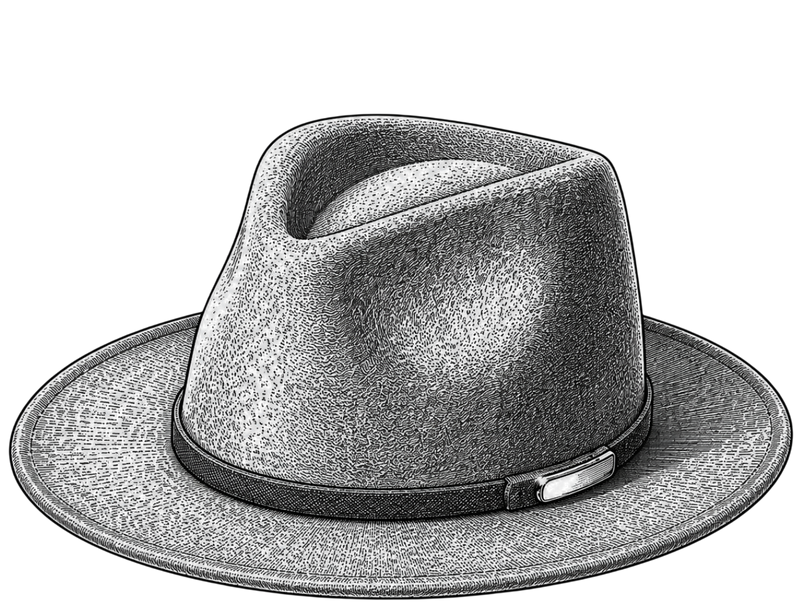
In traditional morning dress contexts, men typically wear grey or black top hats as part of the formal morning dress ensemble. Outside the most formal British wedding traditions, men's hat wearing at weddings is less expected and more personal. A quality fedora or flat cap worn with a sharp suit at a smart-casual wedding is an individual style choice rather than a convention; it should be treated as a considered element of the outfit rather than a default accessory.
For the Wedding Party
Hats for bridesmaids, groomsmen, or the couple themselves often involve coordinated elements. The considerations:
- If the couple is wearing specific hat styles, the wedding party's hats should be complementary rather than competing in scale or colour
- Bridesmaid hats, if coordinated, work best in tonal families rather than identical matches, which can look uniformly institutional
- Flower girls wearing small hats or floral headpieces is a long tradition that works in formal and informal contexts
Browse formal hat styles, occasion hats, and wedding-appropriate hat options at Hatloom.

Frequently Asked Questions
Should women wear hats at weddings?
In British and Irish wedding tradition with a formal or morning dress code, a hat (or fascinator) for women guests is expected and appropriate. In most other Western wedding traditions, hat wearing is optional -- a personal style choice rather than a dress code expectation. The decision depends on the specific dress code, the couple's preferences if they have been communicated, the venue (outdoor summer weddings are natural hat contexts; winter indoor weddings less so), and whether the guest's overall outfit calls for a hat to be complete.
What colour hat should a mother of the bride or groom wear?
The mother-of-the-bride or groom hat is a significant hat selection in the traditional formal wedding context. The standard approach: coordinate with the outfit (hat and dress or suit in a tonal or complementary colour relationship), choose a hat that is formal but not more dramatic than the bride's, and confirm with the couple or wedding planner that the colour does not conflict with the wedding party's palette. Classic choices are warm neutrals (champagne, warm gold, soft rose), rich naturals (navy, forest green, burgundy), or sophisticated pastels -- all choices that are clearly formal and celebratory without competing with the bridal party.
Are fascinator hats appropriate for all weddings?
Fascinators are appropriate for weddings with a formal or morning dress code where the dress code implies headwear, and at more casual outdoor weddings where a full hat might feel excessive. They are less appropriate at very casual weddings where the overall dress level is cocktail or below, where a fascinator would be overdressed relative to the surroundings. In very formal Black tie contexts, a fascinator is generally preferable to a full hat because the evening context is less natural for substantial millinery. The fascinator sits comfortably in the middle formality range of wedding dress codes.