Most hat-wearing errors are not about hat selection -- they are about execution. The hat was a reasonable choice; it was worn incorrectly, paired with the wrong outfit register, or allowed to fall into disrepair that makes the whole outfit read as unfinished. Identifying these errors precisely makes avoiding them straightforward.
Error 1: The Hat Is Too Large
A hat that is too large sits down over the ears, obscures the eyebrows, or rocks forward and back on the head. It reads as a borrowed hat or a hat purchased without sizing consideration. This is the most common hat fit error because many people do not measure their head before purchasing and rely on generic size labels.
How to identify it: if the hat sits below the eyebrow line on a standard placement, it is too large. If the hat rocks forward noticeably when the head tilts down, it is too large. If the hat slides backward when looking up, it is too large.
The fix: sizing tape (self-adhesive foam strips placed around the interior of the sweatband) reduces the effective interior circumference by 0.5-1 cm per strip. For hats too large by more than 1 cm, replacing the sweatband with a wider one is the professional solution. For future purchases: measure head circumference before buying.

Error 2: The Hat Is Worn Too Far Back on the Head
The second most common error. A hat pushed back on the head reveals the full forehead and sits at the back of the head rather than the front. This transforms structured hats (fedoras, flat caps, Panama hats) from deliberate style choices into afterthoughts. The hat is no longer shading the face or framing the forehead -- it is merely resting on the back of the skull.
The correct position for most structured hats: the front edge sits 2-3 cm above the eyebrows. The hat should be angled slightly forward (front edge lower than back) rather than backward. The brim of a fedora should cast at least a faint shadow on the upper forehead at midday light angles.
The fix: consciously reset the hat position each time it is put on. Check in a mirror before leaving the house -- not to see how the hat looks from the front, but to verify the placement position relative to the eyebrows.
Error 3: The Hat Does Not Match the Outfit's Register
A battered, informal hat worn with a smart-casual or formal outfit creates a visible register mismatch. The hat reads as an item that wandered in from a different context. Equally, a very formal hat (top hat, homburg) with casual clothing looks theatrical rather than stylish.
Hat formality roughly maps to:
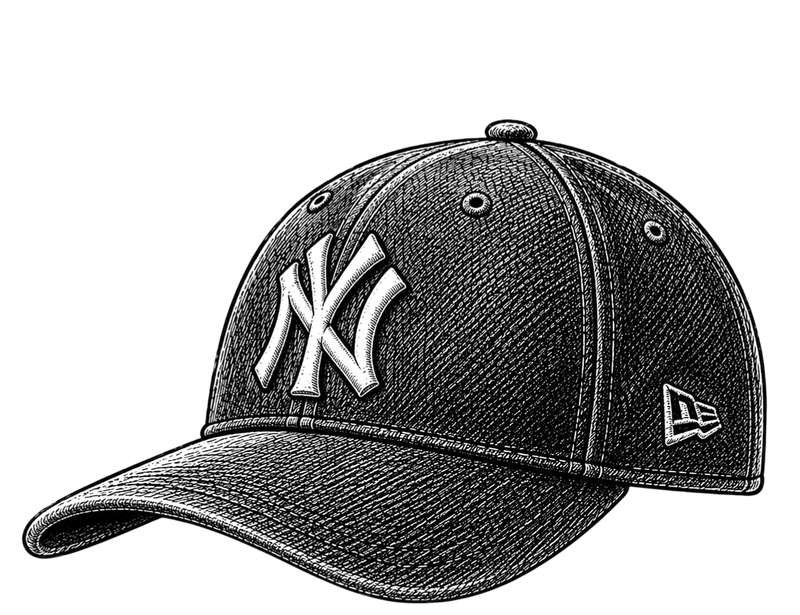
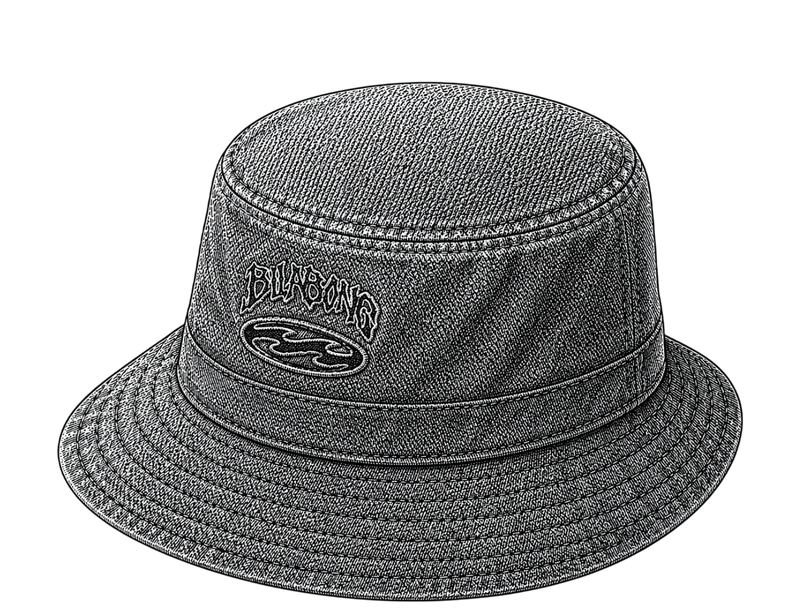
- Casual: baseball cap, bucket hat, unstructured cap, casual flat cap
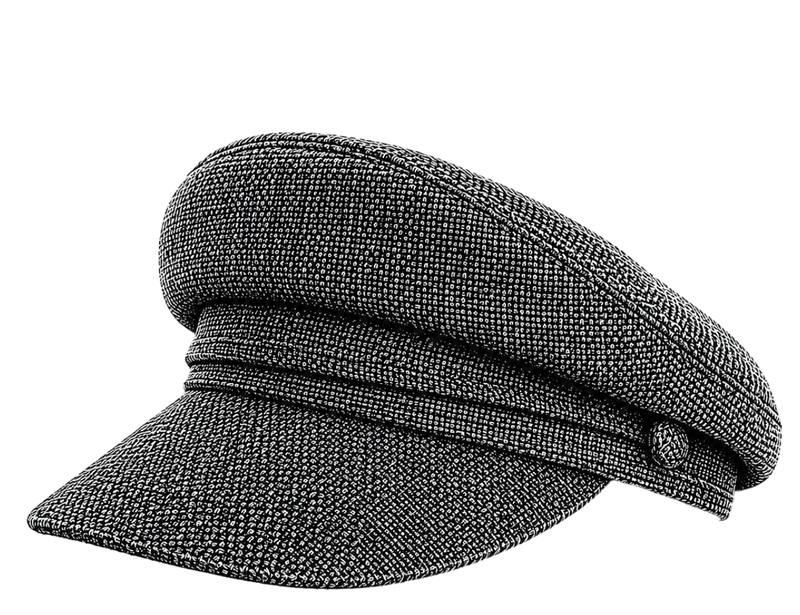
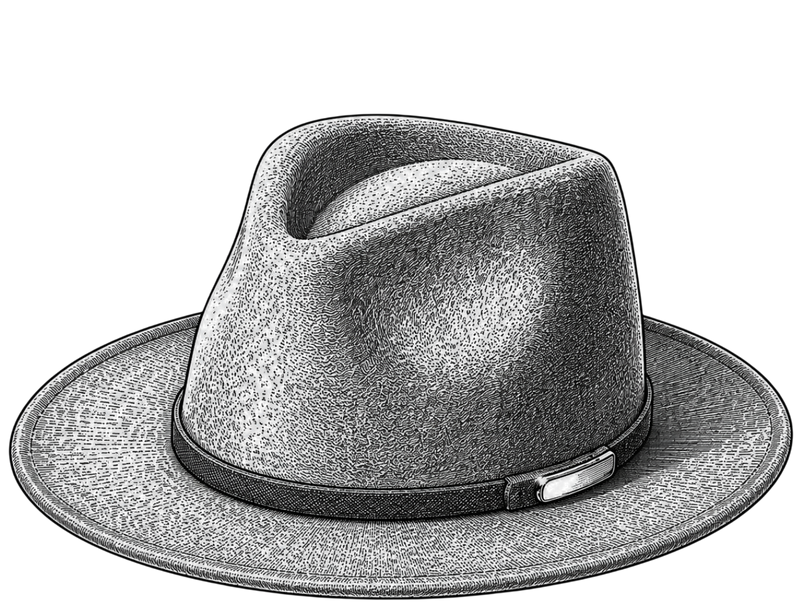
- Smart casual: quality flat cap, quality fedora, structured straw hat, Panama
- Semi-formal: quality felt fedora, homburg
- Formal: top hat, morning coat accessories, formal silk hat
The outfit and the hat should be within one level of each other. A smart casual outfit can carry a quality fedora (one step above) or a quality flat cap (at the same level); it does not carry a baseball cap (two steps below) without creating an obvious register conflict.
Error 4: The Hat Is in Visibly Poor Condition
A crushed felt hat, a stained straw hat, a baseball cap with a sweat-yellowed front panel, or a hat with a deformed brim makes an entire outfit look neglected -- regardless of how well the clothing underneath is chosen. The hat's condition is visible at head height, which is where most social attention is directed. A hat in poor condition is more damaging to an outfit's overall impression than no hat at all.
Minimum maintenance requirements:
- Felt hats: brush with a hat brush in the direction of the nap after each wear; store on a stand or in a hat box; keep out of prolonged rain.
- Straw hats: store out of direct sunlight; keep from being sat on or crushed; wipe surface with a clean damp cloth to remove dust.
- Baseball caps: hand wash when sweat staining becomes visible; reshape crown immediately after washing; air dry rather than machine dry.
Error 5: The Hat Colour Conflicts With the Outfit
Hat colour conflicts come in two types: an unexpected clash (a warm orange hat with a cool blue-grey outfit), and a too-close-but-not-quite match (a hat that is nearly the same colour as the jacket but not quite, creating an attempted-match effect that reads as an error rather than a choice).
Three safe hat-colour approaches that avoid both errors:
- Neutral hat, any outfit: a hat in black, white, cream, navy, grey, or tan relates to essentially any outfit colour without conflict or attempted-match issues.
- Exact match: if the hat colour matches the outfit (same fabric, same dye batch), it reads as intentional coordination. Half-matches read as errors.
- Deliberate contrast: a hat that is clearly in a different but complementary colour family from the outfit reads as a style choice rather than an accident -- the contrast must be obvious enough that there is no question it was chosen.
Error 6: Wearing a Hat Indoors in Contexts That Read as Disrespectful
Hat etiquette about indoor wearing has largely dissolved for casual hats in casual contexts -- a baseball cap worn indoors at a casual venue is not a social issue. However, certain formal indoor contexts still carry conventional expectations: religious services, formal dinners where a dress code is specified, formal ceremonies. Wearing a casual hat in these contexts reads as either ignorance of conventions or deliberate disregard. Understanding when hat removal is expected prevents inadvertent social errors.
As a general guide: hats with no dress-code significance (caps, casual hats) may be worn anywhere casual. In formal contexts, following whatever headwear conventions the event establishes is appropriate. In religious contexts, follow the specific conventions of the tradition -- which vary significantly between traditions.
Browse well-constructed, correctly proportioned hats at Hatloom.

Frequently Asked Questions
How do I know if my hat fits correctly?
Three checks: (1) the hat sits on the head without pressure points -- no area where the hat presses noticeably harder than the others around the circumference; (2) the hat stays in place without continuous adjustment -- it should be possible to walk normally without holding the hat; (3) the hat does not slip over the ears or rotate freely on the head, which indicates too large a fit. A correctly fitting hat can be shaken sideways slightly and will return to position; it will not fall off when the head is tilted at a moderate angle.
What is the correct hat angle?
Most structured hats (fedoras, flat caps, Panama hats) are worn either level or with the front edge slightly lower than the back edge -- a very slight forward tilt. The sideways tilt (one side lower than the other) is a deliberate style choice, not a default. If a hat is tilted to the side, it should be a noticeable, intentional tilt (2+ cm difference side to side) rather than an accidental slight lean (less than 1 cm) that reads as a hat that slipped.
Can you wear a hat with any hairstyle?
Almost all hairstyle and hat combinations are workable with the right hat size and style choice. The variables: curly or high-volume hair requires a hat with a larger interior circumference or a hat worn resting on the hair volume rather than pressing it down; very long hair may need to be managed to avoid escaping below a hat brim in a way that looks unintentional; buns and updos work very well with many hat styles. The limitation is primarily fit -- a hat that cannot accommodate a hairstyle comfortably is a sizing issue rather than a style incompatibility.
Is it wrong to wear a hat with formal clothing?
No, with context awareness. The fedora was standard formal business headwear through the mid-20th century. The top hat is the most formal hat in Western tradition. Wearing a structured quality fedora or homburg with a formal suit is entirely conventional in hat culture -- the error is wearing a casual hat (baseball cap, bucket hat, unstructured cap) with formal clothing, not wearing any hat at all. The hat's formality level should match the outfit's formality level.
How often should hats be replaced?
A quality hat should not need replacing -- it needs maintenance. A felt hat that has been blocked, re-banded, and properly stored can last decades. The need to replace a hat typically indicates one of: a hat below quality threshold (cheap materials that do not hold shape through normal use); a hat that has been damaged by water, sun, or improper storage beyond restoration; or a significant change in fit (head size can change with weight changes). For a quality hat in good condition with proper care, replacement is not a scheduled event.