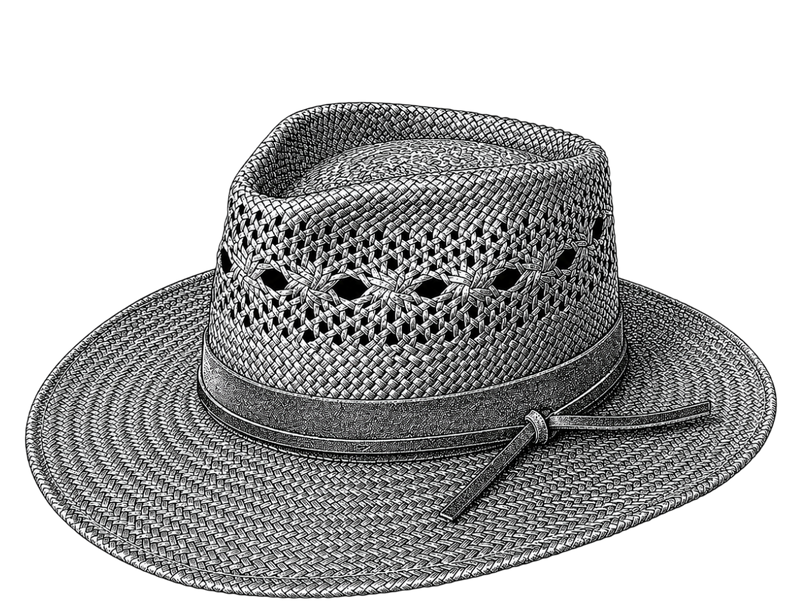
Summer is the hardest season on hats. Not because of rain -- that is autumn's problem -- but because of sweat, UV exposure, and the specific combination of salt and moisture that accelerates deterioration in natural materials. Most people's summer hats look noticeably worse after one season not because of catastrophic damage but because of accumulated sweat staining, salt residue, and UV fading that were each minor individually but compounding. Preventing these effects is easier than reversing them.
The Primary Summer Threat: Sweat and Salt
Human sweat is primarily water with dissolved salts, urea, and small amounts of other compounds. When sweat is absorbed by a hat's sweatband and inner crown, the water evaporates and leaves the salts and other compounds behind. Over time, these accumulate into visible white staining (salt crystallisation) and darker discolouration from protein compounds in the sweat. The process is the same for all hat materials but affects them differently:
- Felt hats: sweat staining affects the sweatband primarily and can wick into the felt itself, leaving white ring marks visible on the exterior brim near the crown junction
- Straw hats: the natural fibres of straw hats are permeable, and sweat can penetrate the hat to create internal staining and, over time, structural weakening of individual fibres
- Cotton and fabric hats: the sweatband discolours, and repeated saturation without cleaning leads to bacterial growth that creates persistent odour
- Synthetic hats: most resistant to sweat damage, as synthetic fibres do not absorb moisture the same way natural fibres do

Prevention: During the Season
Sweatband Protection
The most effective prevention measure is addressing sweat before it accumulates. Two approaches:
- Hat liners: thin absorbent liners (available in cotton or moisture-wicking synthetics) that fit inside the hat's interior band. These absorb sweat before it reaches the hat material and can be washed separately. One or two liners per summer hat, switched out and washed regularly, significantly reduces sweat contact with the hat itself
- Light cleaning after each wear: wiping the interior sweatband with a slightly damp cloth after each wear -- when sweat is fresh -- removes salt and moisture before it has time to dry into the hat material. This takes 30 seconds and prevents the accumulation that makes later cleaning difficult
UV Protection for Hats
UV exposure fades and weakens natural hat materials over time. Summer hats worn outdoors in bright conditions accumulate UV exposure that causes:
- Colour fading in dyed felt and fabric hats
- Gradual bleaching and yellowing in natural straw hats
- Surface embrittlement in straw materials (the fibres become more fragile with sustained UV exposure)
Practical UV protection for hats:
- When not being worn, store hats out of direct sunlight. A hat left on a car dashboard or in a sunny shop window accumulates significant UV exposure unnecessarily
- Fabric UV protectant sprays (sold for outdoor fabrics and upholstery) can be applied to fabric and straw hats at the start of summer to provide some UV resistance
- Natural straw hats can be treated with a light beeswax or carnauba wax treatment that provides some UV protection while also slightly improving water resistance
Physical Handling
Summer hats are more likely to be handled casually than formal season hats -- grabbed, folded into bags, sat on in beach situations. The practical handling guidelines:
- Pick up hats by the brim edges or the crown, not by pinching the crown point (which, over time, deforms the felt or straw at that point)
- For straw hats with natural brim materials, avoid folding or rolling unless the hat is designed for it (some straw hats can be rolled; most cannot without cracking the brim)
- When carrying a hat, a hat bag or a dedicated hat section in a larger bag prevents crushing and maintains shape
Mid-Season Maintenance
At the midpoint of the summer hat season (or whenever the hat begins to show visible sweat accumulation):
- Address any visible salt ring staining on felt hats with a barely damp cloth, working from the outside of the ring inward
- Clean the sweatband with a cotton swab or cloth dampened with slightly diluted white vinegar (10% vinegar in water), which dissolves salt deposits
- Allow the hat to dry completely in the open air before storing or wearing again
End-of-Season Care
Before storing a summer hat at the end of the season:
- Clean the exterior and interior completely -- do not store a hat with sweat or salt residue that will set over the winter storage period and be significantly harder to remove in spring
- Allow the hat to dry completely before boxing or bagging for storage
- Store in a hat box, not in a sealed plastic bag (which traps moisture and promotes mould in natural fibre hats)
- For felt hats, brush with a hat brush to lift and realign the nap before storage
Browse summer straw hats, Panama hats, and wide-brim sun hat styles at Hatloom.

Frequently Asked Questions
How do I remove sweat stains from a summer hat?
The method depends on the hat material. For fabric hats (cotton, canvas, synthetic): a mild soap solution (dish soap in water) applied with a soft brush to the stained area, worked gently, then rinsed with a clean damp cloth and allowed to air dry. For felt hats: a barely damp cloth applied to the exterior staining with gentle dabbing, followed by hat-brush treatment once dry. For straw hats: the same barely damp cloth approach, plus a very light application of white vinegar diluted in water for persistent salt rings. The critical variable for all materials is addressing staining when it is fresh rather than allowing it to set and crystallise.
Can a hat with bad sweat staining be rescued?
In many cases yes, but the degree of recovery depends on how long the staining has been setting. Fresh staining (within the same wear season) typically responds well to cleaning. Old, crystallised sweat staining that has been allowed to set for a full off-season is significantly harder to remove and may require professional hat cleaning. Some hats with very heavy sweat staining can be professionally cleaned and blocked, which both cleans the hat and refreshes its shape. The investment is worthwhile for quality hats; for lower-priced summer hats, replacement at the end of the season may be more practical than professional restoration.
How often should I clean a summer hat?
For the sweatband specifically, wiping after every few wears is ideal for hats worn in hot conditions. For the exterior, cleaning as needed when visible soiling appears -- summer outdoor use creates dust and environmental residue in addition to sweat. A thorough cleaning at the beginning and end of the season, with spot cleaning as needed in between, is a reasonable maintenance schedule for most summer hats. Hats worn in beach environments (salt air plus sun plus potential sand) benefit from more frequent attention because the combination of these elements accelerates deterioration if not addressed.