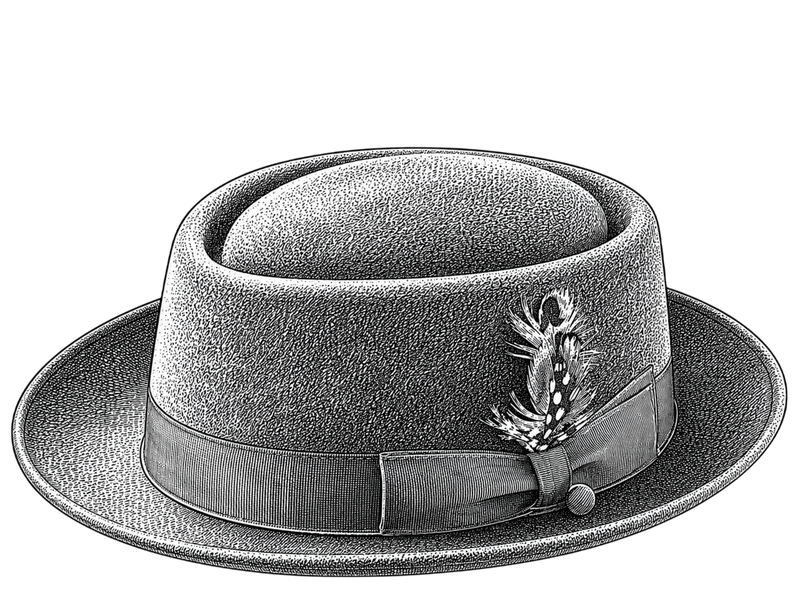
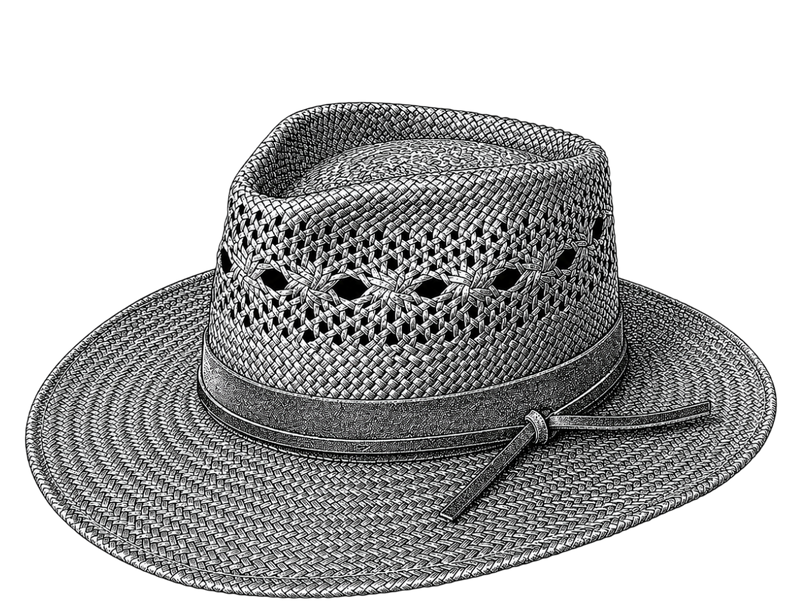
A hat and scarf worn together is the easiest outfit to get wrong and, when done correctly, one of the most complete cold-weather looks. The mistake is treating the two as independent accessories that happen to coexist. They are not — they occupy the same visual zone (neck, face, head) and the combination either reads as coherent or as two separate styling decisions that collide at the collar. The rules that determine which outcome occurs are learnable.
The Core Principle: Material and Tone Should Match, Pattern Should Not
The successful hat-scarf combination follows one of two relationships:
- Tonal harmony with material variation: Hat and scarf in the same or adjacent color family, different materials. A camel wool fedora with a camel cashmere scarf — identical color family, different textures. The color pulls the combination together; the material difference prevents it from looking like a matching set.
- Neutral anchor with one accent: One piece is a neutral (charcoal, navy, black, camel, cream), the other is an accent color. A charcoal felt hat with a deep burgundy scarf — the neutral hat grounds the combination, the accent scarf provides the color interest. Not the reverse — an accent-colored hat with an accent-colored scarf in a different accent color creates competition rather than interest.
What does not work: competing patterns at the same visual scale. A plaid hat with a plaid scarf in a different plaid scale is chaotic at the visual zone where the eye is most focused (the face and neck area). Either one pattern with one solid, or no pattern in either.
Material Combinations by Temperature
Cold Weather (Below 5°C)
In genuine cold, the scarf is primarily functional — warmth at the neck — and the hat is the style piece. The combination framework:
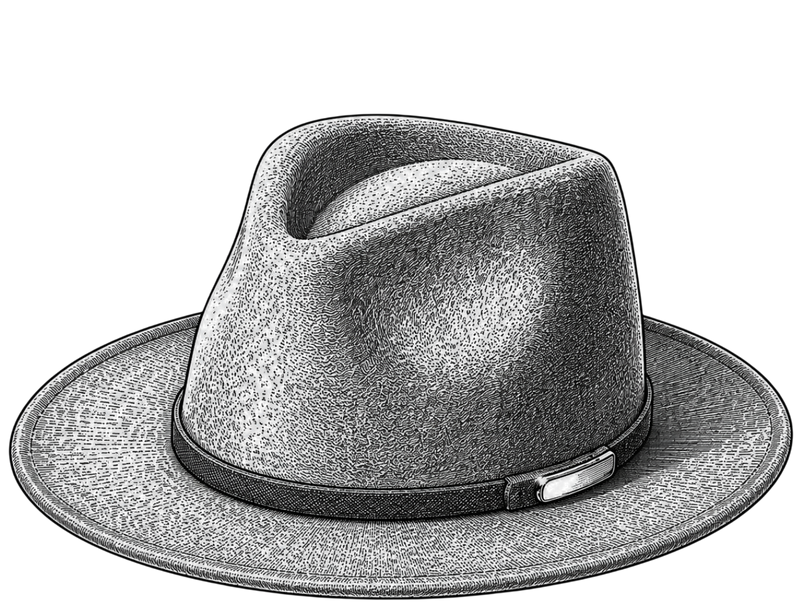
- Felt fedora + wool scarf: The natural pairing for cold-weather city dressing. Both materials are warm. A classic combination — dark gray fedora with a charcoal or burgundy wool scarf — requires no further styling explanation.
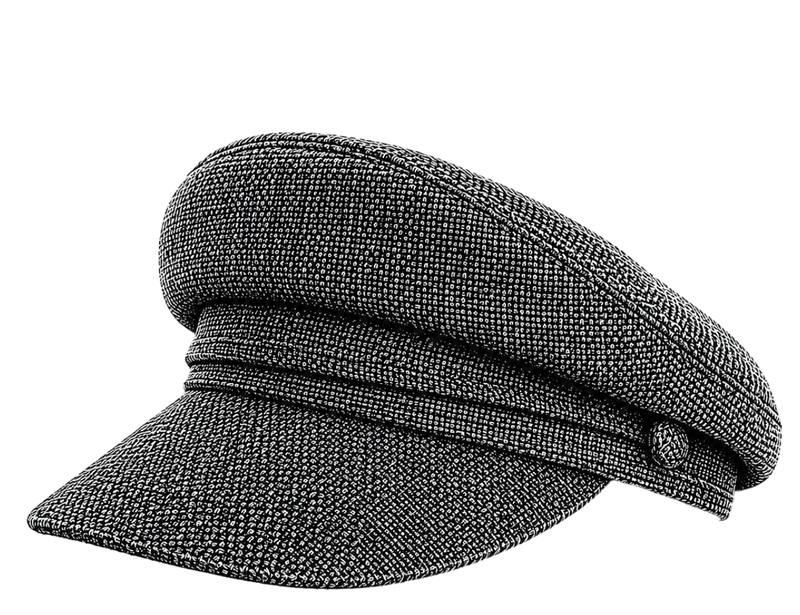
- Wool flat cap + cashmere scarf: The material elevation of the cashmere scarf against the more utilitarian flat cap is a deliberate register difference that reads as considered. Keep the colors in the same family.
- Knit beanie + oversized wool scarf: The casual combination — when both pieces are oversized and relaxed, the proportion is coherent. The error is a tightly-fit knit beanie with a fine, narrow scarf — the proportions misalign.
Mild Weather (5–15°C)
At mild temperatures, the scarf is half functional, half aesthetic. Lighter materials become relevant:
- Felt fedora + light cashmere or modal scarf: A lighter-weight scarf worn loosely rather than wrapped provides warmth without the visual bulk of a winter scarf. The loose drape creates a different relationship with the hat than a tightly wrapped neck covering.
- Panama hat + linen scarf: The transitional combination for late spring or early autumn days — both materials are lightweight, the linen scarf worn loosely signals the approach to warm weather without committing to summer.
How to Tie the Scarf With a Hat
The scarf knot or drape affects the visual relationship with the hat. Key considerations:
The Parisian drape: Scarf folded in half lengthwise, looped around the neck, ends pulled through the fold. Sits close to the neck with two hanging ends in front. Works with both a hat that fits close to the head (flat cap, cloche) and one with more visual presence (wide-brim fedora). The asymmetry of the two hanging ends adds movement without competing with the hat above it.
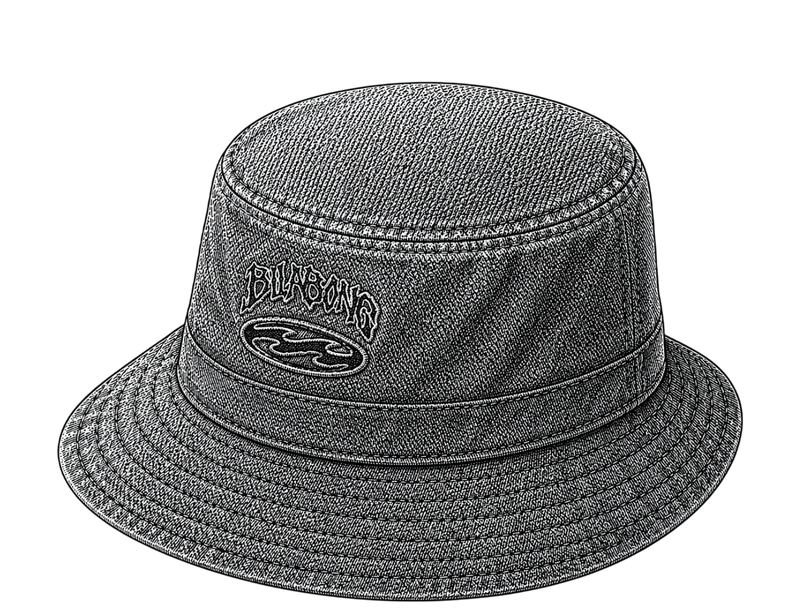
The once-around: Scarf wrapped once around the neck with ends either tucked in or hanging down one side. More casual than the Parisian drape, more covered than leaving the scarf loose. Works with casual-register hats: flat cap, knit beanie, bucket hat.
The loose drape: Scarf placed over the shoulders and across the front without wrapping or knotting. Requires a longer scarf (180 cm+). Creates a distinctive silhouette that reads as European casual. Works best with structured hats — the loose, voluminous scarf balances the defined structure of a felt fedora or Panama hat above it.
What to avoid: Tightly wrapping a thick scarf all the way up to the chin when wearing a fedora or structured hat. The thick neck coverage competes with the hat for visual prominence at the head and neck zone, and the tight wrap reads as winter emergency dressing rather than intentional cold-weather style.
Color Combinations That Work
Specific combinations that have strong visual coherence:
- Camel hat + burgundy scarf: The earth tone and the deep red are adjacent on the warm spectrum. One of the most classic cold-weather color combinations.
- Charcoal hat + cream or ivory scarf: High contrast within a neutral palette. Very clean, very wearable, requires no further outfit coordination.
- Navy hat + camel or tan scarf: The classic navy-camel combination works at the hat-scarf level as well as it works in tailoring. The warm camel prevents the navy from reading as cold.
- Black hat + red scarf: High contrast with a strong accent. Requires confidence — the red scarf is the most visible element of the outfit. Works best when the rest of the outfit is dark and restrained.
- Cognac brown hat + olive or forest green scarf: Earth tones within the warm spectrum. Both colors are nature-adjacent; together they read as considered rather than matched.
Common Mistakes
Matching hat and scarf in exactly the same color and material: This reads as a purchased set rather than as a styling choice. The matching-set appearance is the styling failure to avoid — it signals that no actual decision was made.
Wearing a heavy scarf with a lightweight summer hat: The material register conflict is immediate — a chunky wool scarf with a straw Panama creates a weather incoherence that no color combination can rescue.
Scarf ends covering hat brim: Very long scarf ends that hang down in front long enough to reach below the brim of a wide-brimmed hat create a layered overlap that looks cluttered. Tuck excess scarf ends inside the coat or choose a length that falls above the hat brim position.
Explore felt fedoras and Panama hats for building your cold-weather and transitional looks in the Hatloom collection.
Frequently Asked Questions
Do hat and scarf colors need to match?
They need to be harmonious, which is different from matching. Exact color matching reads as a set and signals no styling decision was made. Tonal harmony — same color family at different intensities, or different colors in the same warmth temperature — reads as a deliberate combination. The most successful hat-scarf combinations use colors that are related but not identical: navy hat with cobalt blue scarf (adjacent tones), or camel hat with tan scarf (same family at different intensities).
Can I wear a patterned hat with a patterned scarf?
Yes, with one condition: the patterns must be at significantly different scales. A large-scale herringbone fedora with a fine-stripe scarf works because the patterns do not compete — one is read at a distance, the other only close-up. Two patterns at the same visual scale create busy competition in the face-and-neck zone where both pieces sit. The easiest approach is one pattern, one solid — most pattern-and-solid hat-scarf combinations require no further calibration.
Should the hat or the scarf be the statement piece?
Typically the hat, because it sits closer to the face and frames the head — the visual focal point of any appearance. A statement hat with a quiet, complementary scarf is the more coherent arrangement. A very bold, pattern-heavy, or accent-colored scarf with a plain, neutral hat is valid but requires more careful calibration — the scarf will draw the eye downward from the face rather than framing it.
What is the best scarf material to wear with a felt hat?
Wool and cashmere are the natural pairings — materials in the same warmth register as felt. Cashmere in particular is the elevated pairing: the softness of the cashmere against the more structured felt creates a considered material contrast. Avoid synthetic scarves with quality felt hats — the material register difference (the hat signals quality, the synthetic scarf does not) undermines the felt hat choice.
How long should a scarf be when wearing a hat?
For a Parisian drape with a standard-height hat: 150–170 cm. This provides enough length to loop through the fold and have ends that hang to the chest without extending below the coat hem. For the loose drape: 180 cm+ is required to create the intended volume. For wrapped styles: 170–200 cm allows for full wrapping without excess. Scarves shorter than 140 cm rarely provide the versatility for the range of tying methods that work well with hats.